
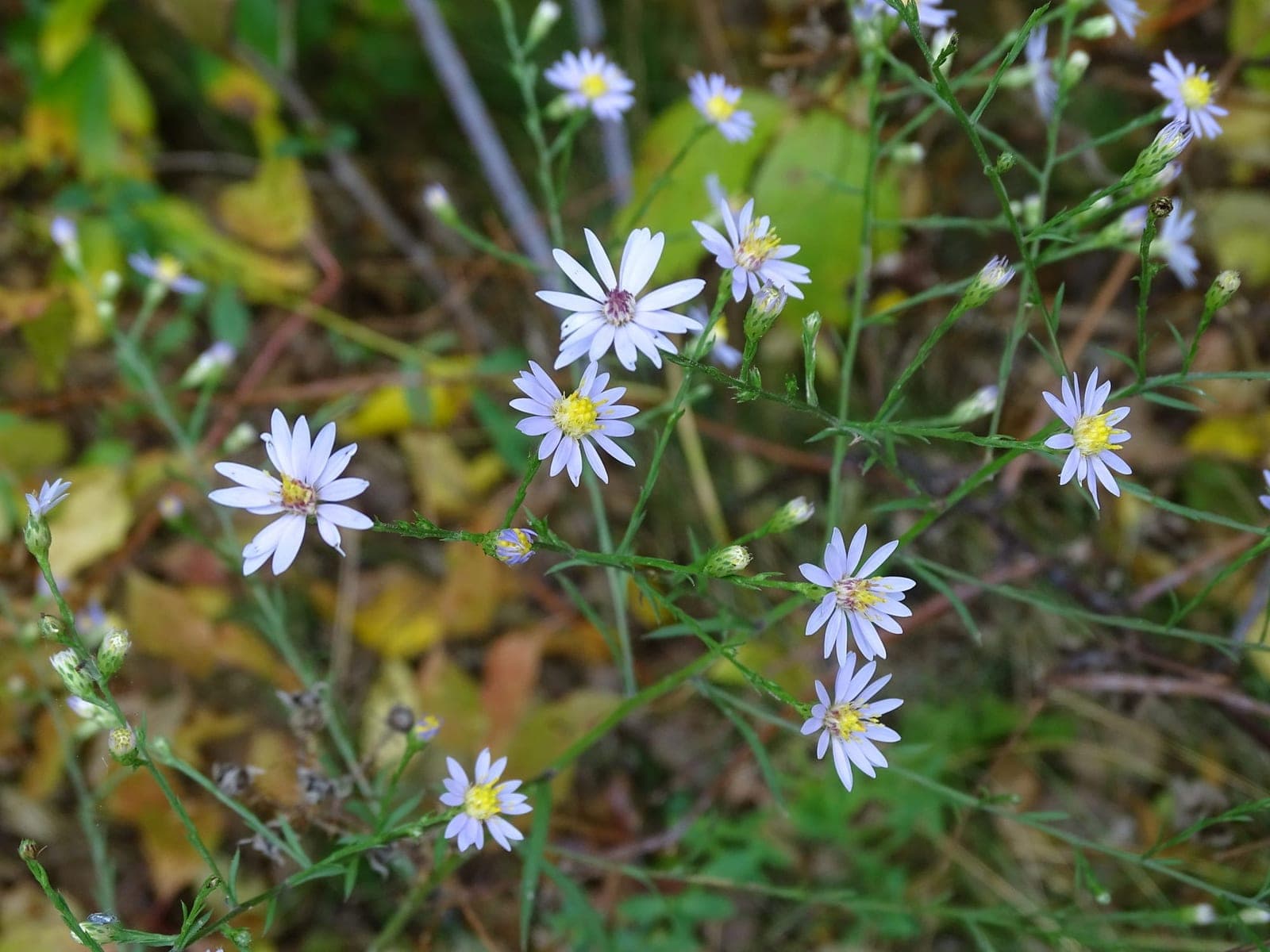
Sky blue aster is a native prairie and oak savanna species from eastern North America bearing sky-blue to violet-blue ray flowers around yellow disk centers in late summer and fall. It is among the last natives to come into its own each season, bridging the garden into fall and providing one of the most dependable late-season nectar sources for migrating monarchs and native bees.
Plants perform best in lean, well-drained to dry soils with full sun; rich or moist ground promotes flopping and increased disease pressure. Clumps spread slowly by short rhizomes and may self-seed on disturbed soil. Division every three to four years keeps growth vigorous. Stems left standing through winter provide seed for birds and shelter for overwintering insects; cut back to several inches in early spring.
Sky blue aster supports specialist native bees in the genus Melissodes and is documented as a nectar resource for monarchs during fall migration. It integrates well into tallgrass prairie plantings, naturalistic meadows, and dry rain-shadow borders.
Ecoregions:Northern ForestsEastern Temperate ForestsGreat Plains
Aster Yellows
Deformed, greenish flowers, stunted growth, and yellowed foliage. Flower centers may produce tufts of leafy growth instead of normal petals.
No cure. Remove and destroy infected plants immediately to stop spread. Control leafhoppers, which transmit the disease, and remove nearby weed hosts.
Powdery mildew
White or grey powdery coating on leaves - usually starting on older growth in humid conditions or when nights cool.
Improve air circulation by thinning plants. Apply neem oil or potassium bicarbonate spray at first sign. Avoid overhead watering.
Fungal leaf spot
Brown or purplish spots on the leaves, often ringed with a yellow halo, that spread and merge in warm, humid, or wet weather; heavily spotted leaves yellow and drop early.
Pick off spotted leaves and clear fallen debris to remove overwintering spores. Improve air circulation by thinning, and water at the base so foliage dries quickly. If it persists, apply a copper- or sulfur-based fungicide at the first sign.
Rust
Orange to brown raised pustules on the undersides of leaves, with yellow spotting on the upper surface. Heavy infections cause leaves to yellow and drop.
Remove and destroy infected leaves. Avoid overhead watering and improve air circulation. Apply a sulfur or copper-based fungicide if it spreads. Clear plant debris in fall.