
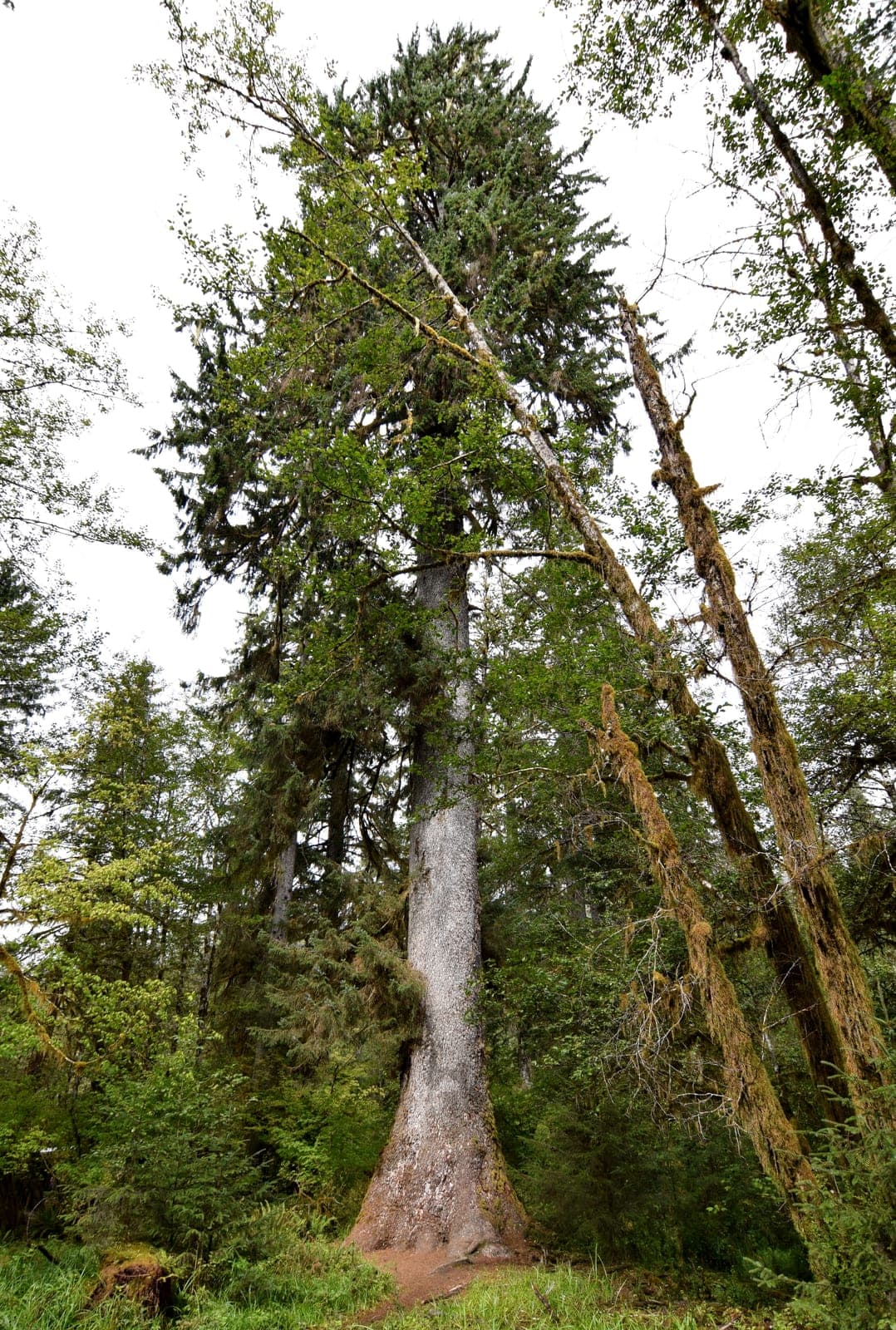
Sitka spruce is the largest spruce species and the fifth-largest conifer on Earth, with documented heights exceeding 100 m and trunk diameters above 5 m in its native coastal range from northern California to Alaska. For gardeners in the Pacific Northwest, it is a defining choice for large properties where year-round evergreen canopy, structural mass, and wildlife value are priorities.
It thrives only in cool, humid maritime climates with consistently high rainfall and mild temperature swings year-round. It is intolerant of drought, prolonged summer heat, and continental cold snaps, performing best within a few kilometres of the coast. In garden conditions, expect 25–45 m over several decades under ideal circumstances. Young trees can put on 60–90 cm per year. It establishes fastest in deep, moist, well-drained, acidic soil at pH 4.5–6.0; standing water promotes root rot. Mulching out to the drip line conserves moisture and suppresses competing vegetation.
Indigenous peoples of the Pacific coast consumed young shoot tips as a vitamin C source and brewed the needles into tea used for scurvy and respiratory ailments. The resinous pitch was applied to wounds as an antimicrobial sealant. Spring-harvested spruce tips are still used today in syrups, ales, and vinegars.
Ecoregions:Northwestern Forested MountainsMarine West Coast Forest
Rhizosphaera Needle Cast
Needles on inner and lower branches turn purple-brown in their second year and drop prematurely, leaving progressively bare branch sections that work upward through the canopy over multiple seasons. Rows of small black fungal fruiting bodies (pycnidia) are visible along needle undersides under a hand lens.
Apply chlorothalonil or copper-based fungicide when new needles reach half their final length; repeat 3–4 weeks later. Rake and remove fallen needles beneath the tree. Maintain adequate spacing for air circulation. Treat for 2–3 consecutive springs on heavily infected trees before evaluating recovery.
Cytospora Canker
White or blue-white pitch masses ooze from bark on lower branches and the trunk. Affected branches die back progressively from the tip inward; bark beneath the resin is discolored brown and may have a resinous, sunken appearance.
Prune infected branches well below the canker margin into healthy wood and destroy all cuttings. Sterilize pruning tools with 70% isopropyl alcohol between each cut. No effective fungicide is available; prevent recurrence by avoiding drought stress, soil compaction, and mechanical bark injury.
Armillaria Root Rot
Thinning, yellowing canopy with progressive dieback; white, fan-shaped mycelial mats visible beneath bark at or just below the soil line; honey-colored mushroom clusters appearing at the trunk base or on surface roots in autumn.
No chemical cure exists. Improve drainage and avoid any injury to roots or trunk. Remove severely infected trees along with as much root material as possible. Do not replant susceptible species in the same spot.
Phytophthora Root Rot
Wilting despite moist soil, yellowing leaves, stunted growth, and dark, decayed roots and crown tissue. Vines may collapse during hot weather.
Plant in well-draining soil and avoid waterlogging. Remove and destroy affected vines. Improve drainage with raised beds or amended soil and avoid overwatering.
Rust
Orange to brown raised pustules on the undersides of leaves, with yellow spotting on the upper surface. Heavy infections cause leaves to yellow and drop.
Remove and destroy infected leaves. Avoid overhead watering and improve air circulation. Apply a sulfur or copper-based fungicide if it spreads. Clear plant debris in fall.