
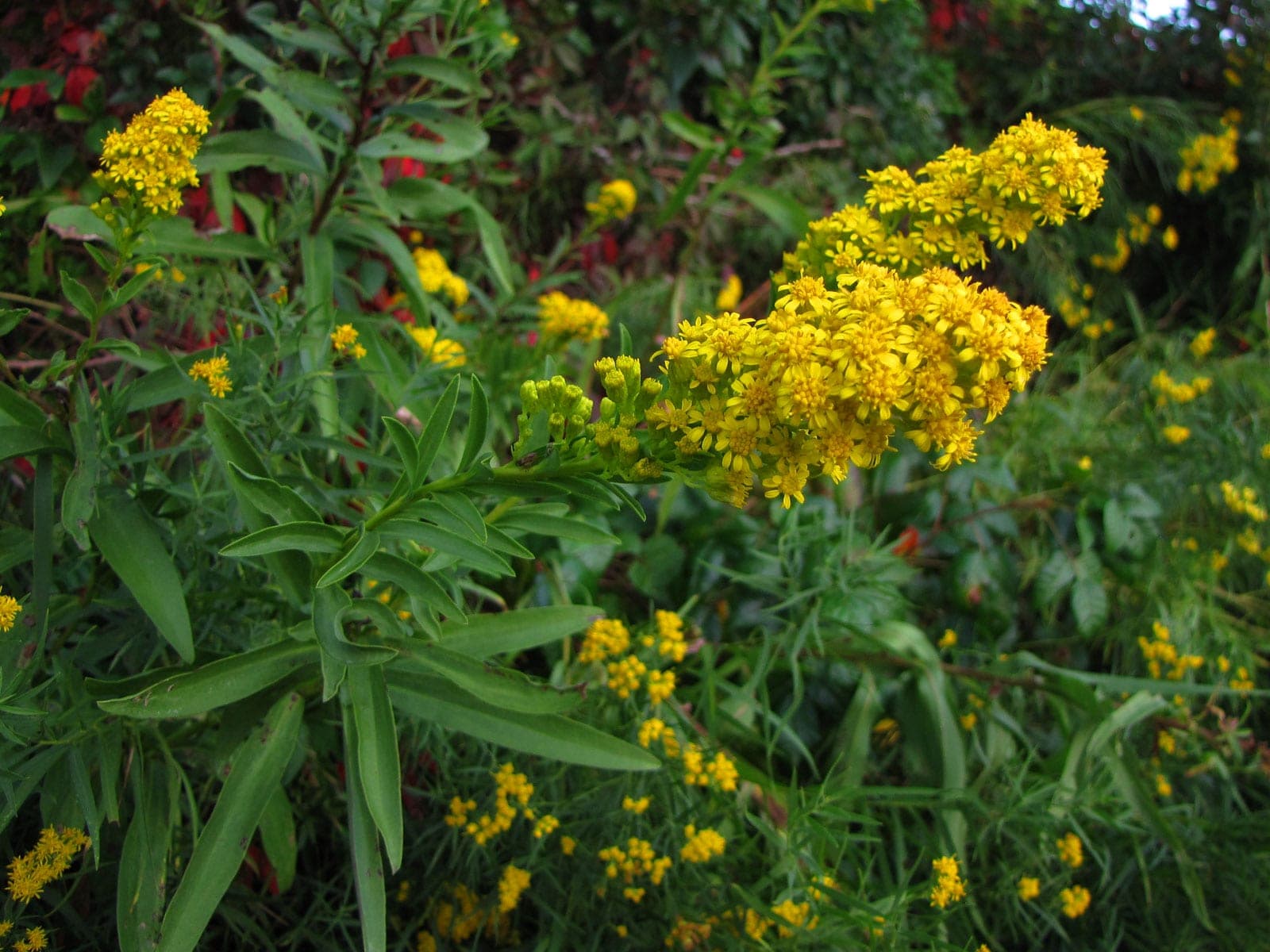
Solidago sempervirens is a perennial native to salt marshes, coastal dunes, and barrier islands along eastern North America, from Newfoundland to the Caribbean. It handles salt spray, sandy soil, and periodic flooding better than most ornamentals, making it a reliable choice for coastal plantings or any inland site with poor, dry, or alkaline soil.
Plants spread by both seed and rhizome, slowly forming colonies. In managed beds, divide clumps every three to four years to control spread and renew vigor. Lean, sandy soil suits this species better than rich garden loam; fertile soil produces lush, floppy stems. No supplemental fertilizer is needed once established. Cold-hardy to zone 4a, it breaks dormancy reliably after hard winters.
Seaside goldenrod is one of the most ecologically significant late-season plants on the eastern seaboard. It is a primary nectar source for migrating monarch butterflies and supports numerous specialist Solidago-dependent bee species. Indigenous peoples of eastern North America used goldenrod preparations across the genus for urinary complaints, wound care, and respiratory ailments.
Ecoregions:Northern ForestsEastern Temperate Forests
Powdery mildew
White or grey powdery coating on leaves - usually starting on older growth in humid conditions or when nights cool.
Improve air circulation by thinning plants. Apply neem oil or potassium bicarbonate spray at first sign. Avoid overhead watering.
Rust
Orange to brown raised pustules on the undersides of leaves, with yellow spotting on the upper surface. Heavy infections cause leaves to yellow and drop.
Remove and destroy infected leaves. Avoid overhead watering and improve air circulation. Apply a sulfur or copper-based fungicide if it spreads. Clear plant debris in fall.
Fungal leaf spot
Brown or purplish spots on the leaves, often ringed with a yellow halo, that spread and merge in warm, humid, or wet weather; heavily spotted leaves yellow and drop early.
Pick off spotted leaves and clear fallen debris to remove overwintering spores. Improve air circulation by thinning, and water at the base so foliage dries quickly. If it persists, apply a copper- or sulfur-based fungicide at the first sign.