
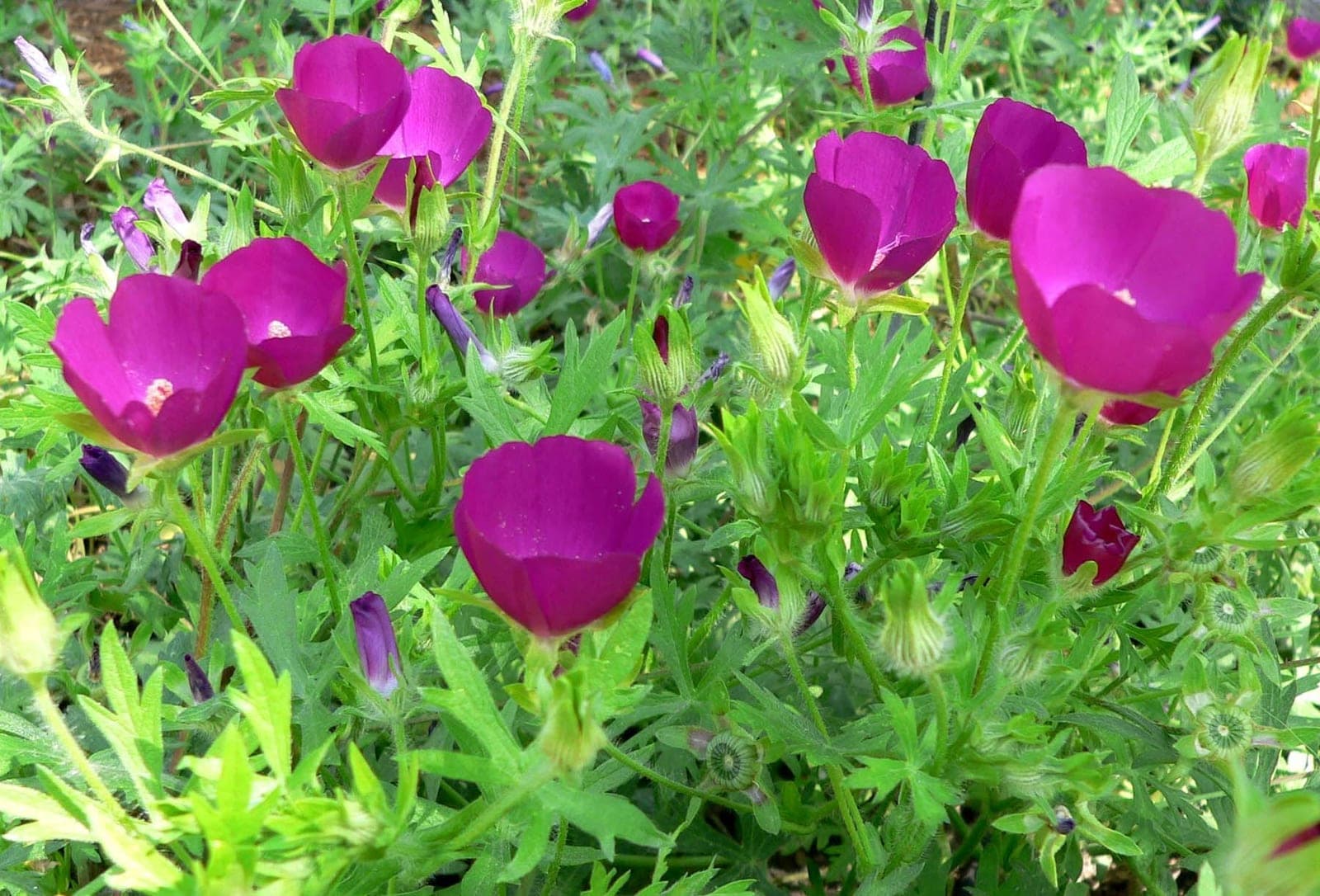
Callirhoe involucrata is a trailing perennial native to the Great Plains, grown as a low-spreading groundcover that produces vivid wine-red to magenta cup-shaped flowers from late spring through hard frost. Its long season of color, minimal water needs, and toughness in lean soils make it a practical choice where conventional perennials struggle.
A thick, fleshy taproot drives the plant's drought tolerance but also means it cannot be transplanted successfully once established - direct sowing in a permanent location is the only reliable approach. It performs best in sandy, gravelly, or rocky soil with sharp drainage; heavy clay or wet sites cause crown rot and decline. Plants spread by sprawling stems to 24–36 inches wide while staying low to the ground. Full sun is mandatory; shade sharply reduces flowering. Keep mulch pulled back from the crown, as buried crowns rot quickly. The plant is native to dry prairies and short-grass plains, and cold-hardiness into zone 3 is typical.
The starchy taproot was used as food by Plains tribes including the Comanche. In the garden, the long flowering period draws native bees, bumblebees, and several butterfly species across the summer.
Ecoregions:Eastern Temperate ForestsGreat Plains
Root rot
Plants wilt, yellow, and stunt even in moist soil; lower stems and roots turn brown, soft, and mushy and the plant may collapse. Most common in heavy, wet, or poorly drained ground.
Improve drainage and stop overwatering, and never plant too deep. Lift and destroy badly affected plants along with the soil around the roots. Grow in raised or free-draining beds to prevent it returning.
Crown Rot
Lower leaves yellow and wilt; the base of the rosette turns brown and soft, sometimes with white fungal threads at the soil line. Plants collapse in wet conditions.
Remove and destroy affected plants. Improve drainage and avoid overhead watering. Do not mulch directly against the crown. Space plants for airflow and avoid replanting in the same wet spot.
Powdery mildew
White or grey powdery coating on leaves - usually starting on older growth in humid conditions or when nights cool.
Improve air circulation by thinning plants. Apply neem oil or potassium bicarbonate spray at first sign. Avoid overhead watering.
Rust
Orange to brown raised pustules on the undersides of leaves, with yellow spotting on the upper surface. Heavy infections cause leaves to yellow and drop.
Remove and destroy infected leaves. Avoid overhead watering and improve air circulation. Apply a sulfur or copper-based fungicide if it spreads. Clear plant debris in fall.