
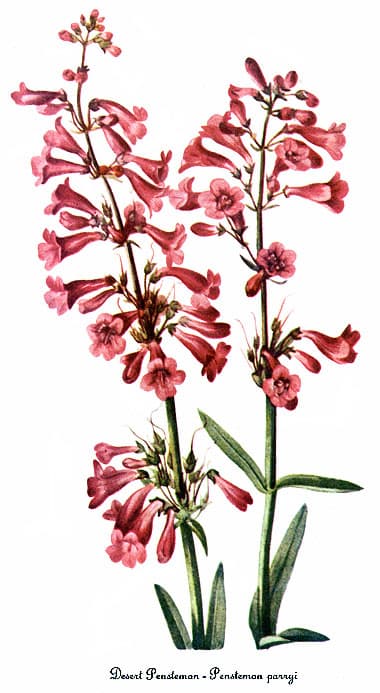
Parry's penstemon is a native Sonoran Desert perennial that sends up tall stems densely lined with tubular magenta-pink flowers in March and April. It is among the showiest spring wildflowers in the low desert, reaching 3–5 feet in flower, and is well suited to xeriscape, native plant, and pollinator gardens across the Southwest. Once established, plants need no supplemental water.
The species follows a cool-season pattern: seeds germinate with autumn rains, plants grow through winter, bloom in early spring, set seed, and then go fully summer-dormant. In the wild, flowering occurs in the second year after germination; autumn sowing in cultivation often produces blooming plants in the first season. The plant is intolerant of summer irrigation and will rot in heavy clay or poorly drained soils. Decomposed granite, native sandy soil, or a gravel mulch layer encourages establishment and prevents crown rot during monsoon season. Plants self-seed freely and will naturalize on dry slopes and open garden beds with minimal intervention.
Parry's penstemon is a significant early-season nectar source for migrating and resident hummingbirds in the Sonoran Desert and also supports native carpenter bees and mason bees. It is a standard species in regional habitat restoration plantings because of its reliability from seed and its ecological role in the spring forage window before most other desert natives peak.
Ecoregions:North American DesertsSouthern Semi-Arid HighlandsTemperate Sierras
Fungal leaf spot
Brown or purplish spots on the leaves, often ringed with a yellow halo, that spread and merge in warm, humid, or wet weather; heavily spotted leaves yellow and drop early.
Pick off spotted leaves and clear fallen debris to remove overwintering spores. Improve air circulation by thinning, and water at the base so foliage dries quickly. If it persists, apply a copper- or sulfur-based fungicide at the first sign.
Crown Rot
Lower leaves yellow and wilt; the base of the rosette turns brown and soft, sometimes with white fungal threads at the soil line. Plants collapse in wet conditions.
Remove and destroy affected plants. Improve drainage and avoid overhead watering. Do not mulch directly against the crown. Space plants for airflow and avoid replanting in the same wet spot.
Powdery mildew
White or grey powdery coating on leaves - usually starting on older growth in humid conditions or when nights cool.
Improve air circulation by thinning plants. Apply neem oil or potassium bicarbonate spray at first sign. Avoid overhead watering.