
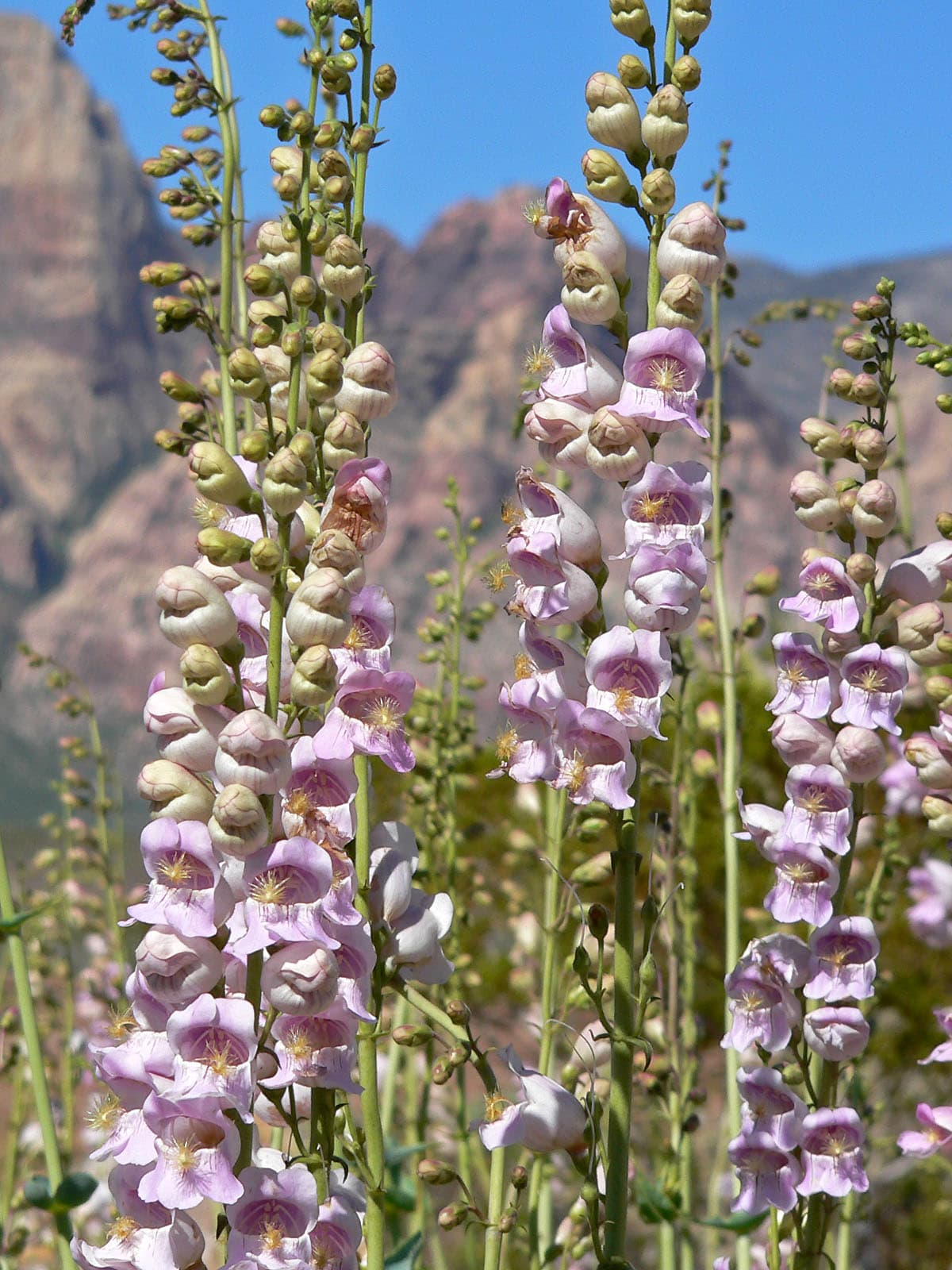
Palmer's Penstemon is a native western North American perennial and one of the few penstemons with noticeably fragrant flowers. The large, inflated, pink-to-lavender tubular flowers are carried on stems reaching 3–5 feet tall and reliably attract hummingbirds, bumblebees, and other long-tongued native pollinators. It is well suited to xeriscape, dry native plantings, and roadside revegetation.
It performs best in fast-draining, lean, or rocky soils with full sun. Wet or heavy soil, particularly during winter dormancy, is the primary cause of plant loss - even brief waterlogging of roots can be fatal. It commonly behaves as a short-lived perennial or monocarpic biennial, but self-seeds reliably where drainage is adequate. Keep soil pH between 6.5 and 8.0, do not mulch over the crown in wet-winter climates, and withhold supplemental fertilizer, as excess nitrogen produces tall, floppy stems prone to collapse.
The flowers are among the most fragrant of any penstemon, with a sweet scent detectable several feet away. They are an important nectar resource for hummingbirds and native bumblebees and are increasingly used in western naturalistic and low-water landscapes as a structural alternative to larger ornamental perennials.
Ecoregions:Northwestern Forested MountainsNorth American DesertsTemperate Sierras
Powdery mildew
White or grey powdery coating on leaves - usually starting on older growth in humid conditions or when nights cool.
Improve air circulation by thinning plants. Apply neem oil or potassium bicarbonate spray at first sign. Avoid overhead watering.
Fungal leaf spot
Brown or purplish spots on the leaves, often ringed with a yellow halo, that spread and merge in warm, humid, or wet weather; heavily spotted leaves yellow and drop early.
Pick off spotted leaves and clear fallen debris to remove overwintering spores. Improve air circulation by thinning, and water at the base so foliage dries quickly. If it persists, apply a copper- or sulfur-based fungicide at the first sign.
Crown Rot
Lower leaves yellow and wilt; the base of the rosette turns brown and soft, sometimes with white fungal threads at the soil line. Plants collapse in wet conditions.
Remove and destroy affected plants. Improve drainage and avoid overhead watering. Do not mulch directly against the crown. Space plants for airflow and avoid replanting in the same wet spot.
Phytophthora Root Rot
Wilting despite moist soil, yellowing leaves, stunted growth, and dark, decayed roots and crown tissue. Vines may collapse during hot weather.
Plant in well-draining soil and avoid waterlogging. Remove and destroy affected vines. Improve drainage with raised beds or amended soil and avoid overwatering.