
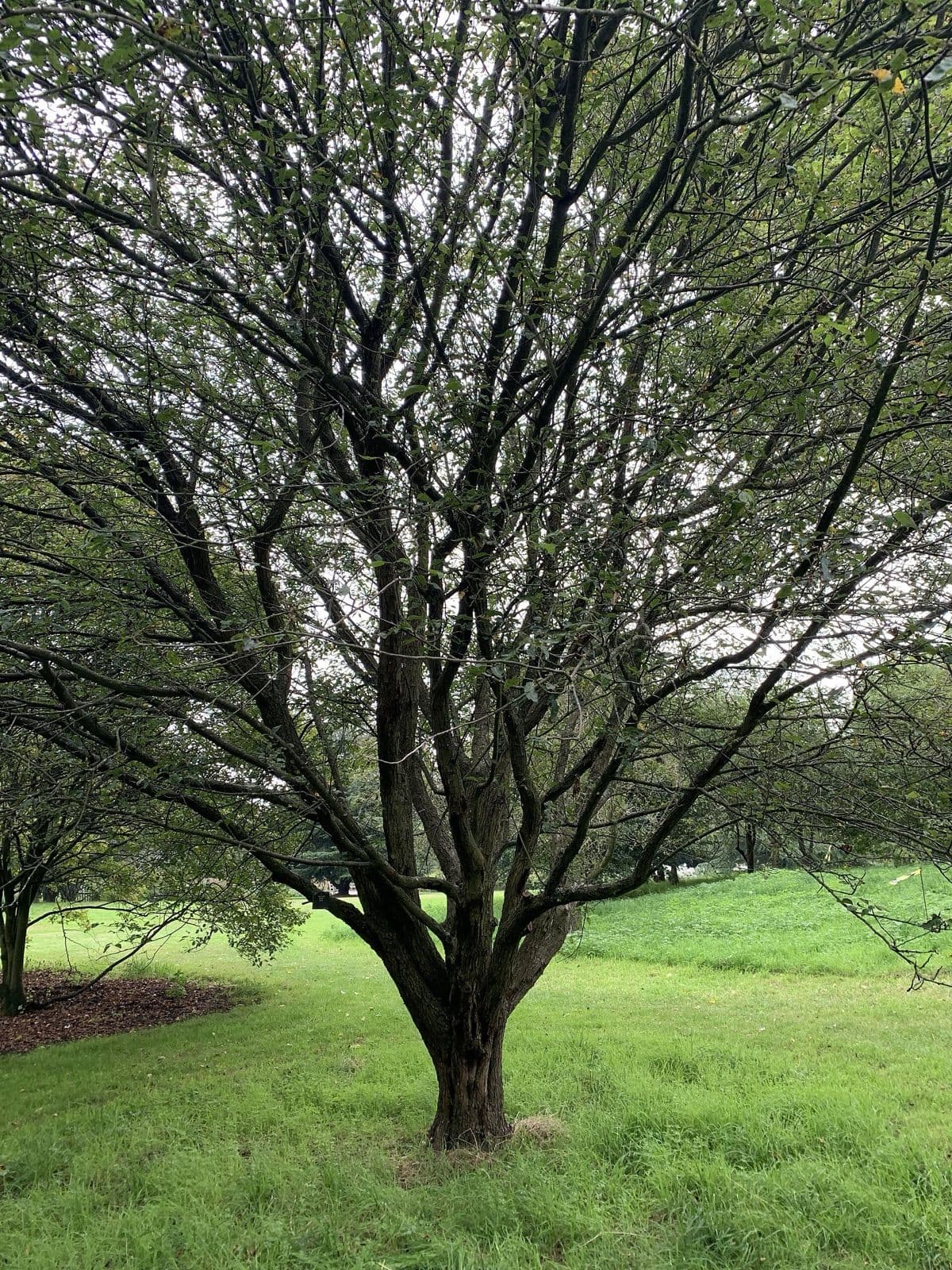
Malus fusca is the only crabapple native to western North America, ranging from southern Alaska to northern California. It grows naturally along stream banks, wetland margins, and forest edges, making it one of the few small native trees adapted to seasonally saturated soils. Gardeners tackling rain gardens, riparian restoration, or Pacific Northwest native plantings will find few comparable native trees at this scale.
The species reaches 10–30 ft and can be grown as a single-trunk tree or multi-stemmed large shrub depending on whether suckers are managed. It produces white to pale pink clusters of blossoms in spring followed by small red or yellow-red fruits that ripen late summer to fall. Fruit persists well into winter and is a critical food source for birds, bears, deer, and other wildlife. Sucker management is recommended when a tree form is desired; left unchecked, it spreads into a dense thicket. Prefers slightly acidic soil and performs well without supplemental fertilizer once established.
Coastal Indigenous peoples including Haida, Tlingit, and Salish groups ate the fruit fresh, dried, or preserved in grease. Bark preparations were used internally for digestive complaints and applied externally to wounds. The hard, dense wood was fashioned into tool handles, digging sticks, and other implements.
Ecoregions:Northwestern Forested MountainsMarine West Coast Forest
Fire Blight
Water-soaked, wilting blossoms and young stems that rapidly turn brown to black. Infected shoot tips curl into a characteristic shepherd's crook. Bark beneath the infection may show reddish-brown discoloration.
Prune infected wood 8–12 inches below visible symptoms during dry weather. Sterilize tools with 70% isopropyl alcohol or a 10% bleach solution between cuts. Avoid high-nitrogen fertilizers that produce soft, disease-susceptible growth. Copper-based bactericides applied at early flowering can reduce spread in high-pressure years.
Apple Scab
Olive-green to brown velvety spots appear on leaf upper surfaces; infected leaves curl, yellow, and drop prematurely. Fruit develops raised, dark, corky lesions that crack as the apple expands; heavily infected fruit is stunted and misshapen. Severe spring infections can defoliate a tree by midsummer.
Rake and destroy all fallen leaves each autumn to eliminate the overwintering ascospore source. Apply fungicide beginning at green-tip stage and repeat every 7–14 days through petal fall - timing to wet periods is critical because primary infection follows spring rain events when spores are released from leaf litter. Captan, myclobutanil, and copper-based products are commonly used. Avoid overhead irrigation. Where scab pressure is consistently high, plant a scab-resistant pollinizer variety alongside Honeycrisp.
Cedar-Apple Rust
Hard, reddish-brown galls up to 2 inches in diameter form on twigs and small branches. During warm, wet spring weather, galls swell and produce bright orange, gelatinous, finger-like telial horns up to 1 inch long. Repeated infections weaken individual branches. On alternate hosts (apple, crabapple), the disease causes yellow to orange leaf spots, premature defoliation, and distorted fruit.
Prune and bag galls before telial horns emerge in spring; do not compost removed material. Apply a preventive fungicide - myclobutanil or propiconazole - to high-value apple or crabapple hosts nearby during the spring spore release window. Where feasible, avoid siting Juniperus virginiana within several hundred feet of apple orchards. Choosing rust-resistant apple and crabapple cultivars breaks the disease cycle more reliably than chemical control alone.
Powdery mildew
White or grey powdery coating on leaves - usually starting on older growth in humid conditions or when nights cool.
Improve air circulation by thinning plants. Apply neem oil or potassium bicarbonate spray at first sign. Avoid overhead watering.
Fungal leaf spot
Brown or purplish spots on the leaves, often ringed with a yellow halo, that spread and merge in warm, humid, or wet weather; heavily spotted leaves yellow and drop early.
Pick off spotted leaves and clear fallen debris to remove overwintering spores. Improve air circulation by thinning, and water at the base so foliage dries quickly. If it persists, apply a copper- or sulfur-based fungicide at the first sign.