
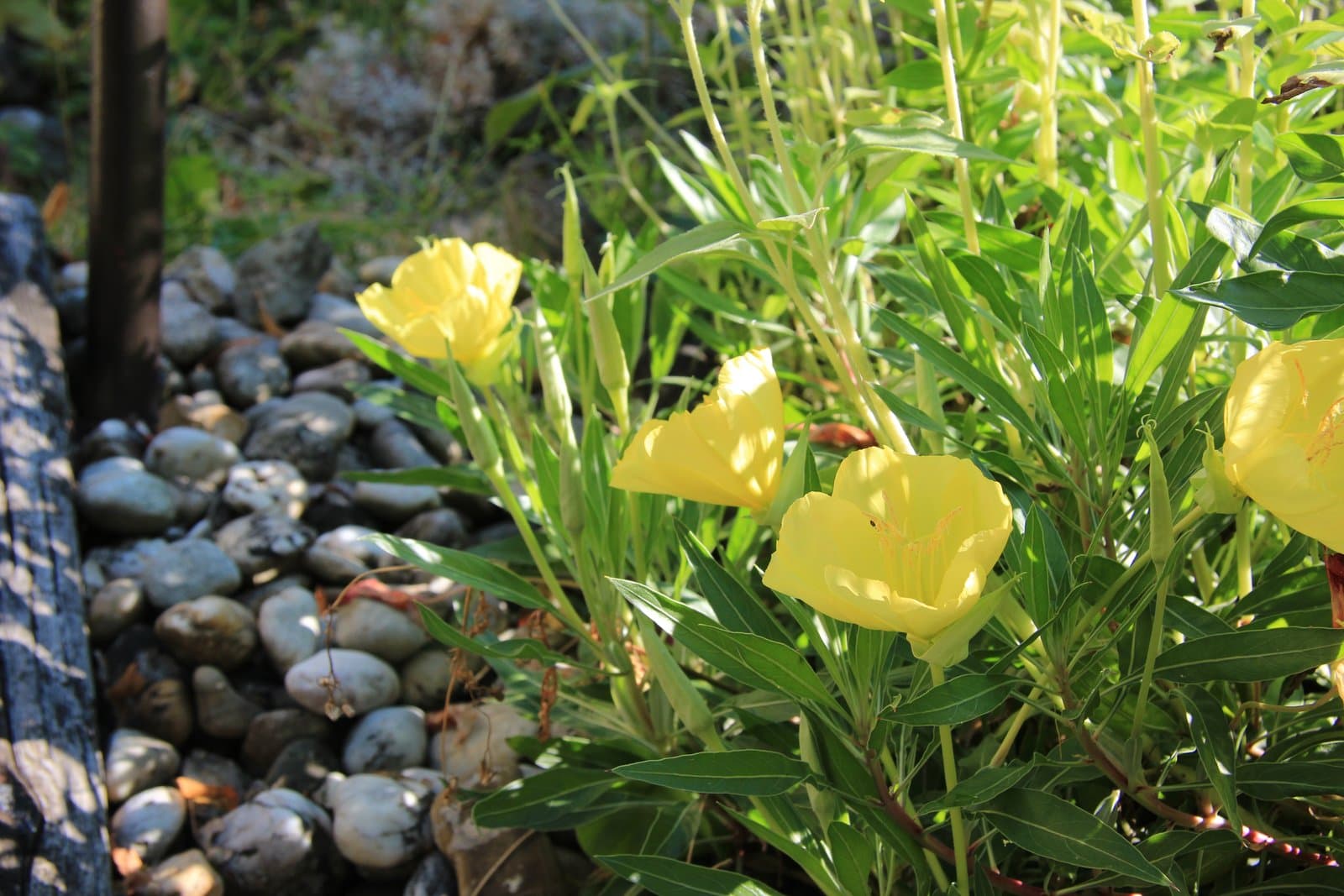
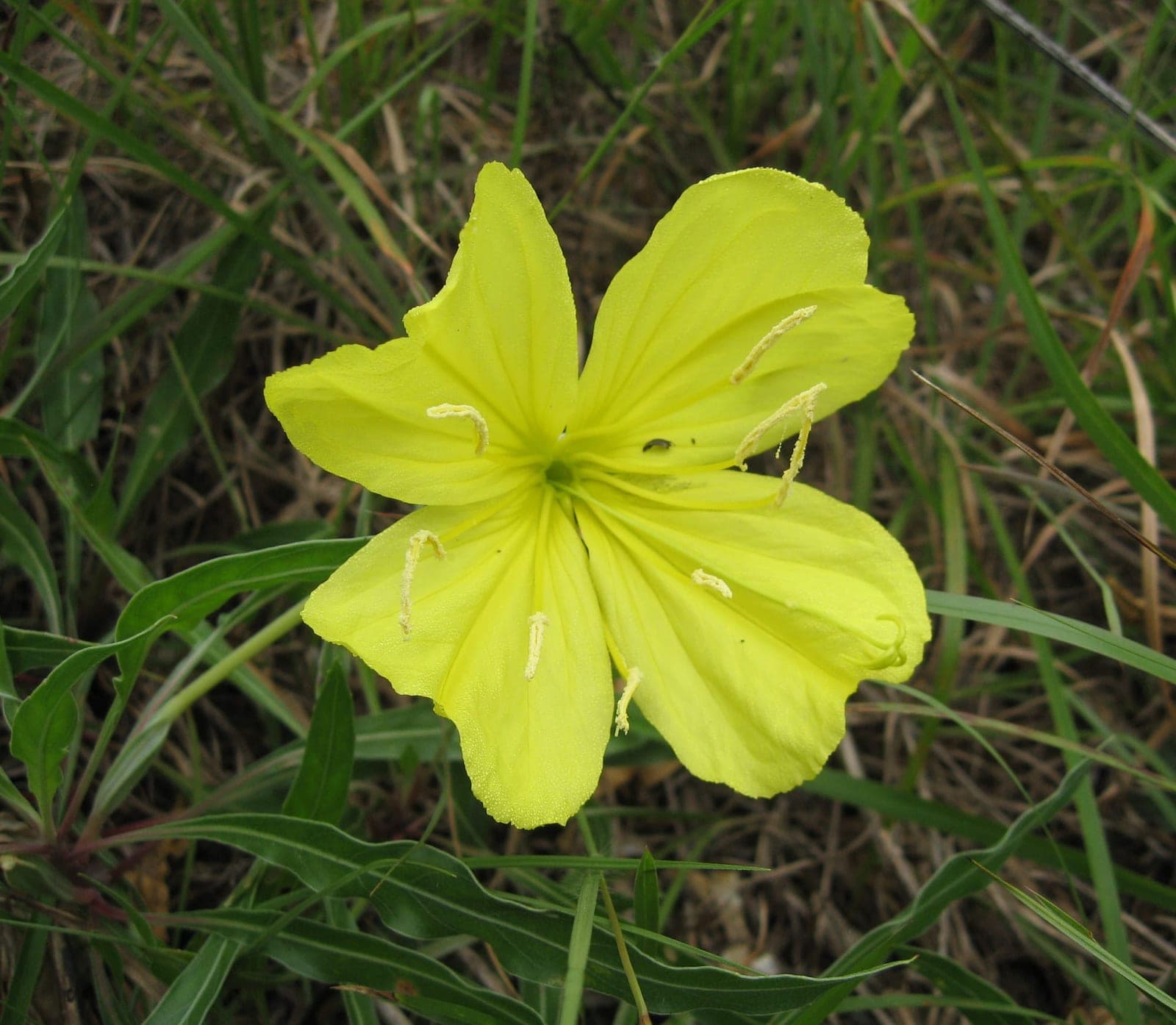
Oenothera macrocarpa is a low-growing native perennial found on calcareous prairies and limestone outcrops across the south-central United States and northeastern Mexico. Its flowers are disproportionately large for the plant's size - lemon-yellow, up to 5 inches across - opening in the late afternoon and closing by the following morning. The winged seedpods that develop through summer and fall add ornamental interest beyond the flowering period, and the trailing stems stay compact, rarely exceeding a foot in height.
Sharp drainage is the primary requirement. The plant is native to thin, rocky, alkaline soils and performs best with little fertility and minimal supplemental irrigation once established. Rich or moisture-retentive soil promotes rank foliage, reduced flowering, and high susceptibility to crown rot. Mulch should not be piled over the crown. Neutral to mildly alkaline pH suits it well; plants spread slowly from a woody crown and taproot and are not aggressively invasive.
Comanche people within the plant's native range used the roots as a cooked food source.
Ecoregions:Eastern Temperate ForestsGreat Plains
Crown Rot
Lower leaves yellow and wilt; the base of the rosette turns brown and soft, sometimes with white fungal threads at the soil line. Plants collapse in wet conditions.
Remove and destroy affected plants. Improve drainage and avoid overhead watering. Do not mulch directly against the crown. Space plants for airflow and avoid replanting in the same wet spot.
Root rot
Plants wilt, yellow, and stunt even in moist soil; lower stems and roots turn brown, soft, and mushy and the plant may collapse. Most common in heavy, wet, or poorly drained ground.
Improve drainage and stop overwatering, and never plant too deep. Lift and destroy badly affected plants along with the soil around the roots. Grow in raised or free-draining beds to prevent it returning.
Fungal leaf spot
Brown or purplish spots on the leaves, often ringed with a yellow halo, that spread and merge in warm, humid, or wet weather; heavily spotted leaves yellow and drop early.
Pick off spotted leaves and clear fallen debris to remove overwintering spores. Improve air circulation by thinning, and water at the base so foliage dries quickly. If it persists, apply a copper- or sulfur-based fungicide at the first sign.