
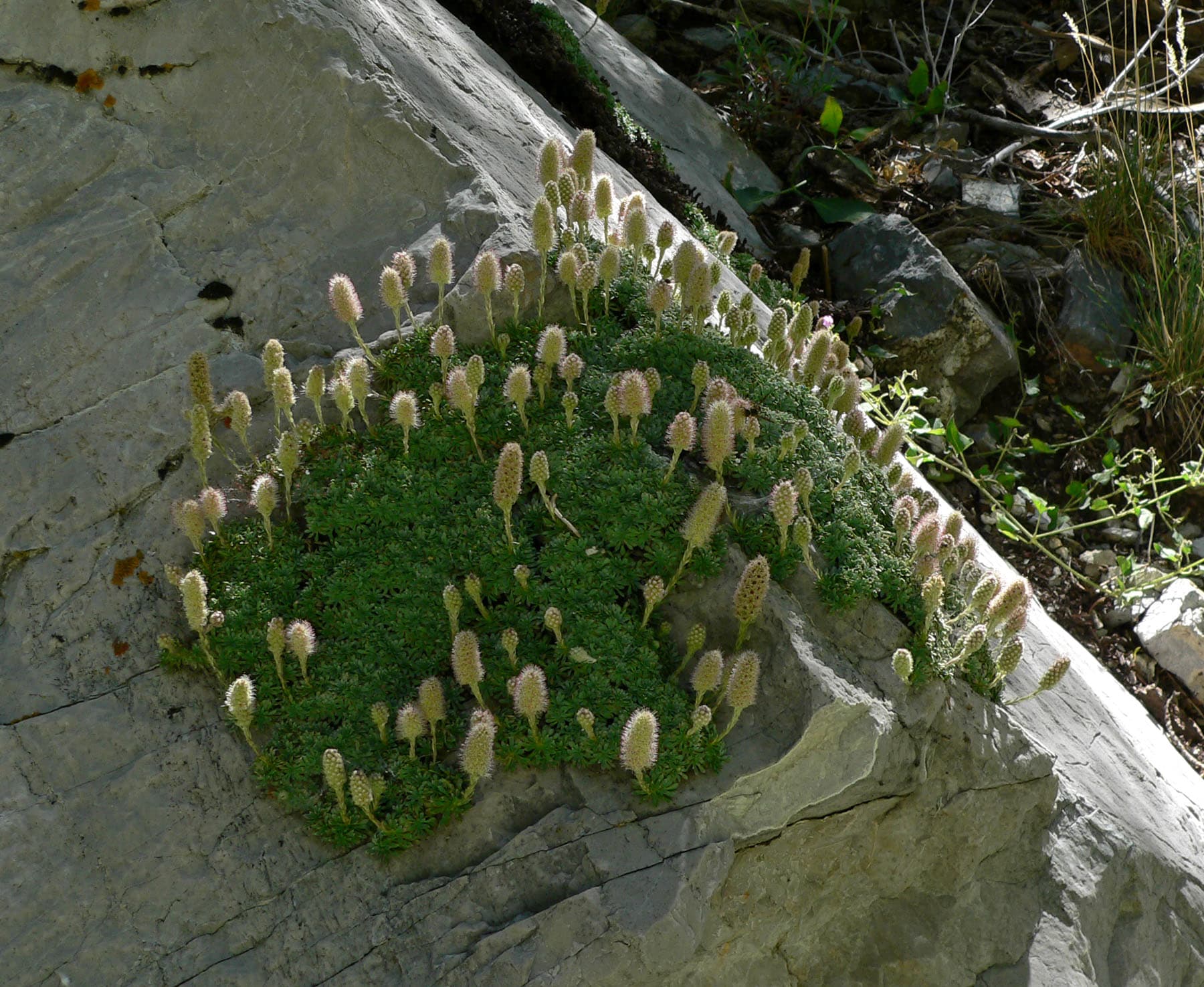
Mat rock spiraea is a low, woody, mat-forming subshrub in the rose family, native to cliff faces, talus slopes, and rocky outcrops across the western United States. It forms dense cushions of small gray-green leaves and produces short, tight clusters of tiny white flowers in summer. Slow-growing and long-lived, it fills a specialized niche in crevice gardens, dry rock walls, and exposed slopes where few woody plants survive.
Sharp drainage is non-negotiable. In the wild, this species colonizes limestone and sandstone ledges where soil is minimal and water moves away almost instantly. In cultivation it requires gritty or gravelly substrate; clay or moisture-retentive soil leads to crown rot. Once established it is essentially self-sufficient, tolerating severe drought, thin soils, and temperature extremes typical of montane and semi-arid zones. Avoid mulching over the crown, and do not amend planting soil with organic matter that retains moisture.
Ecoregions:Northwestern Forested MountainsNorth American DesertsTemperate Sierras
Root rot
Plants wilt, yellow, and stunt even in moist soil; lower stems and roots turn brown, soft, and mushy and the plant may collapse. Most common in heavy, wet, or poorly drained ground.
Improve drainage and stop overwatering, and never plant too deep. Lift and destroy badly affected plants along with the soil around the roots. Grow in raised or free-draining beds to prevent it returning.
Powdery mildew
White or grey powdery coating on leaves - usually starting on older growth in humid conditions or when nights cool.
Improve air circulation by thinning plants. Apply neem oil or potassium bicarbonate spray at first sign. Avoid overhead watering.