
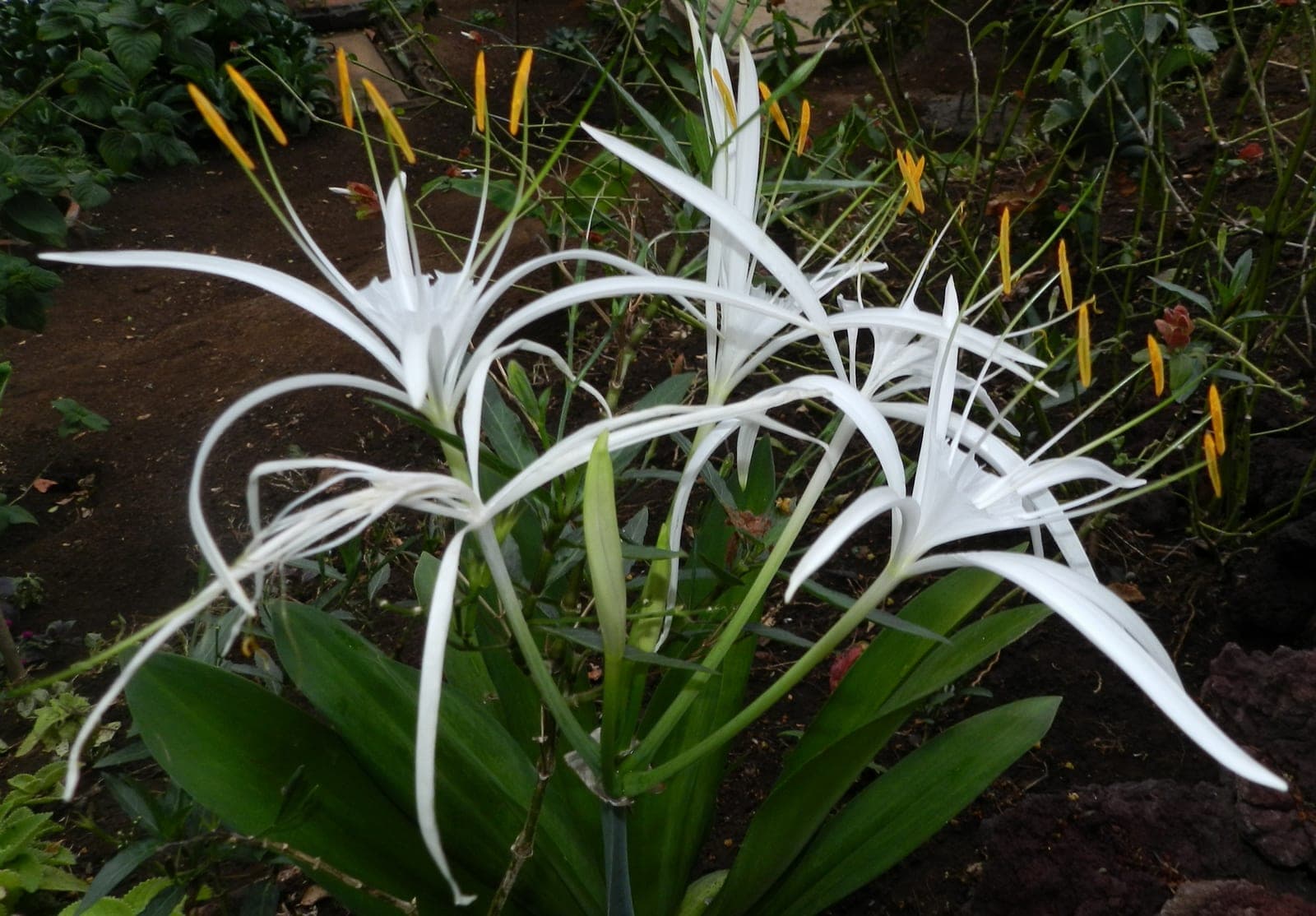
Hymenocallis latifolia is a coastal perennial bulb native to beaches, sand dunes, and mangrove swamps in Florida, Mexico, and the West Indies. It produces large, fragrant white flowers with a spidery fringe surrounding a cup-shaped central corona, making it one of the more striking bulbs adapted to tropical coastal conditions.
The plant tolerates sandy, saline, and periodically flooded soils where most ornamentals fail, which gives it practical value in rain gardens, coastal edges, and low-lying spots. It spreads by offsets and forms dense clumps over time. In zone 9 foliage may die back after a freeze but the bulbs typically survive and resprout in spring. In zones 10–11 it grows year-round. Even in naturally wet sites, standing water held against the crown for extended periods promotes rot, so sites with some tidal or storm drainage movement are preferable to stagnant pools.
Like other Hymenocallis species, this plant concentrates lycorine and related alkaloids in the bulb. Alkaloids isolated from closely related species, including pancratistatin analogues, have been studied in laboratory settings for cytotoxic activity against cancer cell lines. The bulbs are toxic to humans and animals if ingested.
Crown Rot
Lower leaves yellow and wilt; the base of the rosette turns brown and soft, sometimes with white fungal threads at the soil line. Plants collapse in wet conditions.
Remove and destroy affected plants. Improve drainage and avoid overhead watering. Do not mulch directly against the crown. Space plants for airflow and avoid replanting in the same wet spot.
Root rot
Plants wilt, yellow, and stunt even in moist soil; lower stems and roots turn brown, soft, and mushy and the plant may collapse. Most common in heavy, wet, or poorly drained ground.
Improve drainage and stop overwatering, and never plant too deep. Lift and destroy badly affected plants along with the soil around the roots. Grow in raised or free-draining beds to prevent it returning.
Fungal leaf spot
Brown or purplish spots on the leaves, often ringed with a yellow halo, that spread and merge in warm, humid, or wet weather; heavily spotted leaves yellow and drop early.
Pick off spotted leaves and clear fallen debris to remove overwintering spores. Improve air circulation by thinning, and water at the base so foliage dries quickly. If it persists, apply a copper- or sulfur-based fungicide at the first sign.