
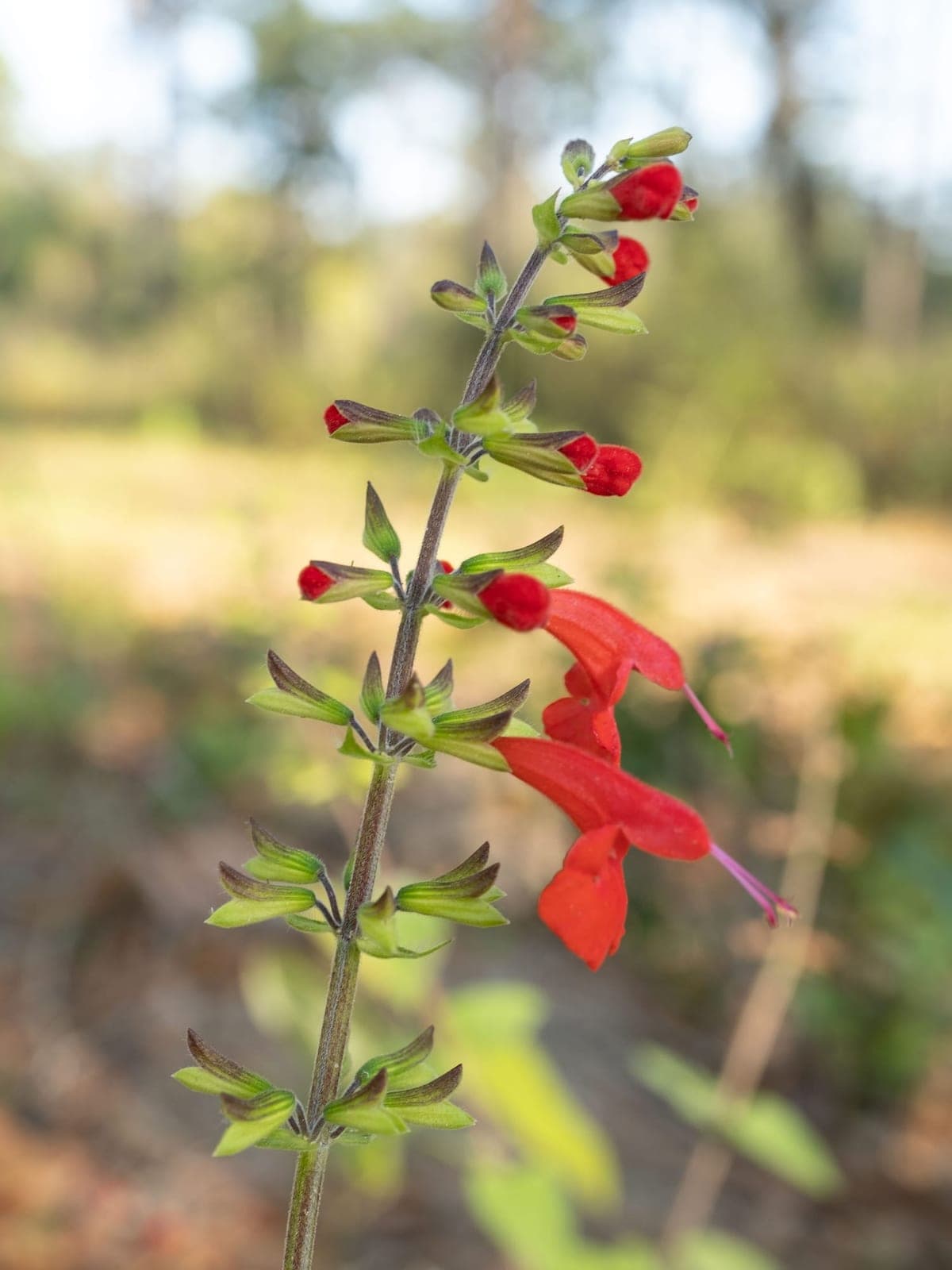
Salvia coccinea is a herbaceous perennial native to the southeastern United States, Mexico, Central America, the Caribbean, and northern South America. Upright stems carry whorled tubular red flowers from late spring through frost, and the species is widely grown as a warm-season annual in zones below 8. Several cultivars extend the color range to pink and white.
Plants establish quickly and become drought tolerant once rooted. In the Deep South, light afternoon shade reduces leaf scorch and prolongs the blooming period. Salvia coccinea self-seeds prolifically in warm climates, forming naturalized colonies with little intervention. In zones 8–9, top growth dies after frost but the root crown typically resprouts in spring.
The flowers are a reliable nectar source for hummingbirds, sphinx moths, and long-tongued native bees. Leaf preparations have been used in Mexican traditional medicine to reduce fever.
Ecoregions:Eastern Temperate ForestsGreat PlainsTropical Wet Forests
Powdery mildew
White or grey powdery coating on leaves - usually starting on older growth in humid conditions or when nights cool.
Improve air circulation by thinning plants. Apply neem oil or potassium bicarbonate spray at first sign. Avoid overhead watering.
Root rot
Plants wilt, yellow, and stunt even in moist soil; lower stems and roots turn brown, soft, and mushy and the plant may collapse. Most common in heavy, wet, or poorly drained ground.
Improve drainage and stop overwatering, and never plant too deep. Lift and destroy badly affected plants along with the soil around the roots. Grow in raised or free-draining beds to prevent it returning.
Damping Off
Seedlings collapse at the soil line with thin, water-soaked stems; seeds may fail to emerge or rot before sprouting.
Sow in well-draining mix, avoid overwatering, and ensure good airflow. Remove affected seedlings and let the surface dry between waterings.