
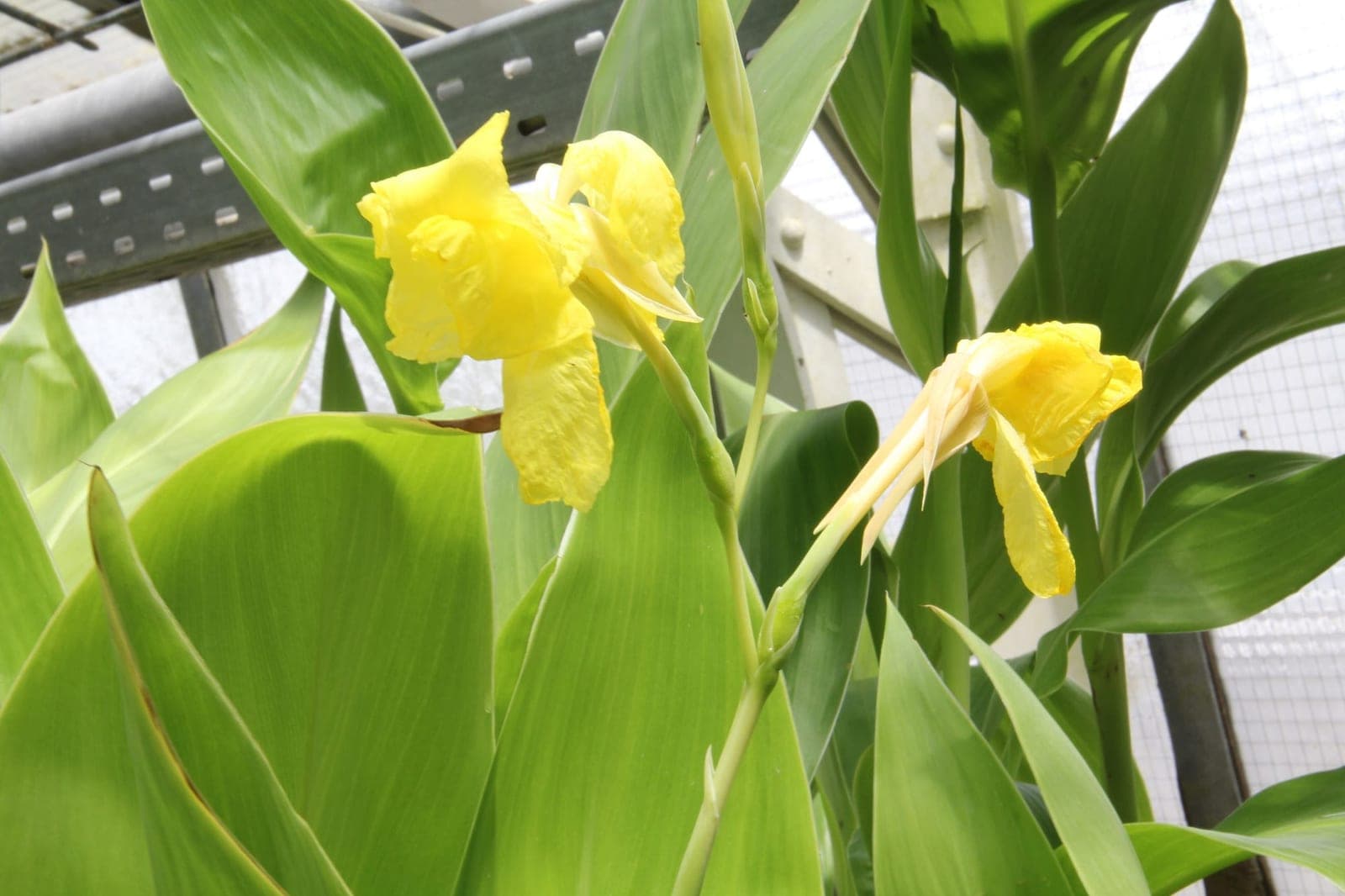
Canna flaccida is a native North American wetland perennial, sometimes called the bandanna of the Everglades, ranging from Texas to South Carolina. It is one of the few Canna species indigenous to the United States and one of the most ecologically appropriate choices for gardeners developing rain gardens, pond margins, or boggy ground.
The plant spreads by fleshy rhizomes and tolerates extended periods of standing water. Planting in saturated or shallow-water margins suits it better than standard border soil. In zones 7b and 8, rhizomes should be mulched heavily after the first frost or lifted and stored frost-free over winter; from zone 9 southward the plant persists year-round without intervention.
Canna flaccida is the primary larval host for the Brazilian skipper butterfly (Calpodes ethlius) throughout its native range. It also holds direct historical importance in horticulture, having been crossed with Canna indica in the 19th century to produce the large-flowered hybrid cannas now dominant in the ornamental trade worldwide.
Rust
Orange to brown raised pustules on the undersides of leaves, with yellow spotting on the upper surface. Heavy infections cause leaves to yellow and drop.
Remove and destroy infected leaves. Avoid overhead watering and improve air circulation. Apply a sulfur or copper-based fungicide if it spreads. Clear plant debris in fall.
Bacterial Soft Rot
Rhizomes turn mushy and foul-smelling; foliage yellows and pulls away easily at the base. Often follows borer damage or overly wet soil.
Cut away all soft tissue back to firm rhizome, let it dry, and dust the cut with sulfur. Improve drainage and avoid burying rhizomes. Destroy badly infected plants.
Mosaic virus
Yellowing, mottled, or distorted leaves. No cure - spread by aphids.
Remove and destroy infected plants. Control aphid populations to prevent spread. Do not propagate from infected tubers.
Botrytis (grey mould)
Grey fuzzy mould on petals and stems, worst in cool wet conditions.
Remove affected parts immediately. Improve air circulation. Avoid overhead watering. Apply copper fungicide if severe.
Crown Rot
Lower leaves yellow and wilt; the base of the rosette turns brown and soft, sometimes with white fungal threads at the soil line. Plants collapse in wet conditions.
Remove and destroy affected plants. Improve drainage and avoid overhead watering. Do not mulch directly against the crown. Space plants for airflow and avoid replanting in the same wet spot.