
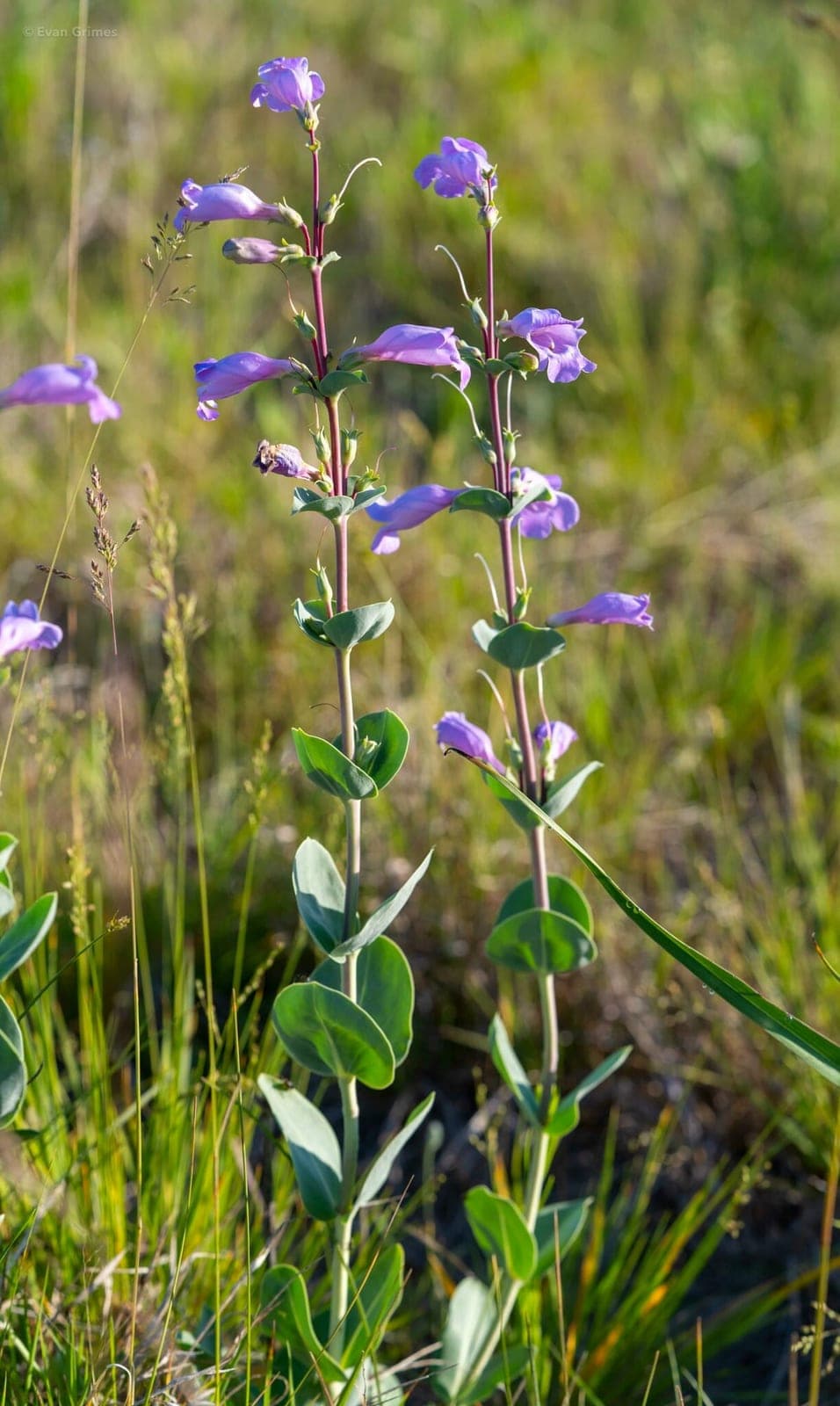
Penstemon grandiflorus is a native perennial of the North American Great Plains, producing large tubular flowers in lavender, pink, and white on upright stems in late spring. It is among the showiest species in the genus and well suited to xeriscape, prairie-style, and pollinator gardens.
It is short-lived, typically persisting 2–3 years, but self-seeds reliably in suitable conditions. Sharp drainage is essential; consistently moist or fertile soils cause crown rot and shorten plant life. Sandy or gravelly loam with lean fertility is ideal. Plants are highly drought tolerant once established and rarely need supplemental irrigation.
The large tubular flowers are heavily visited by bumblebees and hummingbirds. Planting in groups improves self-seeding success and gives the colony the density needed to sustain itself over time.
Ecoregions:Northern ForestsNorthwestern Forested MountainsEastern Temperate ForestsGreat Plains
Crown Rot
Lower leaves yellow and wilt; the base of the rosette turns brown and soft, sometimes with white fungal threads at the soil line. Plants collapse in wet conditions.
Remove and destroy affected plants. Improve drainage and avoid overhead watering. Do not mulch directly against the crown. Space plants for airflow and avoid replanting in the same wet spot.
Root rot
Plants wilt, yellow, and stunt even in moist soil; lower stems and roots turn brown, soft, and mushy and the plant may collapse. Most common in heavy, wet, or poorly drained ground.
Improve drainage and stop overwatering, and never plant too deep. Lift and destroy badly affected plants along with the soil around the roots. Grow in raised or free-draining beds to prevent it returning.
Powdery mildew
White or grey powdery coating on leaves - usually starting on older growth in humid conditions or when nights cool.
Improve air circulation by thinning plants. Apply neem oil or potassium bicarbonate spray at first sign. Avoid overhead watering.
Fungal leaf spot
Brown or purplish spots on the leaves, often ringed with a yellow halo, that spread and merge in warm, humid, or wet weather; heavily spotted leaves yellow and drop early.
Pick off spotted leaves and clear fallen debris to remove overwintering spores. Improve air circulation by thinning, and water at the base so foliage dries quickly. If it persists, apply a copper- or sulfur-based fungicide at the first sign.