
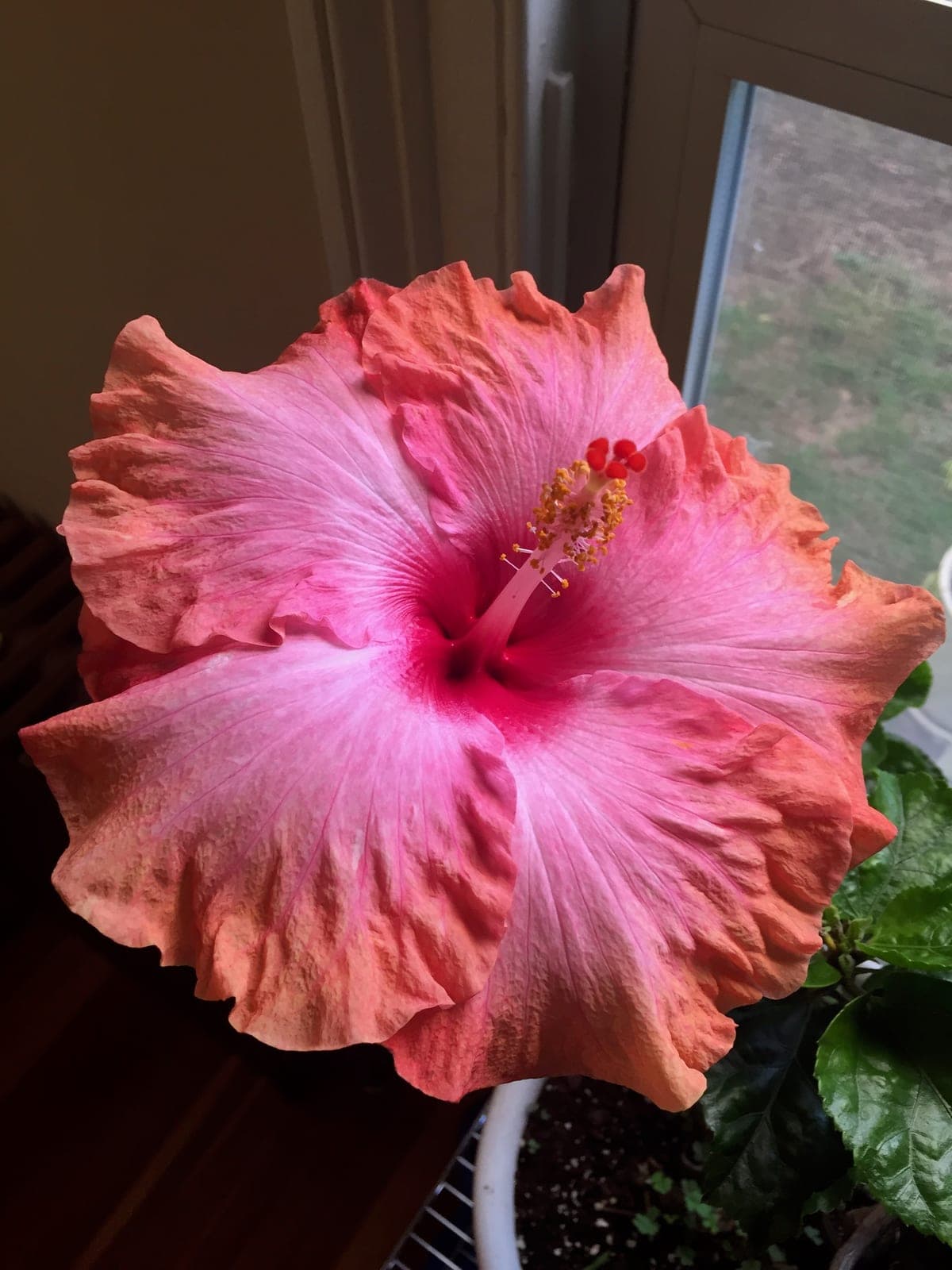
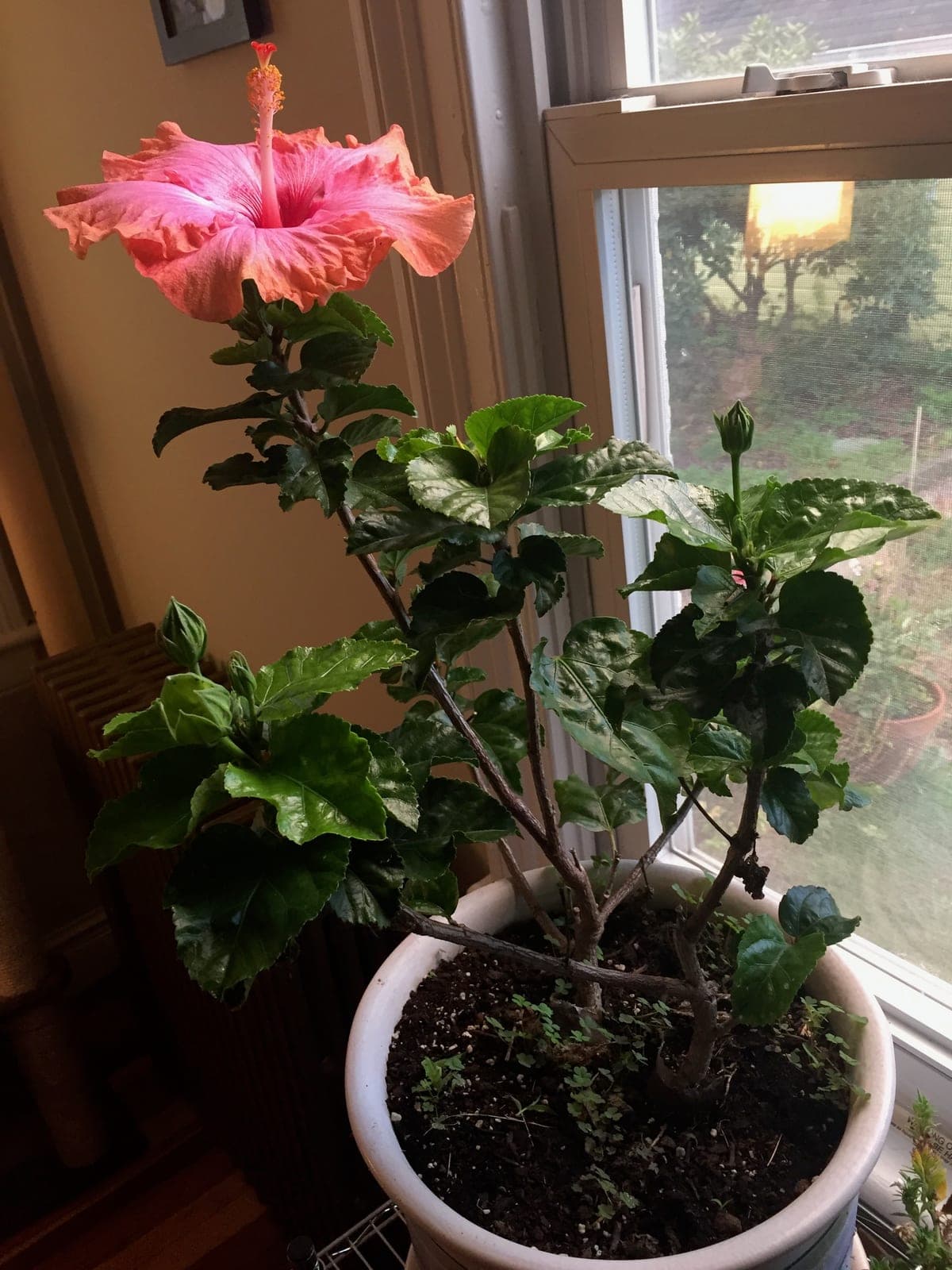
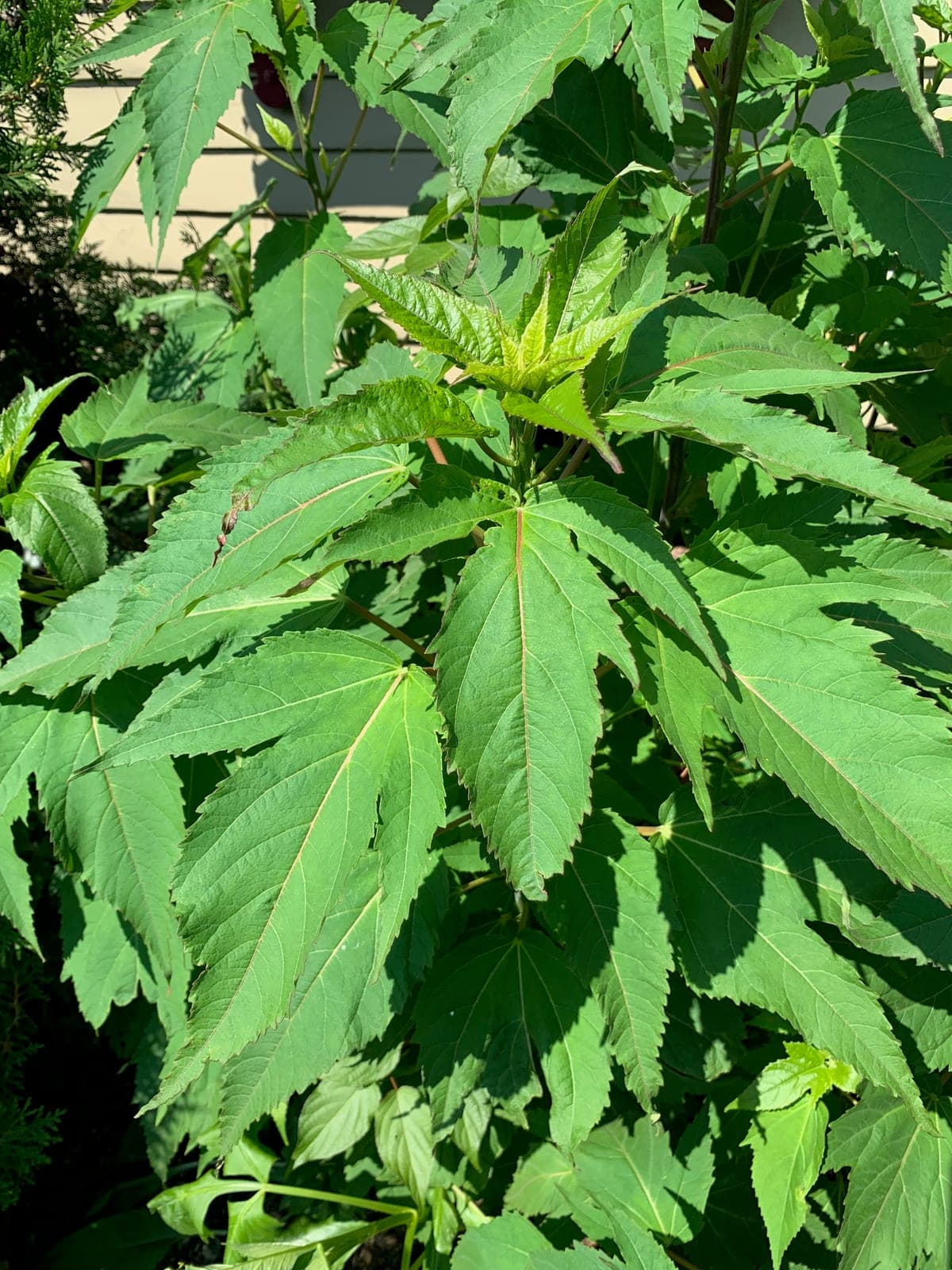
Hibiscus moscheutos 'Disco Belle Rose Pink' is a compact cultivar of the native swamp rose mallow, a hardy herbaceous perennial from eastern North American wetlands and stream margins. It produces flowers up to 10 inches across in clear rose-pink with a deep red eye - among the largest single-season flowers of any perennial in its hardiness range - despite being fully root-hardy well into cold climates.
This cultivar is notably late to emerge in spring, often not showing growth until soil temperatures reach 60°F or above, so mark crown locations in fall to avoid disturbing dormant roots. Once growth begins, plants develop rapidly and flower from midsummer through frost. Tolerance for periodically saturated soil makes it well-suited to rain gardens and pond margins. A thick mulch layer retains moisture and insulates crowns in zones 4–5. Monthly balanced fertilization during active growth substantially improves production. Bud drop occurs when soil dries out during bud development, so consistent soil moisture is critical through the flowering period.
Flowers and young leaves are edible, with a mild flavor and mucilaginous texture similar to okra. Native American groups used root preparations as a poultice and as a demulcent for coughs and throat irritation, consistent with the mucilage-rich character shared across the mallow family.
Ecoregions:Eastern Temperate ForestsGreat Plains
Fungal leaf spot
Brown or purplish spots on the leaves, often ringed with a yellow halo, that spread and merge in warm, humid, or wet weather; heavily spotted leaves yellow and drop early.
Pick off spotted leaves and clear fallen debris to remove overwintering spores. Improve air circulation by thinning, and water at the base so foliage dries quickly. If it persists, apply a copper- or sulfur-based fungicide at the first sign.
Root rot
Plants wilt, yellow, and stunt even in moist soil; lower stems and roots turn brown, soft, and mushy and the plant may collapse. Most common in heavy, wet, or poorly drained ground.
Improve drainage and stop overwatering, and never plant too deep. Lift and destroy badly affected plants along with the soil around the roots. Grow in raised or free-draining beds to prevent it returning.
Powdery mildew
White or grey powdery coating on leaves - usually starting on older growth in humid conditions or when nights cool.
Improve air circulation by thinning plants. Apply neem oil or potassium bicarbonate spray at first sign. Avoid overhead watering.
Rust
Orange to brown raised pustules on the undersides of leaves, with yellow spotting on the upper surface. Heavy infections cause leaves to yellow and drop.
Remove and destroy infected leaves. Avoid overhead watering and improve air circulation. Apply a sulfur or copper-based fungicide if it spreads. Clear plant debris in fall.