
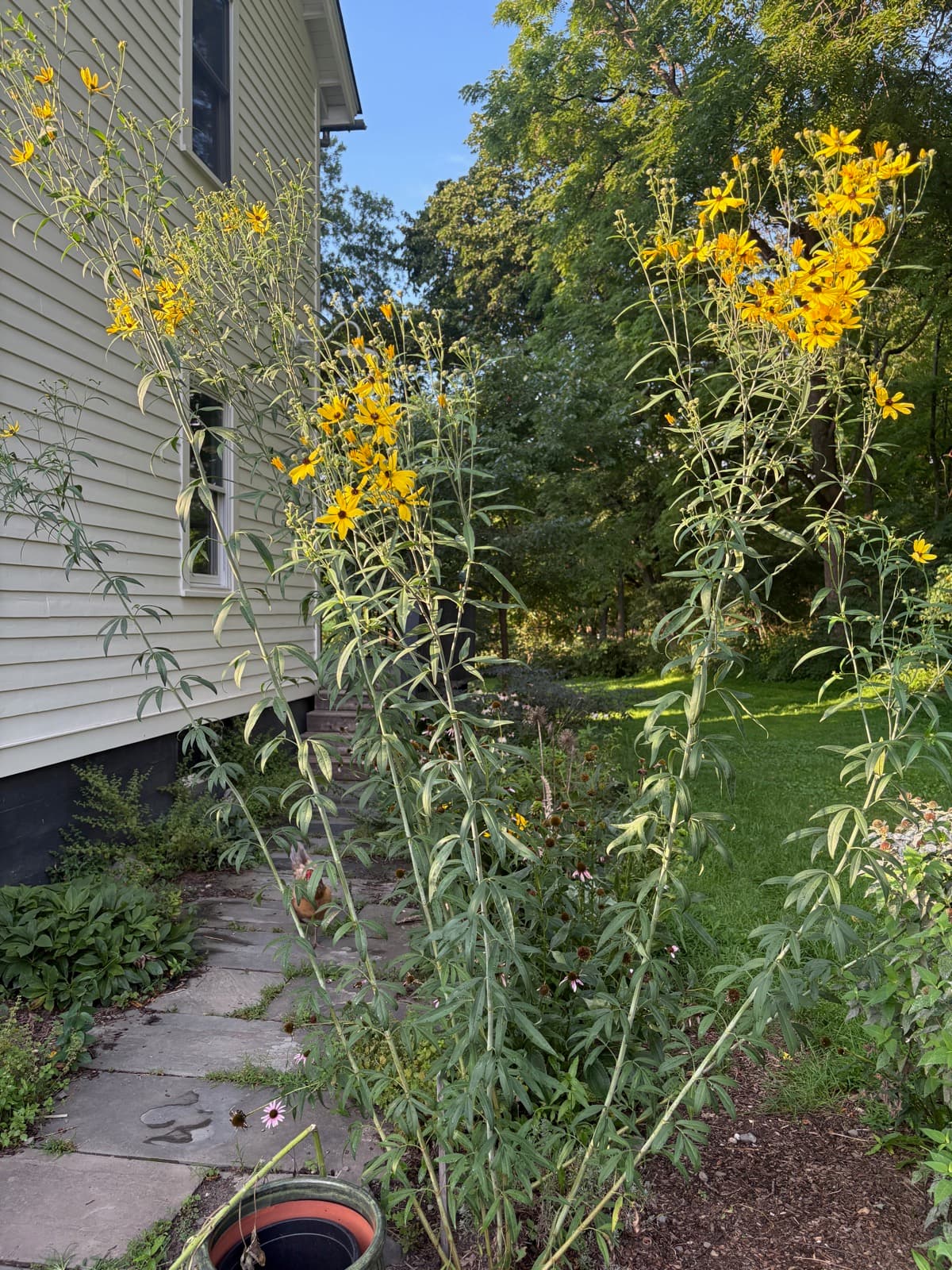
Helianthus salicifolius is a tall perennial native to the Great Plains and Ozark Plateau, grown for its fine-textured, willow-like foliage throughout the season and its prolific display of small yellow flowers in late summer and fall. It fills a critical late-season gap in prairie and naturalistic plantings and works well at the back of a border.
The plant spreads by rhizomes and forms colonies over time; dividing clumps every three to four years keeps growth in check. Cutting stems back by half in early summer reduces flopping and delays flowering slightly. It tolerates drought, poor soils, and clay once established. Prefers neutral to slightly acidic soil. Remove unwanted basal shoots at the soil line to manage spread.
Seeds attract goldfinches and other seed-eating birds from fall through winter. Dense stands provide small-wildlife cover, and the late flowers support migrating monarch butterflies and native bees when few other nectar sources remain.
Ecoregions:Eastern Temperate ForestsGreat Plains
Powdery mildew
White or grey powdery coating on leaves - usually starting on older growth in humid conditions or when nights cool.
Improve air circulation by thinning plants. Apply neem oil or potassium bicarbonate spray at first sign. Avoid overhead watering.
Rust
Orange to brown raised pustules on the undersides of leaves, with yellow spotting on the upper surface. Heavy infections cause leaves to yellow and drop.
Remove and destroy infected leaves. Avoid overhead watering and improve air circulation. Apply a sulfur or copper-based fungicide if it spreads. Clear plant debris in fall.
Fungal leaf spot
Brown or purplish spots on the leaves, often ringed with a yellow halo, that spread and merge in warm, humid, or wet weather; heavily spotted leaves yellow and drop early.
Pick off spotted leaves and clear fallen debris to remove overwintering spores. Improve air circulation by thinning, and water at the base so foliage dries quickly. If it persists, apply a copper- or sulfur-based fungicide at the first sign.
Sclerotinia Head Rot
Soft brown rot on the back of the flower head, white fungal growth, and hard black bodies inside; stems may wilt and collapse.
Remove and destroy infected heads and stems. Avoid overhead watering and crowding. Rotate away from sunflowers and other susceptible crops for several years.
Verticillium Wilt
Lower leaves yellow and wilt, often on one side of the plant, with brown streaking in the stem and crown tissue when cut open. Plants are stunted and decline over the season.
Remove and destroy affected plants. Avoid planting in soil that has grown infected tomatoes, peppers, or other susceptible crops. Rotate beds and improve drainage; there is no cure once a plant is infected.