
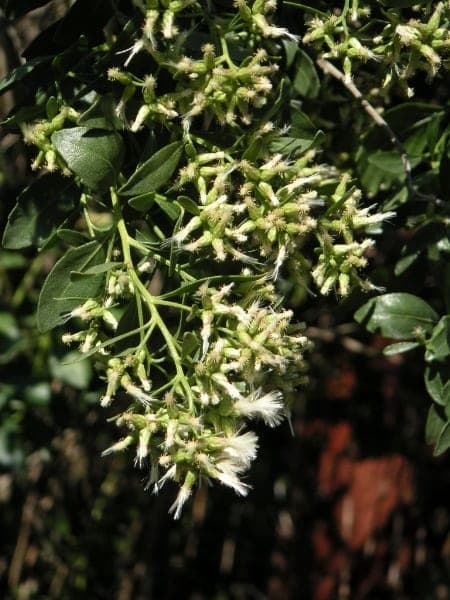
Baccharis halimifolia is a dioecious native North American shrub ranging from Nova Scotia south through the eastern and Gulf Coast states into eastern Mexico and the Caribbean. Female plants produce dense masses of silky white seed heads in fall that persist for several weeks, making this one of the most striking late-season displays of any native shrub. Male plants are far less ornamental; purchase plants while in seed or select named female cultivars to ensure the display.
Groundsel tree thrives in coastal and brackish settings where most landscape shrubs fail - salt spray, periodic flooding, compacted sandy soils, and strong wind are all tolerated. It establishes quickly and requires little supplemental water once rooted. It spreads readily by seed, so removal of volunteers near natural areas is prudent. Hard pruning in late winter controls size and rejuvenates older stems. Tolerates a wide soil pH from slightly acid to slightly alkaline, and performs equally well in dry upland soils or moist to periodically wet lowlands.
As a native shrub, groundsel tree supports specialist native bees and late-season pollinators in late summer and early fall. Birds eat the seeds, and dense branching provides nesting and escape cover. It is a primary choice for coastal restoration and erosion-control plantings on barrier islands, salt marshes, and disturbed shorelines.
Ecoregions:Eastern Temperate ForestsGreat PlainsTropical Wet Forests
Fungal leaf spot
Brown or purplish spots on the leaves, often ringed with a yellow halo, that spread and merge in warm, humid, or wet weather; heavily spotted leaves yellow and drop early.
Pick off spotted leaves and clear fallen debris to remove overwintering spores. Improve air circulation by thinning, and water at the base so foliage dries quickly. If it persists, apply a copper- or sulfur-based fungicide at the first sign.
Root rot
Plants wilt, yellow, and stunt even in moist soil; lower stems and roots turn brown, soft, and mushy and the plant may collapse. Most common in heavy, wet, or poorly drained ground.
Improve drainage and stop overwatering, and never plant too deep. Lift and destroy badly affected plants along with the soil around the roots. Grow in raised or free-draining beds to prevent it returning.