
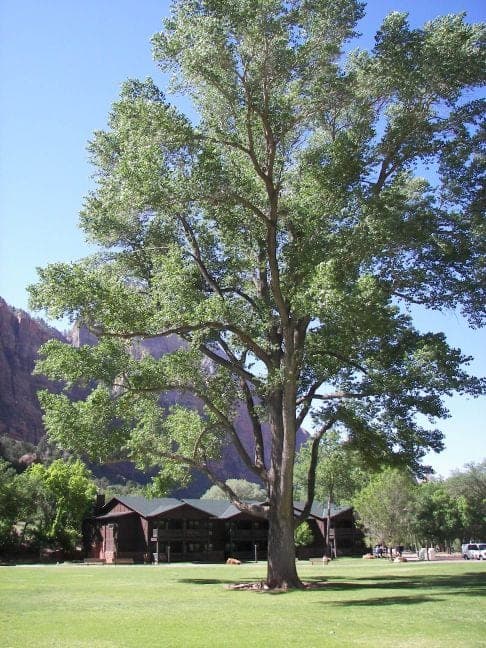
Fremont cottonwood is a large, fast-growing deciduous tree native to riparian corridors of the American Southwest and northern Mexico. It reaches 35–90 feet tall with a broad, spreading crown and ranks among the most ecologically significant trees in arid-region river systems. Gardeners in low-desert and mid-elevation western landscapes value it for rapid canopy establishment, bold triangular foliage, and vivid gold fall color.
In the wild it establishes along streams and rivers, with deep roots accessing permanent groundwater. In cultivation it tolerates average soils with consistent irrigation but performs best near water features or in low areas that collect runoff. Growth is rapid - often 5–8 feet per year when young and well-watered. Root spread is extensive and can damage underground utilities. Female trees release cottony seed in late spring, and root suckers emerge readily and should be removed as they appear. pH tolerance is broad, and the tree accepts clay, sandy loam, or gravelly alluvial soils common to Southwestern floodplains.
Native peoples of the Southwest used the inner bark as an emergency food source and applied resinous spring buds topically for wound care and inflammation. The tree is a keystone species in desert riparian ecosystems: it shades waterways, stabilizes streambanks, and provides nesting sites for raptors, songbirds, and cavity-nesting birds. Restoration ecologists use it to revegetate degraded streamsides throughout the Colorado River drainage and Great Basin.
Ecoregions:Northwestern Forested MountainsNorth American DesertsMediterranean CaliforniaSouthern Semi-Arid HighlandsTemperate Sierras
Cytospora Canker
White or blue-white pitch masses ooze from bark on lower branches and the trunk. Affected branches die back progressively from the tip inward; bark beneath the resin is discolored brown and may have a resinous, sunken appearance.
Prune infected branches well below the canker margin into healthy wood and destroy all cuttings. Sterilize pruning tools with 70% isopropyl alcohol between each cut. No effective fungicide is available; prevent recurrence by avoiding drought stress, soil compaction, and mechanical bark injury.
Fungal leaf spot
Brown or purplish spots on the leaves, often ringed with a yellow halo, that spread and merge in warm, humid, or wet weather; heavily spotted leaves yellow and drop early.
Pick off spotted leaves and clear fallen debris to remove overwintering spores. Improve air circulation by thinning, and water at the base so foliage dries quickly. If it persists, apply a copper- or sulfur-based fungicide at the first sign.
Rust
Orange to brown raised pustules on the undersides of leaves, with yellow spotting on the upper surface. Heavy infections cause leaves to yellow and drop.
Remove and destroy infected leaves. Avoid overhead watering and improve air circulation. Apply a sulfur or copper-based fungicide if it spreads. Clear plant debris in fall.
Armillaria Root Rot
Thinning, yellowing canopy with progressive dieback; white, fan-shaped mycelial mats visible beneath bark at or just below the soil line; honey-colored mushroom clusters appearing at the trunk base or on surface roots in autumn.
No chemical cure exists. Improve drainage and avoid any injury to roots or trunk. Remove severely infected trees along with as much root material as possible. Do not replant susceptible species in the same spot.
Botryosphaeria Canker
Dark, sunken cankers on stems and major branches, most often occurring after drought stress or mechanical wounding. Bark peeled back from affected areas reveals brown, discolored wood beneath. Branch tips wilt and die back progressively inward.
Prune infected branches at least 6 inches below the visible canker margin using sterilized tools, and dispose of all cuttings away from the garden. Reduce plant stress by maintaining consistent irrigation during dry periods and avoiding bark wounds during maintenance. No curative fungicide is available; keeping plants vigorous is the primary preventive strategy.