
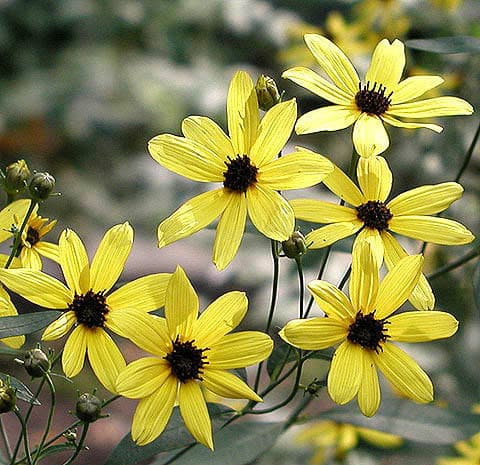
A tall, statuesque native prairie perennial found from Iowa and Kansas east to Pennsylvania and Georgia, tall tickseed sends up slender, mostly unbranched stems that only branch near the top, where they carry bright yellow daisy flowers with a faint chocolate scent from late summer into fall. Its height and airy habit make it a good back-of-border anchor or naturalized meadow planting without ever needing staking.
It's easy in average to poor soil and genuinely drought tolerant once established, asking for very little beyond full sun. Butterflies and other pollinators visit heavily, and deer generally leave it alone. Cutting stems back by half in early summer can produce a shorter, bushier plant if the full 8-foot height isn't wanted.
Ecoregions:Eastern Temperate ForestsGreat Plains
Powdery mildew
White or grey powdery coating on leaves - usually starting on older growth in humid conditions or when nights cool.
Improve air circulation by thinning plants. Apply neem oil or potassium bicarbonate spray at first sign. Avoid overhead watering.