
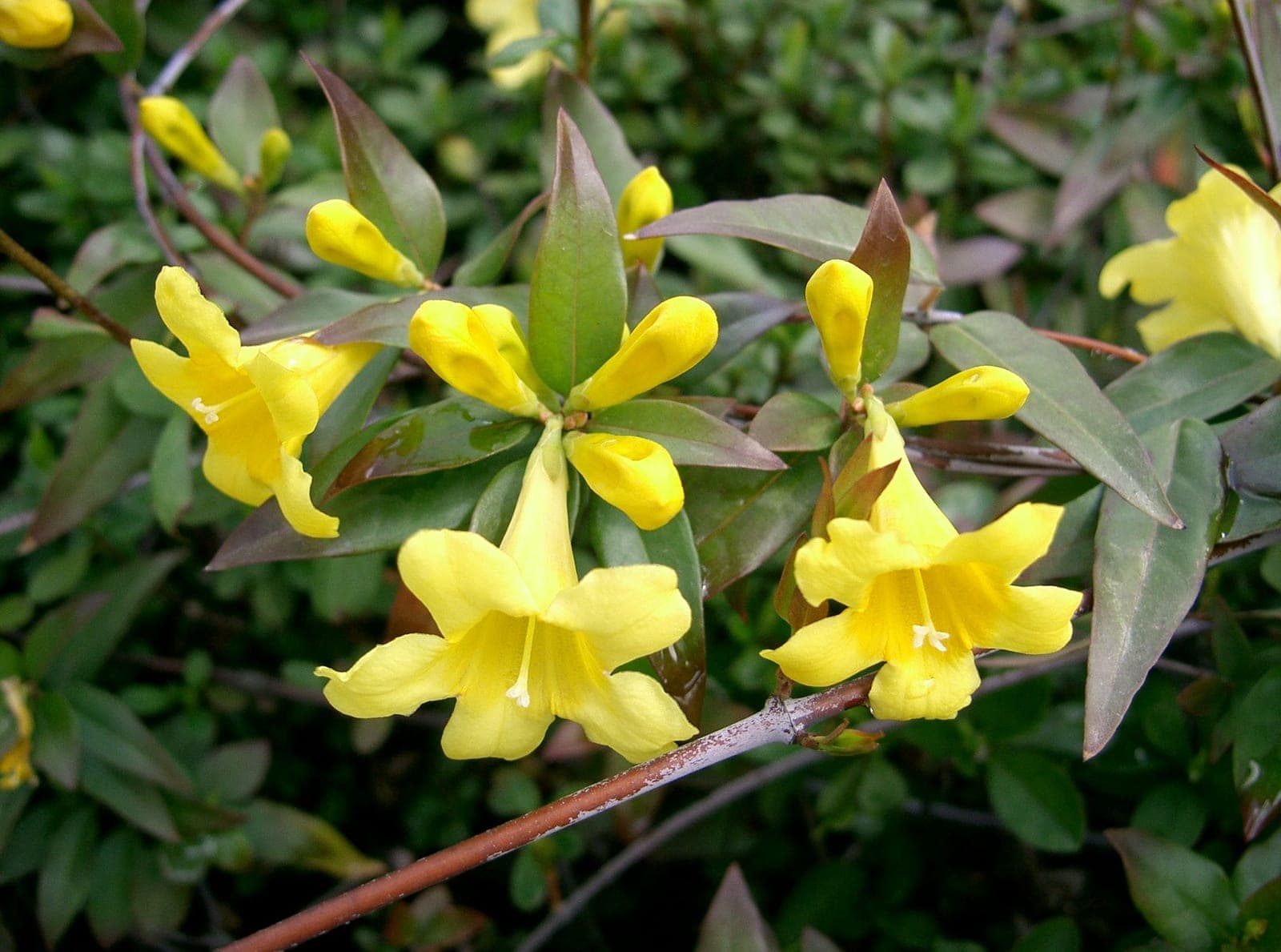
Carolina jessamine (Gelsemium sempervirens) is an evergreen twining vine native to the southeastern United States and subtropical Americas, from Honduras north through Mexico into the Carolinas. It produces fragrant, bright yellow trumpet-shaped flowers from late winter through early spring, often the first woody vine to bloom in its range, and is the state flower of South Carolina. Year-round glossy foliage makes it a practical choice for covering fences, trellises, and arbors.
The vine grows 10–20 feet on any sturdy support, flowering most heavily in full sun but tolerating part shade. It adapts to a range of soils provided drainage is adequate, and in zones 9–10 it may rebloom in fall. In zone 7a it is cold-hardy but benefits from a sheltered south-facing exposure and a layer of mulch at the root zone. All parts of the plant - foliage, flowers, roots, and nectar - are toxic to humans, livestock, and honeybees; site away from areas frequented by children or grazing animals.
Gelsemium alkaloids, chiefly gelsemine and gelseminine, underlie a long history of use as a nervine and febrifuge in traditional Appalachian and homeopathic medicine. Homeopathic preparations are associated with anticipatory anxiety, neuralgia, and influenza-like symptoms. Pharmacological research continues to investigate these alkaloids for analgesic and anxiolytic properties, but the narrow margin between a therapeutic and toxic dose makes self-use dangerous.
Ecoregions:Eastern Temperate ForestsGreat Plains
Fungal leaf spot
Brown or purplish spots on the leaves, often ringed with a yellow halo, that spread and merge in warm, humid, or wet weather; heavily spotted leaves yellow and drop early.
Pick off spotted leaves and clear fallen debris to remove overwintering spores. Improve air circulation by thinning, and water at the base so foliage dries quickly. If it persists, apply a copper- or sulfur-based fungicide at the first sign.
Phytophthora Root Rot
Wilting despite moist soil, yellowing leaves, stunted growth, and dark, decayed roots and crown tissue. Vines may collapse during hot weather.
Plant in well-draining soil and avoid waterlogging. Remove and destroy affected vines. Improve drainage with raised beds or amended soil and avoid overwatering.
Sooty Mold (Scale-Associated)
Black, powdery or crusty coating on upper leaf surfaces and stems. Affected leaves may yellow and drop in severe cases. The mold grows on honeydew secreted by scale insects, mealybugs, or aphids feeding on the plant.
Control the underlying pest infestation first using horticultural oil or neem oil applied thoroughly to stems and leaf undersides. Once pest populations are reduced, sooty mold stops spreading and weathers away over time. Rinse foliage with a strong stream of water to dislodge existing mold deposits.
Powdery mildew
White or grey powdery coating on leaves - usually starting on older growth in humid conditions or when nights cool.
Improve air circulation by thinning plants. Apply neem oil or potassium bicarbonate spray at first sign. Avoid overhead watering.