
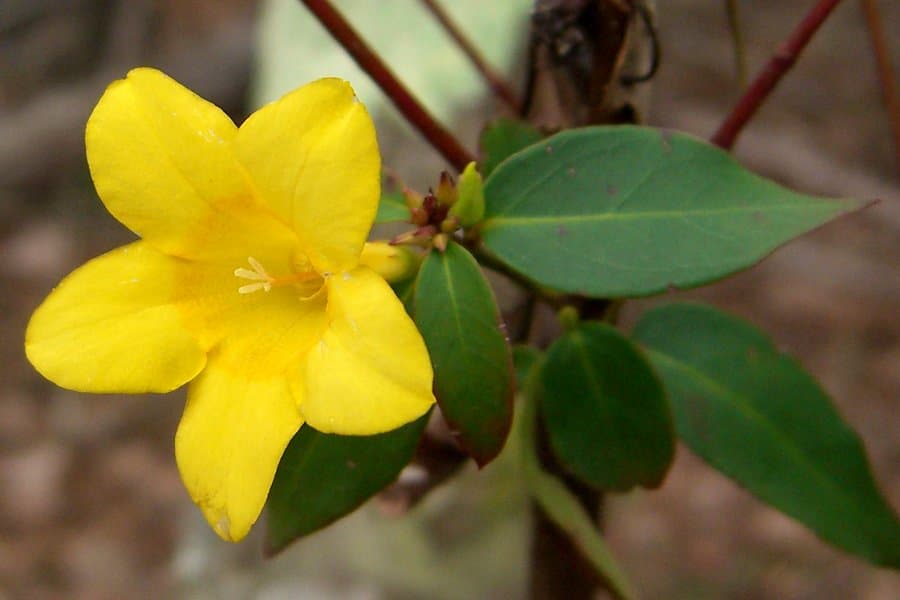
Gelsemium rankinii (Rankin's trumpetflower) is a native twining vine of the southeastern United States, growing wild in swamps, pocosins, and wet woodland margins from Louisiana to the Carolinas. It is closely related to Carolina jessamine (G. sempervirens) but better suited to consistently wet sites and tolerates brief flooding. Gardeners developing rain gardens, bog edges, or moist naturalized areas will find it a useful native alternative to exotic climbing vines.
The vine climbs by twining and typically reaches 10–20 feet with adequate support. It blooms twice - a flush of small yellow trumpet-shaped flowers in early spring and a second flush in fall - extending seasonal interest beyond most comparable vines. Flowers are not fragrant, which immediately distinguishes it from G. sempervirens. It thrives in acidic, humus-rich soil kept consistently moist and responds well to a thick organic mulch layer to retain moisture and buffer root temperatures. Cold-hardiness is slightly below that of Carolina jessamine. It is less available in the general nursery trade; local native plant specialists are the most reliable source.
All parts of the plant contain gelsemine and related strychnine-class alkaloids and are toxic to humans, livestock, and most wildlife. The genus has been studied for analgesic and anxiolytic properties, and G. sempervirens carries a history of use in botanical and homeopathic medicine for headache and neuralgia, but no safe therapeutic application has been established for G. rankinii specifically. Handle plants with care and wash hands after contact.
Ecoregions:Eastern Temperate Forests
Fungal leaf spot
Brown or purplish spots on the leaves, often ringed with a yellow halo, that spread and merge in warm, humid, or wet weather; heavily spotted leaves yellow and drop early.
Pick off spotted leaves and clear fallen debris to remove overwintering spores. Improve air circulation by thinning, and water at the base so foliage dries quickly. If it persists, apply a copper- or sulfur-based fungicide at the first sign.
Phytophthora Root Rot
Wilting despite moist soil, yellowing leaves, stunted growth, and dark, decayed roots and crown tissue. Vines may collapse during hot weather.
Plant in well-draining soil and avoid waterlogging. Remove and destroy affected vines. Improve drainage with raised beds or amended soil and avoid overwatering.
Powdery mildew
White or grey powdery coating on leaves - usually starting on older growth in humid conditions or when nights cool.
Improve air circulation by thinning plants. Apply neem oil or potassium bicarbonate spray at first sign. Avoid overhead watering.