
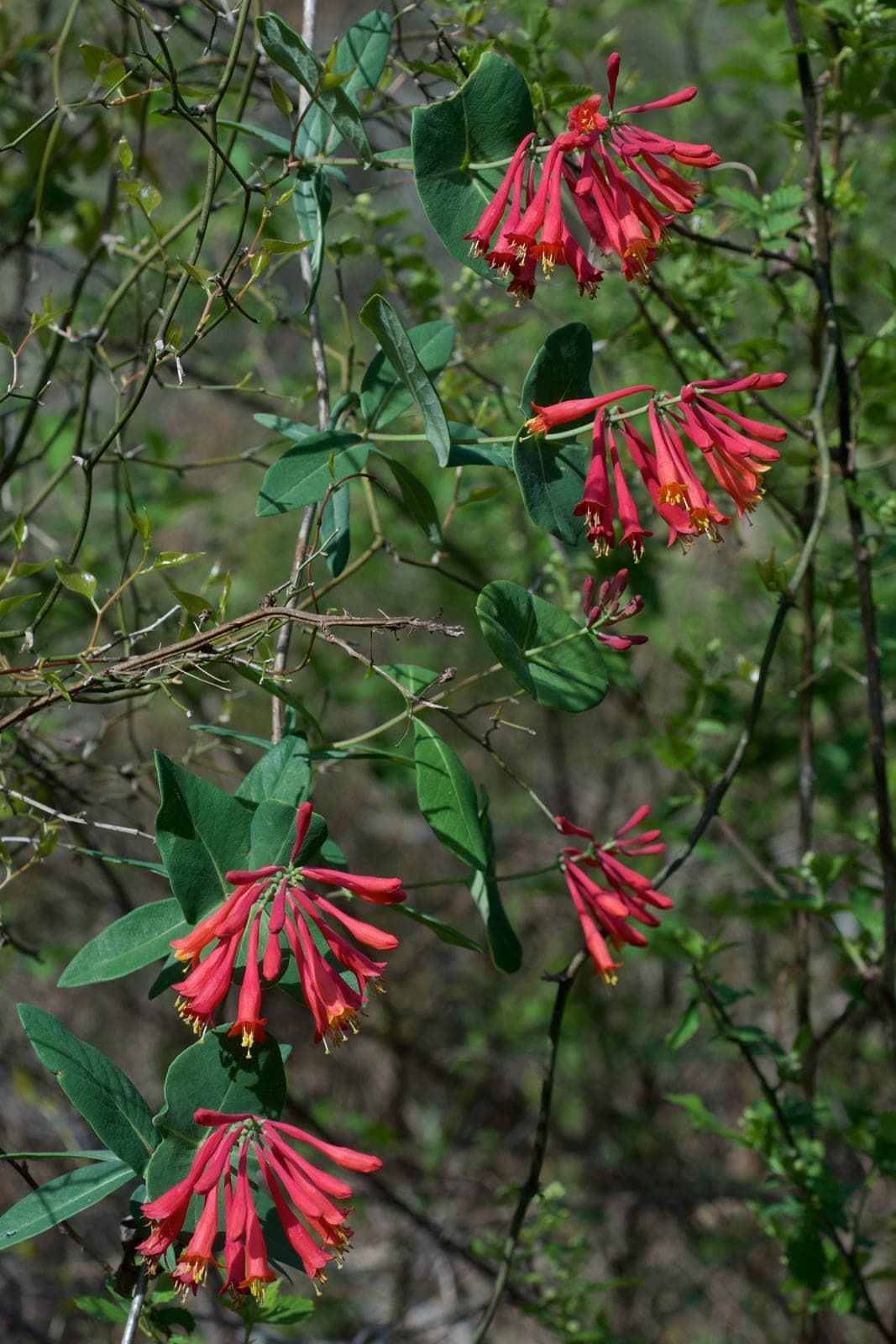
Coral honeysuckle is a twining native vine of the eastern United States, producing tubular red to orange-red flowers from spring into summer. Unlike the invasive Japanese honeysuckle (Lonicera japonica), it is non-aggressive and well-suited to wildlife gardens, native plantings, and mixed borders where vertical interest is needed.
The vine climbs by twining and requires a trellis, fence, or arbor for support. It tolerates a range of soils and becomes moderately drought-tolerant once established. In zones 7 and warmer it tends to be semi-evergreen; in colder zones it drops its leaves fully. Red berries ripen in fall and attract songbirds. A 2–3 inch layer of mulch over the root zone helps retain moisture and extends cold hardiness at the northern edge of its range.
The corolla tube is sized specifically for ruby-throated hummingbird pollinators and is largely inaccessible to most bees, making this vine a near-exclusive hummingbird resource during spring migration. Several sphinx moths and native butterfly species use it as a larval host, and the fall fruit is consumed by bluebirds, hermit thrushes, and other migratory songbirds.
Ecoregions:Eastern Temperate ForestsGreat Plains
Powdery mildew
White or grey powdery coating on leaves - usually starting on older growth in humid conditions or when nights cool.
Improve air circulation by thinning plants. Apply neem oil or potassium bicarbonate spray at first sign. Avoid overhead watering.
Honeysuckle Leaf Blight
Brown or black spots on leaves that enlarge and merge, followed by curling, browning, and early leaf drop, often worse in wet seasons.
Remove and destroy infected leaves, thin growth to improve airflow, avoid overhead watering, and apply a copper-based fungicide if the problem recurs.