
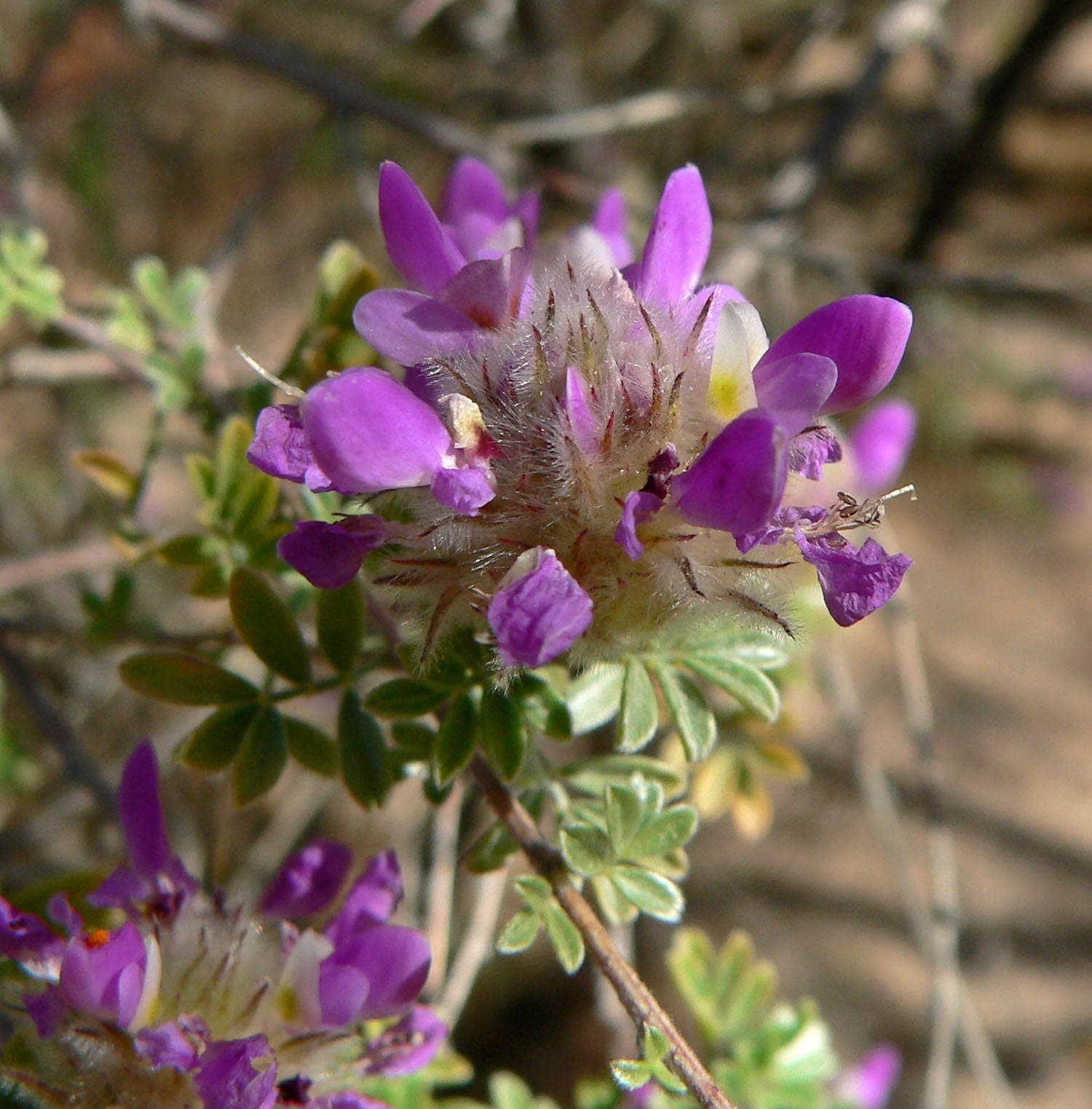
Dalea pulchra is a native shrub of the Madrean sky islands region, found wild across southern Arizona, New Mexico, Sonora, and Chihuahua. It produces dense clusters of small violet-purple flowers on arching stems with finely divided, silver-gray foliage from late winter through early spring, often beginning in February. That early-season color, compact mounding habit, and low maintenance requirements after establishment make it a reliable choice for arid and semi-arid gardens across the American Southwest.
Bush Dalea performs best in full sun with fast-draining, rocky or sandy soil and minimal supplemental water after the first year. It tolerates reflected heat and lean, alkaline soils. Fall planting gives roots time to establish before summer heat arrives. A layer of gravel mulch around the root zone reduces surface evaporation without trapping moisture against the crown. In zone 7b the plant may die back to the crown after hard freezes but typically regrows from roots the following spring. Soil that holds standing water will kill it.
The flowers are an important early-season nectar and pollen source for native bees, including specialist Dalea-foraging bee species, as well as butterflies and hummingbirds. This timing - when few other shrubs in the Sonoran Desert region are active - gives Bush Dalea documented value in supporting regional pollinator communities.
Ecoregions:North American DesertsSouthern Semi-Arid Highlands
Root rot
Plants wilt, yellow, and stunt even in moist soil; lower stems and roots turn brown, soft, and mushy and the plant may collapse. Most common in heavy, wet, or poorly drained ground.
Improve drainage and stop overwatering, and never plant too deep. Lift and destroy badly affected plants along with the soil around the roots. Grow in raised or free-draining beds to prevent it returning.
Texas Root Rot
Sudden wilting of branches or the entire canopy, often following a wet period. White cottony fungal mats develop on infected roots. Wood at the crown appears dark and water-soaked. Decline can progress to tree death within weeks.
No effective chemical cure exists. Ensure excellent drainage and avoid overwatering. Remove and destroy all infected plant material. Avoid replanting susceptible species in the same soil for several years.