
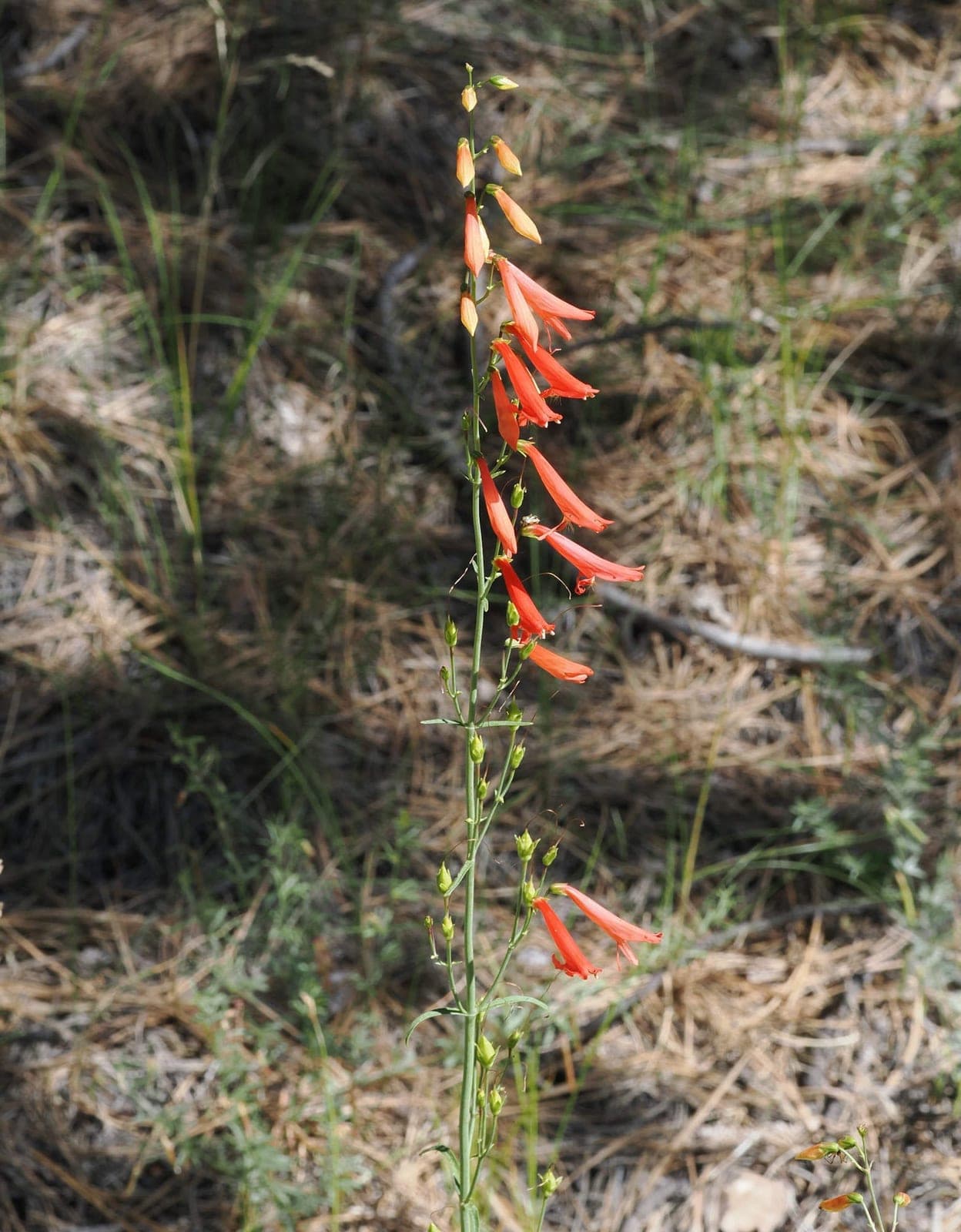
Penstemon barbatus is a clump-forming perennial native to the mountains and foothills of the western United States and northern Mexico. It sends up tall, wiry stems lined with narrow tubular flowers in scarlet to coral-red from early to midsummer. Hummingbirds are its primary pollinators and visit the plant repeatedly through the season.
It thrives in dry, rocky, or sandy soils with excellent drainage and declines quickly in heavy clay or persistently wet ground. In lean, well-drained sites it is long-lived and drought-tolerant once established. The basal rosette is semi-evergreen in mild winters. Cold stratification improves germination; fall-sown seed overwinters naturally and germinates in spring without additional treatment.
As a native wildflower it supports hummingbirds and long-tongued native bees. It naturalizes readily in xeriscape and dry meadow plantings across a wide elevation range, from foothills to subalpine clearings.
Ecoregions:Northwestern Forested MountainsGreat PlainsNorth American DesertsSouthern Semi-Arid HighlandsTemperate Sierras
Powdery mildew
White or grey powdery coating on leaves - usually starting on older growth in humid conditions or when nights cool.
Improve air circulation by thinning plants. Apply neem oil or potassium bicarbonate spray at first sign. Avoid overhead watering.
Root rot
Plants wilt, yellow, and stunt even in moist soil; lower stems and roots turn brown, soft, and mushy and the plant may collapse. Most common in heavy, wet, or poorly drained ground.
Improve drainage and stop overwatering, and never plant too deep. Lift and destroy badly affected plants along with the soil around the roots. Grow in raised or free-draining beds to prevent it returning.
Crown Rot
Lower leaves yellow and wilt; the base of the rosette turns brown and soft, sometimes with white fungal threads at the soil line. Plants collapse in wet conditions.
Remove and destroy affected plants. Improve drainage and avoid overhead watering. Do not mulch directly against the crown. Space plants for airflow and avoid replanting in the same wet spot.