
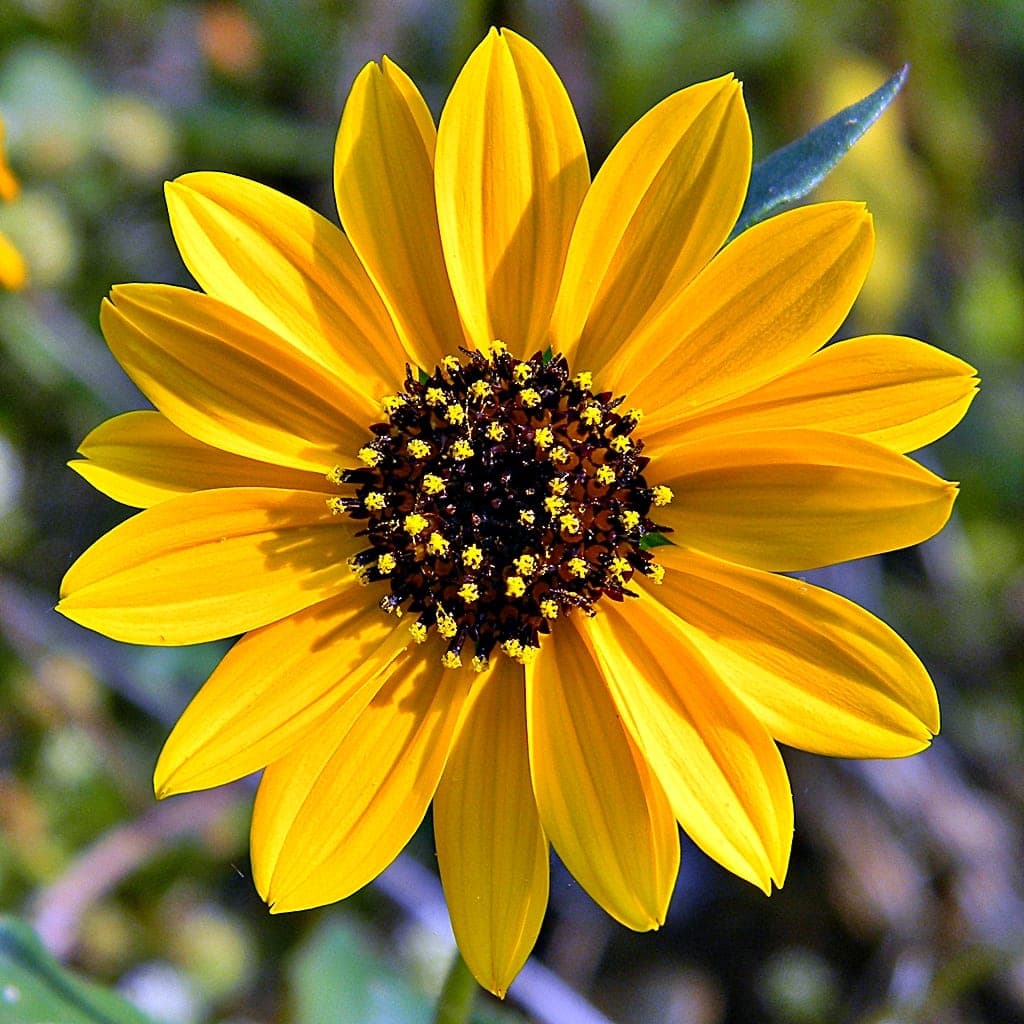
Beach sunflower (Helianthus debilis) is a sprawling, fast-growing perennial native to the Atlantic and Gulf Coasts of the United States. It produces yellow ray flowers with dark brown centers from spring through fall, and nearly continuously in frost-free areas. Its tolerance for salt spray, dry sandy soil, and full coastal exposure makes it one of the most dependable choices for low-maintenance landscapes along the Southeast and Gulf Coast.
In zones 8–9 it behaves as a short-lived perennial or self-seeding annual, dying back after hard frost and returning from dropped seed. In zones 10–11 it persists year-round, spreading by stems that root wherever they contact soil, forming dense colonies. It has been planted widely for coastal dune stabilization and erosion control. Rich, moist soils encourage excessive lush growth and reduce drought performance; infertile, fast-draining sandy soils in the pH 6.0–8.0 range suit it best. In confined gardens, trim rooting stems seasonally to limit lateral spread.
Seeds are consumed by goldfinches, sparrows, and other seed-eating birds. Flowers support bees and butterflies across a long season. The species has naturalized in South Africa, Australia, Taiwan, and Cuba, where it can outcompete native coastal vegetation.
Ecoregions:Eastern Temperate ForestsGreat PlainsTropical Wet Forests
Powdery mildew
White or grey powdery coating on leaves - usually starting on older growth in humid conditions or when nights cool.
Improve air circulation by thinning plants. Apply neem oil or potassium bicarbonate spray at first sign. Avoid overhead watering.
Rust
Orange to brown raised pustules on the undersides of leaves, with yellow spotting on the upper surface. Heavy infections cause leaves to yellow and drop.
Remove and destroy infected leaves. Avoid overhead watering and improve air circulation. Apply a sulfur or copper-based fungicide if it spreads. Clear plant debris in fall.
Fungal leaf spot
Brown or purplish spots on the leaves, often ringed with a yellow halo, that spread and merge in warm, humid, or wet weather; heavily spotted leaves yellow and drop early.
Pick off spotted leaves and clear fallen debris to remove overwintering spores. Improve air circulation by thinning, and water at the base so foliage dries quickly. If it persists, apply a copper- or sulfur-based fungicide at the first sign.
Root rot
Plants wilt, yellow, and stunt even in moist soil; lower stems and roots turn brown, soft, and mushy and the plant may collapse. Most common in heavy, wet, or poorly drained ground.
Improve drainage and stop overwatering, and never plant too deep. Lift and destroy badly affected plants along with the soil around the roots. Grow in raised or free-draining beds to prevent it returning.