
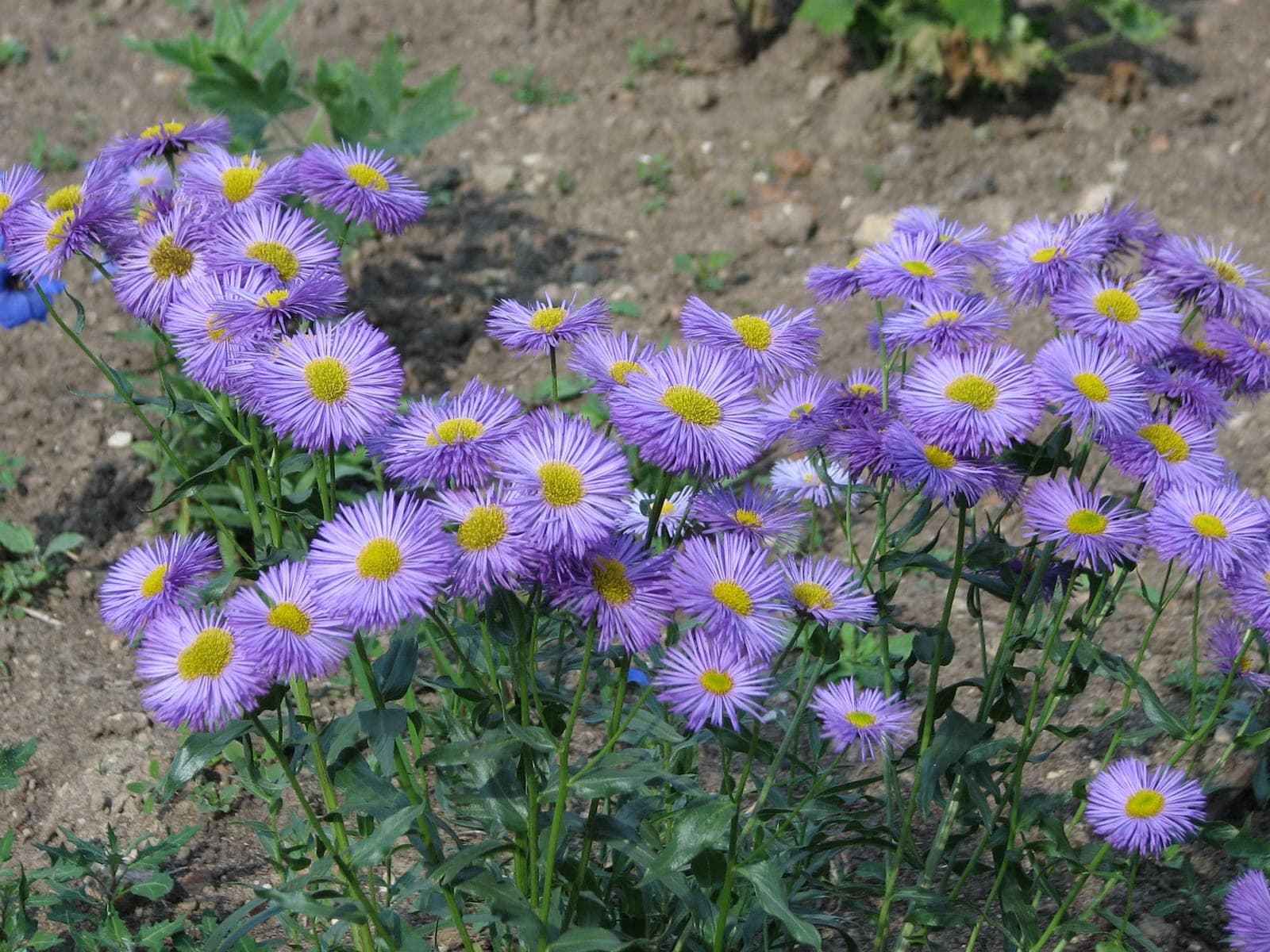
Erigeron speciosus is a native perennial of western North America, naturally found in aspen groves and mountain meadows from low foothills to subalpine elevations. It produces abundant daisy-like heads with fine lavender to violet rays around a yellow disc, blooming from late spring through midsummer. Its compact size suits the front of a border, a rock garden, or a naturalistic wildflower planting.
Once established, aspen fleabane tolerates drought and grows without heavy maintenance. Plants spread slowly by short rhizomes and self-seed modestly without becoming weedy. Cutting stems back by half after the first bloom flush encourages a second wave of flowers in late summer. Lean, well-drained soil keeps growth compact; rich or consistently moist soil encourages lax stems and increases disease pressure.
The dense, fine-rayed flower heads provide reliable pollen and nectar for native bees, small butterflies, and other beneficial insects throughout the blooming period.
Ecoregions:Northern ForestsNorthwestern Forested MountainsMarine West Coast ForestGreat PlainsNorth American DesertsTemperate Sierras
Powdery mildew
White or grey powdery coating on leaves - usually starting on older growth in humid conditions or when nights cool.
Improve air circulation by thinning plants. Apply neem oil or potassium bicarbonate spray at first sign. Avoid overhead watering.
Aster Yellows
Deformed, greenish flowers, stunted growth, and yellowed foliage. Flower centers may produce tufts of leafy growth instead of normal petals.
No cure. Remove and destroy infected plants immediately to stop spread. Control leafhoppers, which transmit the disease, and remove nearby weed hosts.
Rust
Orange to brown raised pustules on the undersides of leaves, with yellow spotting on the upper surface. Heavy infections cause leaves to yellow and drop.
Remove and destroy infected leaves. Avoid overhead watering and improve air circulation. Apply a sulfur or copper-based fungicide if it spreads. Clear plant debris in fall.
Fungal leaf spot
Brown or purplish spots on the leaves, often ringed with a yellow halo, that spread and merge in warm, humid, or wet weather; heavily spotted leaves yellow and drop early.
Pick off spotted leaves and clear fallen debris to remove overwintering spores. Improve air circulation by thinning, and water at the base so foliage dries quickly. If it persists, apply a copper- or sulfur-based fungicide at the first sign.