
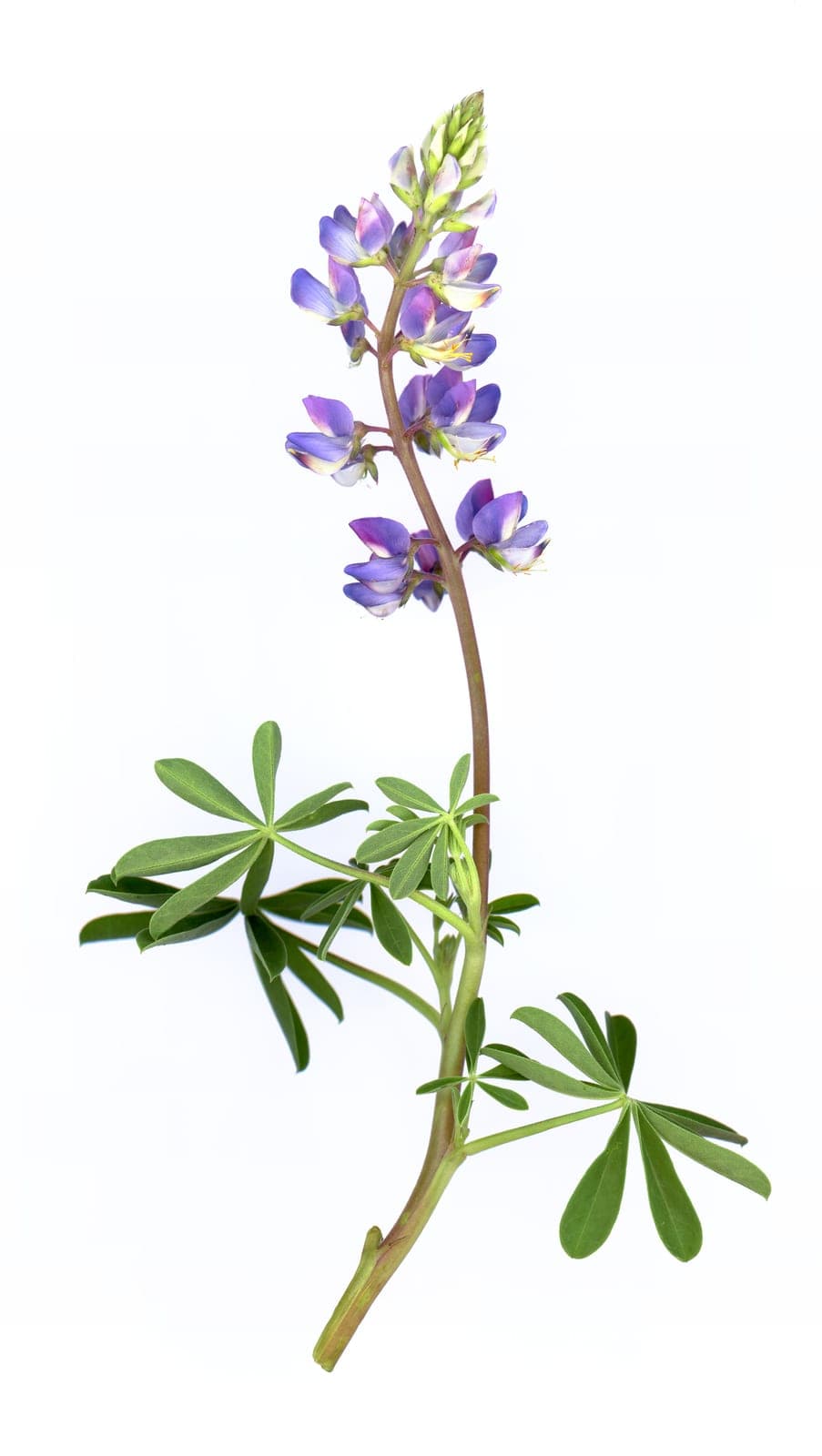
Lupinus succulentus is a native annual lupine from California and Baja California, growing in disturbed grasslands, roadsides, coastal scrub, and arroyo margins. Its upright stems and dense blue-violet flower racemes make it one of the more striking components of California's spring wildflower season and a practical choice for native meadow and restoration plantings.
As a legume, it fixes atmospheric nitrogen through root nodules, improving soil for neighboring plants. It germinates with fall rains, grows through winter, blooms from late February into May, then sets seed and dies. It self-sows reliably in sandy or loamy, well-drained soil. Heavy mulch around the crown traps moisture and promotes crown rot. Slightly acidic to neutral pH suits it well. Minimal soil disturbance in fall encourages germination from the previous season's seed drop.
This species provides an important early-season pollen and nectar source for native bumblebees and specialist lupine-pollen bees. Its foliage serves as larval host material for several native butterfly species, making it a useful component of pollinator and habitat restoration plantings.
Ecoregions:Marine West Coast ForestNorth American DesertsMediterranean CaliforniaTemperate Sierras
Lupin Anthracnose
Twisted, bending stems with sunken brown lesions; leaves develop dark spots and may collapse. Pink spore masses can appear on infected tissue in wet weather.
Remove and destroy infected plants. Use clean, treated seed and avoid overhead watering. Space plants for airflow and rotate planting sites to reduce spore buildup.
Damping Off
Seedlings collapse at the soil line with thin, water-soaked stems; seeds may fail to emerge or rot before sprouting.
Sow in well-draining mix, avoid overwatering, and ensure good airflow. Remove affected seedlings and let the surface dry between waterings.
Powdery mildew
White or grey powdery coating on leaves - usually starting on older growth in humid conditions or when nights cool.
Improve air circulation by thinning plants. Apply neem oil or potassium bicarbonate spray at first sign. Avoid overhead watering.
Root rot
Plants wilt, yellow, and stunt even in moist soil; lower stems and roots turn brown, soft, and mushy and the plant may collapse. Most common in heavy, wet, or poorly drained ground.
Improve drainage and stop overwatering, and never plant too deep. Lift and destroy badly affected plants along with the soil around the roots. Grow in raised or free-draining beds to prevent it returning.