
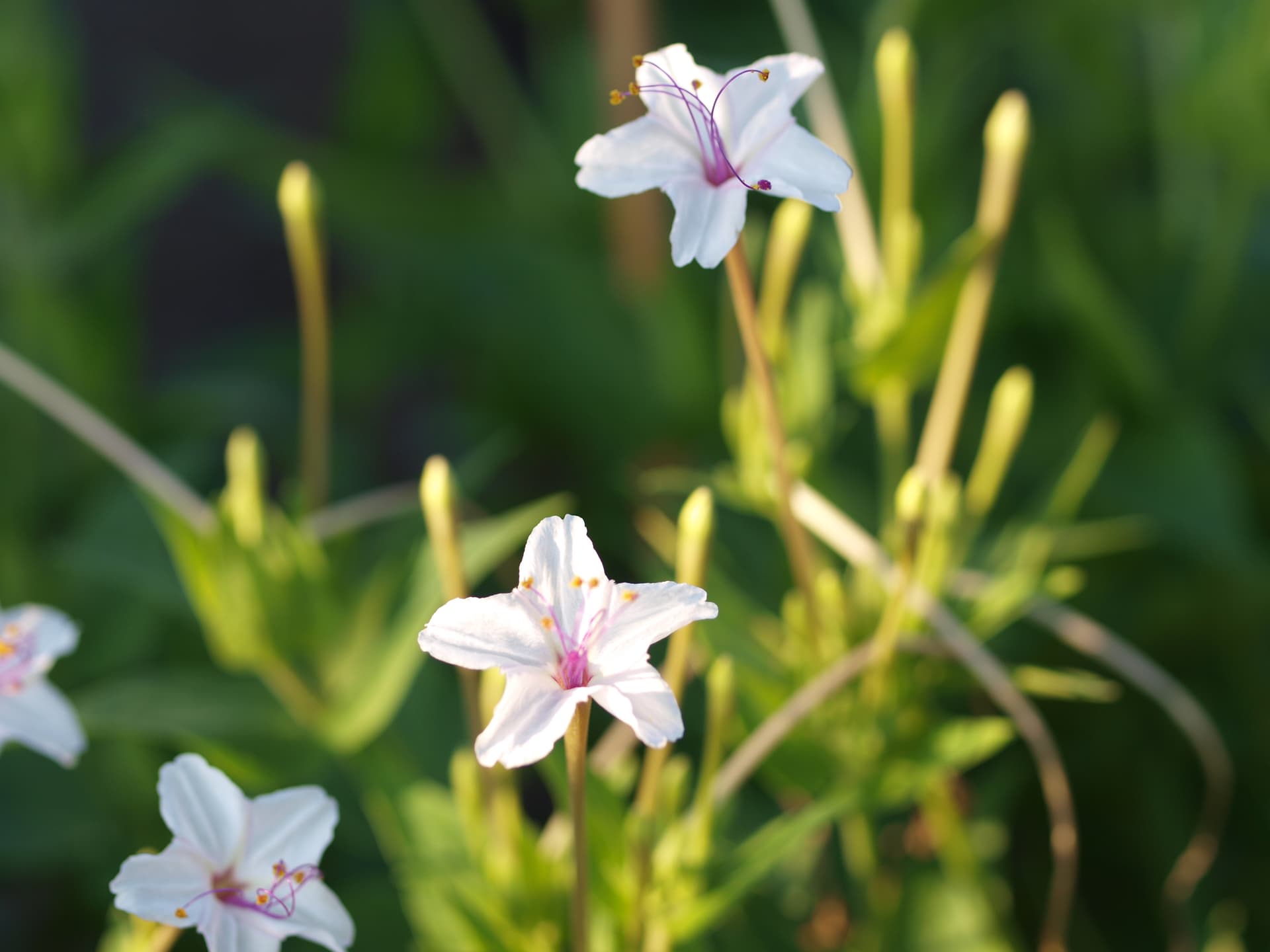
Mirabilis longiflora is a tuberous perennial native to the Chihuahuan Desert region of the southwestern United States and northern Mexico. Its common name refers to the exceptionally long, white, trumpet-shaped flowers-often exceeding 5 inches in tube length-that open in the late afternoon and remain open through the night. It handles heat and dry conditions better than most ornamentals and is unrelated to Brugmansia, which shares the same common name.
The plant grows from a fleshy taproot and dies back after frost, re-emerging reliably in zones 7 and warmer. In zone 7, a dry winter mulch over the root zone improves survival. Seeds are large and germinate readily in warm soil when direct sown. Below zone 7, treat as an annual or dig and store the root crown after first frost in slightly damp peat in a cool, frost-free location.
The flowers are shaped specifically for hawk moth pollination: the long tube excludes most insects and concentrates the nectar for sphingid moths. Fragrance intensifies after dark and is strongest in the hours around midnight, making placement near evening seating or a patio the most effective use of this plant.
Ecoregions:North American DesertsSouthern Semi-Arid HighlandsTemperate Sierras
Powdery mildew
White or grey powdery coating on leaves - usually starting on older growth in humid conditions or when nights cool.
Improve air circulation by thinning plants. Apply neem oil or potassium bicarbonate spray at first sign. Avoid overhead watering.
Root rot
Plants wilt, yellow, and stunt even in moist soil; lower stems and roots turn brown, soft, and mushy and the plant may collapse. Most common in heavy, wet, or poorly drained ground.
Improve drainage and stop overwatering, and never plant too deep. Lift and destroy badly affected plants along with the soil around the roots. Grow in raised or free-draining beds to prevent it returning.
Damping Off
Seedlings collapse at the soil line with thin, water-soaked stems; seeds may fail to emerge or rot before sprouting.
Sow in well-draining mix, avoid overwatering, and ensure good airflow. Remove affected seedlings and let the surface dry between waterings.