
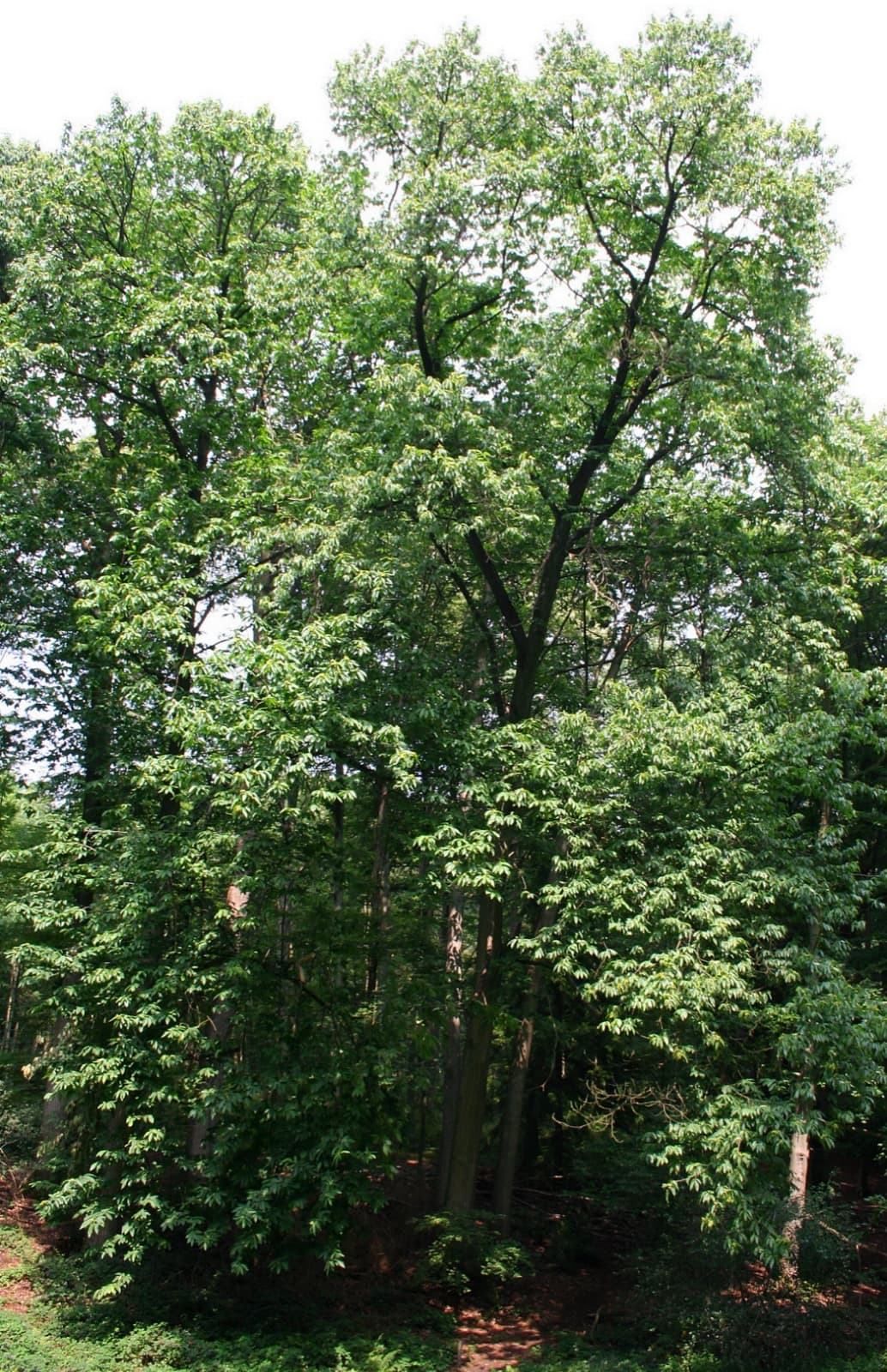
American chestnut was the dominant canopy tree of eastern North American forests, with an estimated 4 billion individuals before 1900. Fast-growing and long-lived, it produced reliable annual nut crops vital to wildlife and rural communities and yielded rot-resistant timber prized for fence posts, furniture, and railroad ties. Chestnut blight (Cryphonectria parasitica), introduced from Asia around 1904, eliminated virtually every mature tree by the 1950s.
The species persists today as root-sprouting coppice; sprouts grow vigorously but are girdled by blight before reaching reproductive maturity. Restoration programs-including the American Chestnut Foundation's backcross breeding project and blight-tolerant transgenic lines developed at SUNY ESF-aim to return the species to the canopy. Plant in deep, well-drained, acidic soil (pH 5.0–6.5); avoid heavy clay and waterlogged sites, which promote Phytophthora root rot. Multiple trees are required for cross-pollination and nut set. Mulch to the drip line to conserve moisture and moderate soil temperature.
Chestnuts are starchy and low in fat compared to other tree nuts and were historically roasted, boiled, or milled into gluten-free flour used across Appalachia and exported to European markets. They remain critical mast for white-tailed deer, wild turkey, and black bears. Chestnut leaf preparations were used in Appalachian folk medicine to treat persistent cough and fever.
Ecoregions:Northern ForestsEastern Temperate Forests
Chestnut Blight
Sunken, discolored cankers girdle stems; infected bark cracks and peels away; yellow-orange spore-producing pustules (stromata) erupt through dead bark; all foliage and growth above the canker wilts and dies while the root system and root crown remain alive and continue to produce sprouts.
No cure exists. Remove and destroy all cankered stems at least 12 inches below the lowest visible canker margin. Source new plantings from established blight-resistance programs such as the American Chestnut Foundation when available. Hypovirulence biocontrol-applying cultures of a debilitating virus that weakens the pathogen-has shown partial success in controlled North American trials; contact your state cooperative extension for current regional protocols.
Phytophthora Root Rot
Wilting despite moist soil, yellowing leaves, stunted growth, and dark, decayed roots and crown tissue. Vines may collapse during hot weather.
Plant in well-draining soil and avoid waterlogging. Remove and destroy affected vines. Improve drainage with raised beds or amended soil and avoid overwatering.