
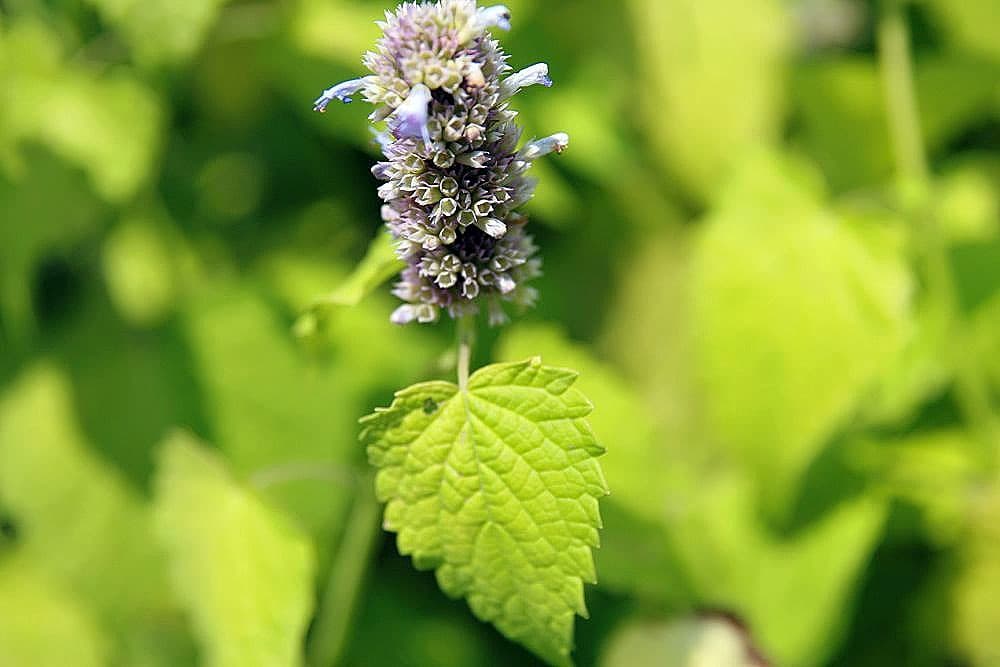
'Golden Jubilee' is a cultivar of anise hyssop (Agastache foeniculum), an aromatic perennial in the mint family native to the north-central United States and southern Canada. It is distinguished from the species by chartreuse to golden foliage that shows its strongest color in cool spring weather. Blue-purple flower spikes rise above the foliage from midsummer through first frost, reliably attracting bees, butterflies, and hummingbirds.
Anise hyssop is short-lived, typically persisting 2–3 years, but self-seeds freely. Lean to average, sharply drained soil is preferred; fertile soil produces soft, floppy stems. It is drought tolerant once established. Self-sown offspring of 'Golden Jubilee' frequently revert toward the green-leafed species form, so vegetative propagation is recommended to preserve the gold foliage. Slightly alkaline to neutral pH suits it well.
Leaves and flowers carry a pronounced anise-licorice flavor and are used fresh in salads, steeped for herbal tea, or added to beverages as a garnish. Great Plains tribes historically used the dried herb for coughs and feverish colds. Laboratory studies show mild antimicrobial activity in essential oil extracts.
Ecoregions:Northern ForestsNorthwestern Forested MountainsEastern Temperate ForestsGreat Plains