
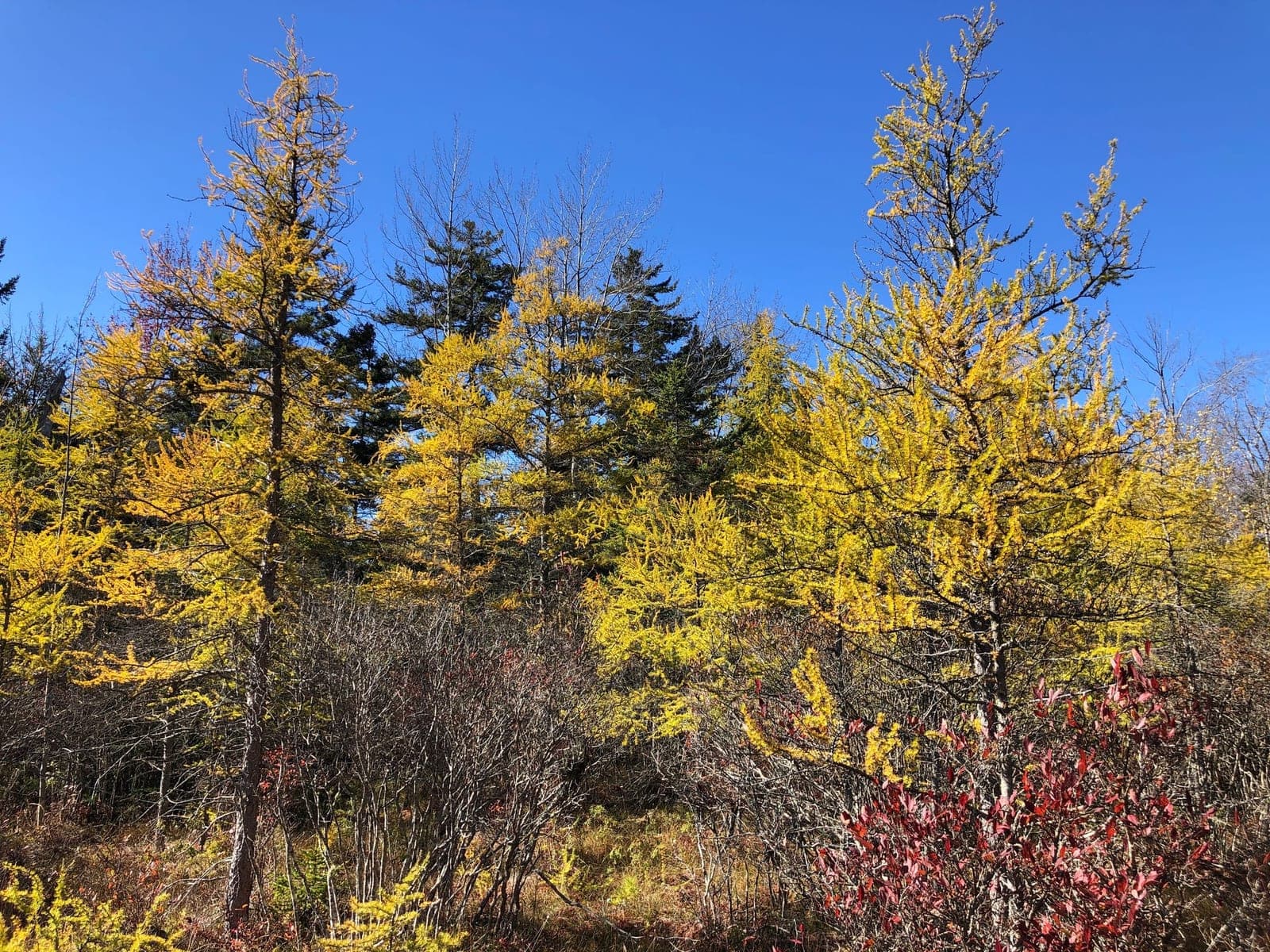
Tamarack (Larix laricina) is the only deciduous conifer native to northeastern North America and Canada's boreal zone. It drops its needles each fall after turning vivid golden yellow - a striking display in native plantings and wet woodland edges. Among the most cold-tolerant trees on the continent, it thrives where most conifers cannot survive.
Tamarack is a bog specialist, forming pure stands in acidic peatlands and poorly drained soils at pH 4.5–6.0, but it adapts to upland sites with adequate moisture. It requires full sun and fails quickly in shade. Growth is slow to moderate; trees typically reach 40–60 ft in cultivation. Established trees tolerate standing water for extended periods. The species provides nesting structure and forage for moose, snowshoe hare, yellow-rumped warbler, and siskins. Larch sawfly (Pristiphora erichsonii) is the most serious recurring pest and can defoliate entire trees in outbreak years.
Indigenous peoples across the Great Lakes and boreal regions used inner bark as emergency food and prepared decoctions from bark and roots for wound care, skin diseases, and rheumatism. Tamarack bark is a commercial source of arabinogalactan, a prebiotic polysaccharide used as a dietary fiber supplement.
Ecoregions:TaigaNorthern ForestsEastern Temperate ForestsGreat Plains
Sirococcus Shoot Blight
Newly elongating shoot tips wilt and turn brown in late spring. Infected needles and stems develop small black pycnidia. Affected shoots may curl into a shepherd's crook shape. Current-year growth is killed and the disease can spread further during prolonged wet periods.
Prune and destroy infected shoot tips as soon as symptoms appear. Apply copper-based fungicide or chlorothalonil at bud break, repeating every two weeks during wet springs. Plant at adequate spacing to maximize air circulation and avoid overhead irrigation.
Armillaria Root Rot
Thinning, yellowing canopy with progressive dieback; white, fan-shaped mycelial mats visible beneath bark at or just below the soil line; honey-colored mushroom clusters appearing at the trunk base or on surface roots in autumn.
No chemical cure exists. Improve drainage and avoid any injury to roots or trunk. Remove severely infected trees along with as much root material as possible. Do not replant susceptible species in the same spot.
Larch Canker
Sunken, resinous cankers on stems and branches with distinctive orange to yellow cup-shaped fungal fruiting bodies (apothecia) forming at the canker margin. Branches die back above the infection; repeated infections cause stem deformity and girdling.
Prune cankered wood at least 6 inches below the visible infection margin during dry weather and destroy the removed material. Sterilize tools between cuts. Avoid bark wounds from equipment or staking hardware. No effective chemical treatment exists for established cankers; maintain tree vigor through correct siting in full sun with adequate soil moisture.