
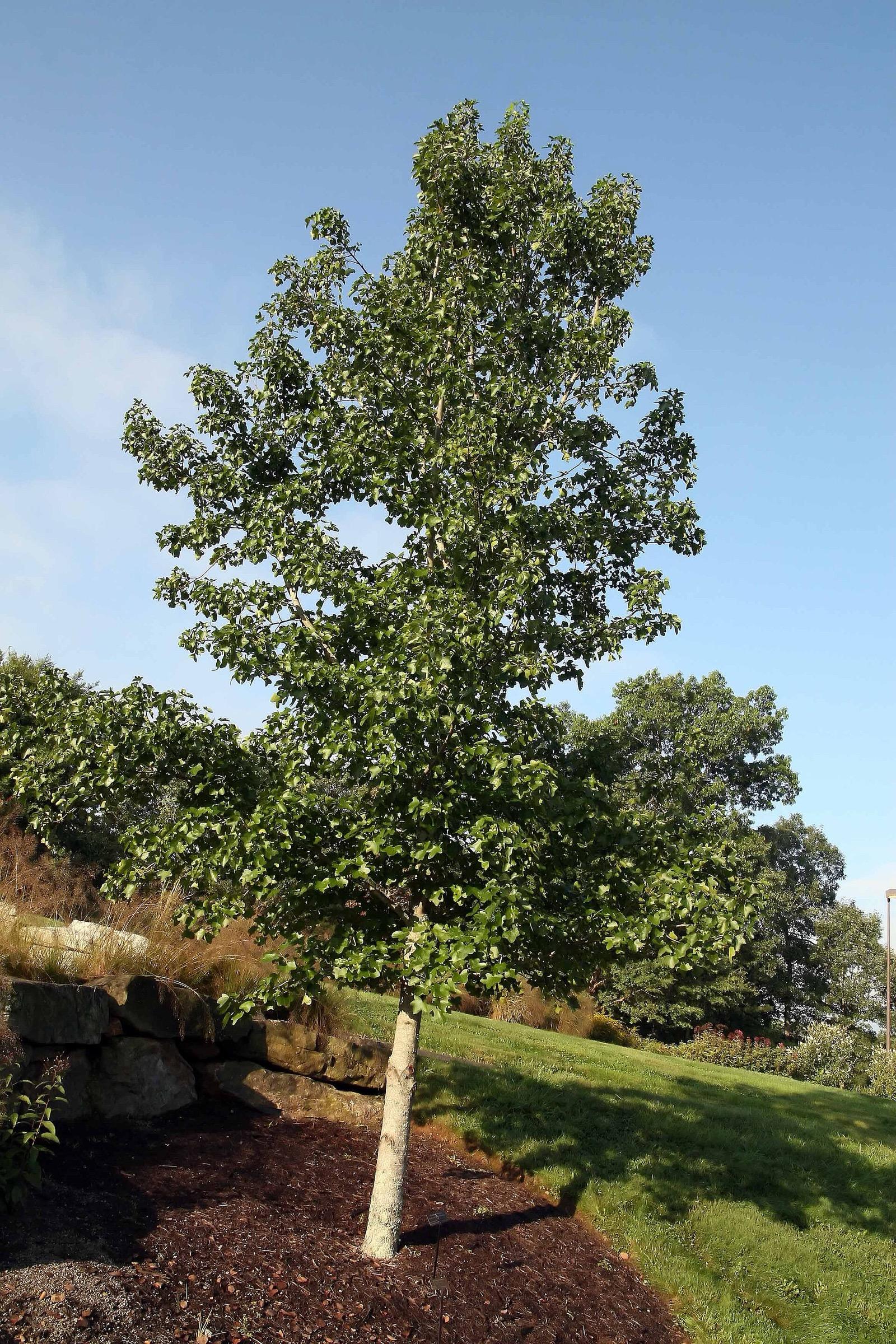
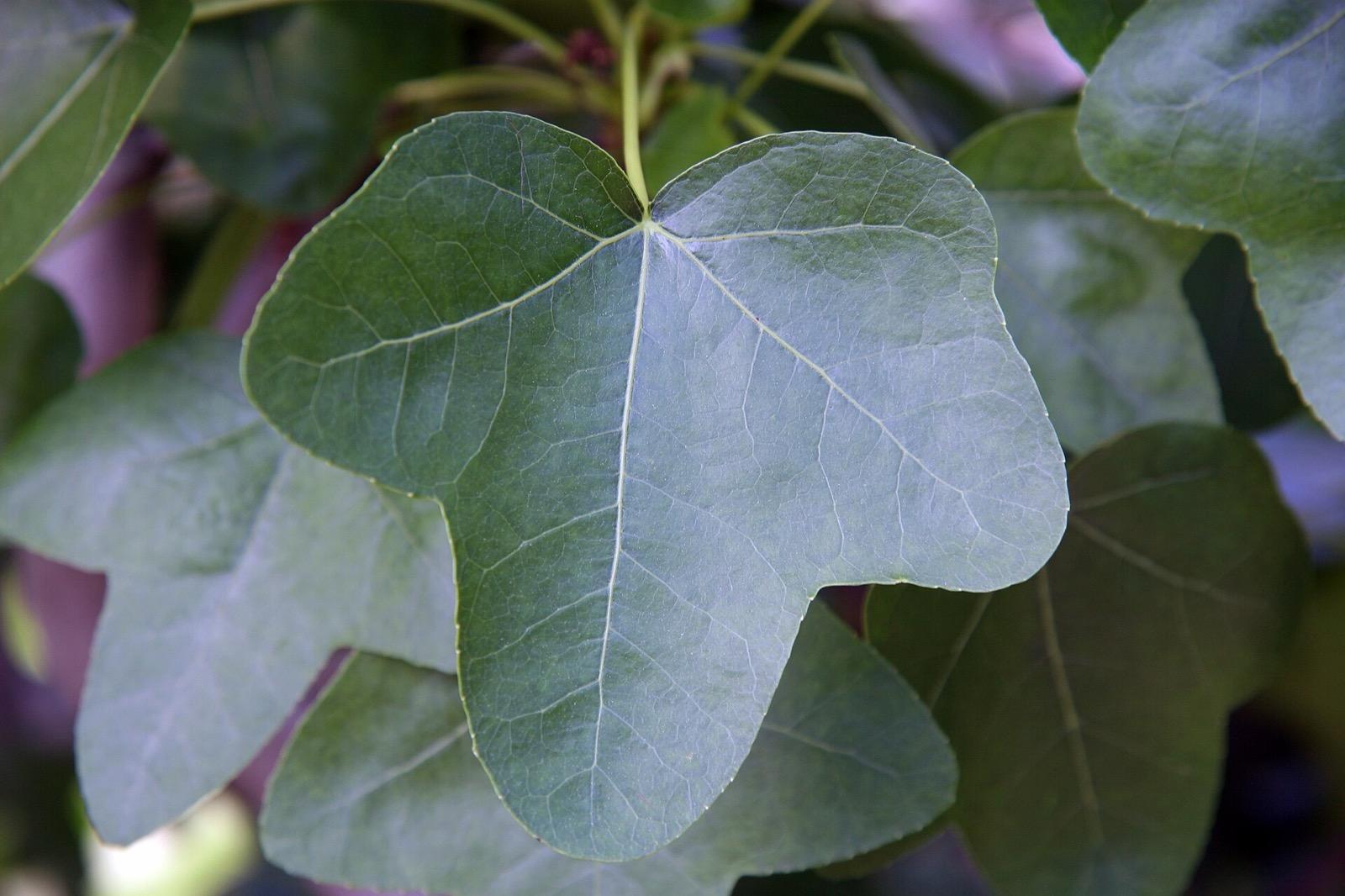
Rotundiloba Sweetgum is a sterile cultivar of American sweetgum (Liquidambar styraciflua) selected for its rounded leaf lobes and absence of the spiny seed balls that make the straight species problematic in lawns and high-traffic areas. It offers the same multi-season interest as the species - distinctive corky bark ridges on young stems, handsome star-shaped foliage, and fall color spanning burgundy, orange, and purple - without the messy, foot-hazard fruit.
This is a large, long-lived deciduous tree that needs space to develop its broad oval crown. It thrives in full sun and moist, slightly acidic soil, tolerating clay and periodically wet sites better than most large ornamentals. Because fall color can vary by propagation source, select trees in autumn when color is visible. Though marketed as fruitless, isolated seed balls do occasionally develop; remove them promptly. Sweetgum generally prefers a soil pH of 5.5–6.5 and benefits from deep organic mulch over the root zone to retain moisture and stabilize soil temperature. Surface roots can become prominent with age in compacted or shallow soils.
The species produces a balsamic resin known as American storax, extracted from wounded bark. This resin has been used in traditional medicine by Indigenous peoples and early European settlers for skin conditions, respiratory complaints, and wound care, and remains a minor ingredient in some pharmaceutical and perfume formulations.
Ecoregions:Eastern Temperate ForestsGreat Plains
These dates are for Zone 6b. Enter your ZIP to time every job to your own frost dates.
- buy · Jan 2 - Jan 16Order nursery stock - about two months before planting
- plant · Mar 13 - Apr 3Plant container or balled-and-burlapped stock before bud break. This form sets no seed balls, so it can go near a lawn or patio.
Problems & troubleshooting
Common problems
Fungal leaf spot
Brown or purplish spots on the leaves, often ringed with a yellow halo, that spread and merge in warm, humid, or wet weather; heavily spotted leaves yellow and drop early.
Pick off spotted leaves and clear fallen debris to remove overwintering spores. Improve air circulation by thinning, and water at the base so foliage dries quickly. If it persists, apply a copper- or sulfur-based fungicide at the first sign.
Botryosphaeria Canker
Dark, sunken cankers on stems and major branches, most often occurring after drought stress or mechanical wounding. Bark peeled back from affected areas reveals brown, discolored wood beneath. Branch tips wilt and die back progressively inward.
Prune infected branches at least 6 inches below the visible canker margin using sterilized tools, and dispose of all cuttings away from the garden. Reduce plant stress by maintaining consistent irrigation during dry periods and avoiding bark wounds during maintenance. No curative fungicide is available; keeping plants vigorous is the primary preventive strategy.
Root rot
Plants wilt, yellow, and stunt even in moist soil; lower stems and roots turn brown, soft, and mushy and the plant may collapse. Most common in heavy, wet, or poorly drained ground.
Improve drainage and stop overwatering, and never plant too deep. Lift and destroy badly affected plants along with the soil around the roots. Grow in raised or free-draining beds to prevent it returning.