
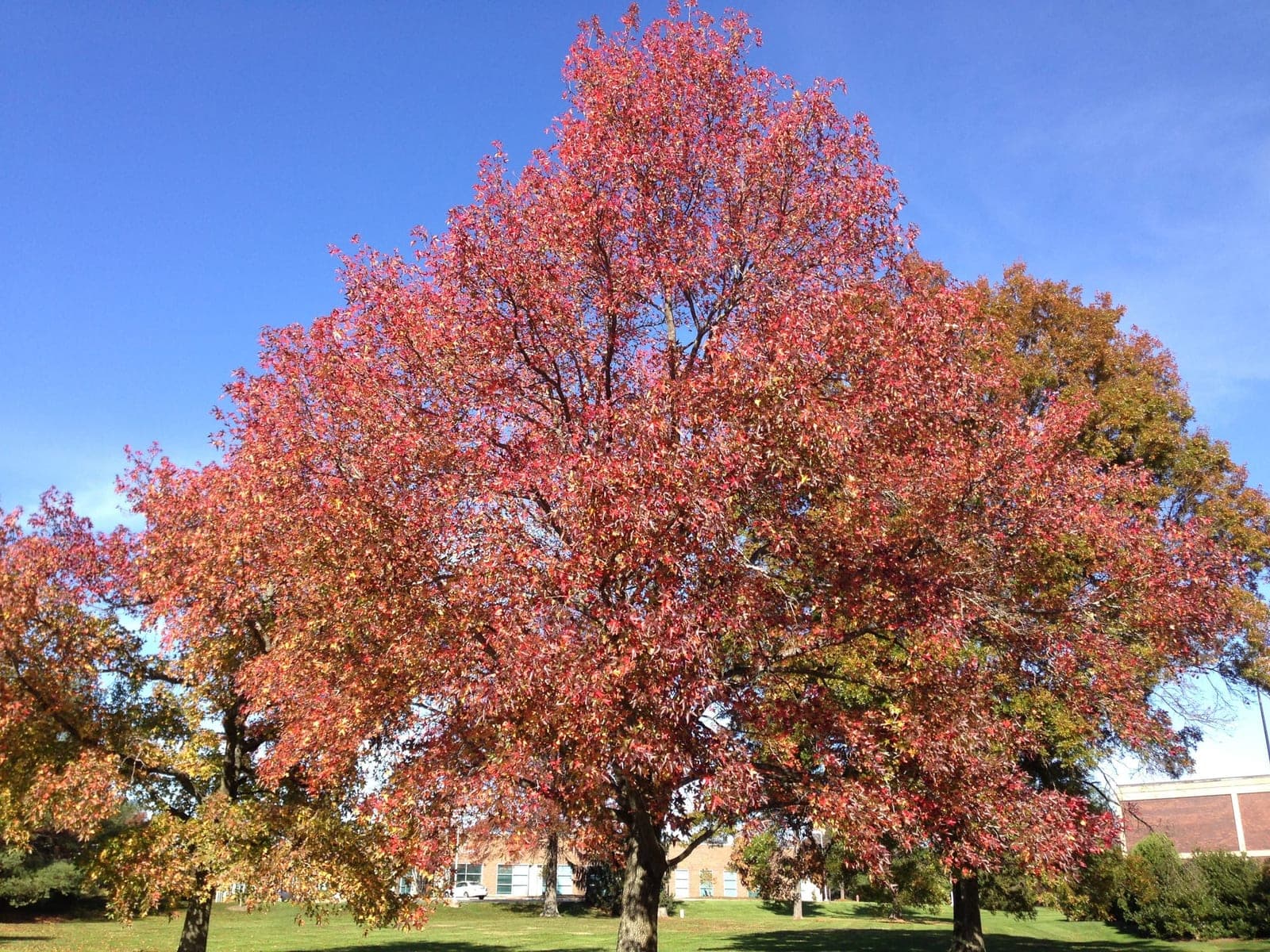
Sweetgum is a large native deciduous tree of eastern North America recognized by its star-shaped five-pointed leaves and spiky, round seed balls. Fall foliage shifts from green to combinations of red, burgundy, orange, and yellow, often several colors simultaneously on one tree. The seed balls persist on bare branches through winter, adding structural interest long after leaf drop.
Grows best in full sun with moist, slightly acidic soil and tolerates periodically wet sites, making it useful at the edge of low-lying areas or near drainage swales. It develops a deep taproot, so transplanting large specimens is difficult; install young nursery stock. Adapts to urban conditions better than many large native trees. Root suckers and self-sown seedlings can appear near the base. Dropped seed balls are a maintenance consideration in high-traffic lawn areas; fruitless cultivars exist where this is a concern.
The bark exudes a resin called storax with documented traditional use for skin conditions, wound treatment, and respiratory complaints; it was also chewed historically as gum. The fruits contain shikimic acid, used industrially as a synthesis precursor for oseltamivir (Tamiflu).
Ecoregions:Eastern Temperate ForestsGreat Plains
Fungal leaf spot
Brown or purplish spots on the leaves, often ringed with a yellow halo, that spread and merge in warm, humid, or wet weather; heavily spotted leaves yellow and drop early.
Pick off spotted leaves and clear fallen debris to remove overwintering spores. Improve air circulation by thinning, and water at the base so foliage dries quickly. If it persists, apply a copper- or sulfur-based fungicide at the first sign.
Botryosphaeria Canker
Dark, sunken cankers on stems and major branches, most often occurring after drought stress or mechanical wounding. Bark peeled back from affected areas reveals brown, discolored wood beneath. Branch tips wilt and die back progressively inward.
Prune infected branches at least 6 inches below the visible canker margin using sterilized tools, and dispose of all cuttings away from the garden. Reduce plant stress by maintaining consistent irrigation during dry periods and avoiding bark wounds during maintenance. No curative fungicide is available; keeping plants vigorous is the primary preventive strategy.
Bacterial Leaf Scorch
Browning at leaf margins progresses inward, often with a yellow or reddish border between healthy and necrotic tissue. Symptoms first appear on older leaves in late summer and worsen each subsequent year as the pathogen spreads through the xylem.
No cure exists. Prune affected branches, maintain tree vigor with deep watering and a wide mulch ring, and manage sharpshooter leafhopper populations where feasible. Oxytetracycline trunk injections by a licensed arborist may suppress symptoms temporarily but do not eliminate Xylella fastidiosa.