
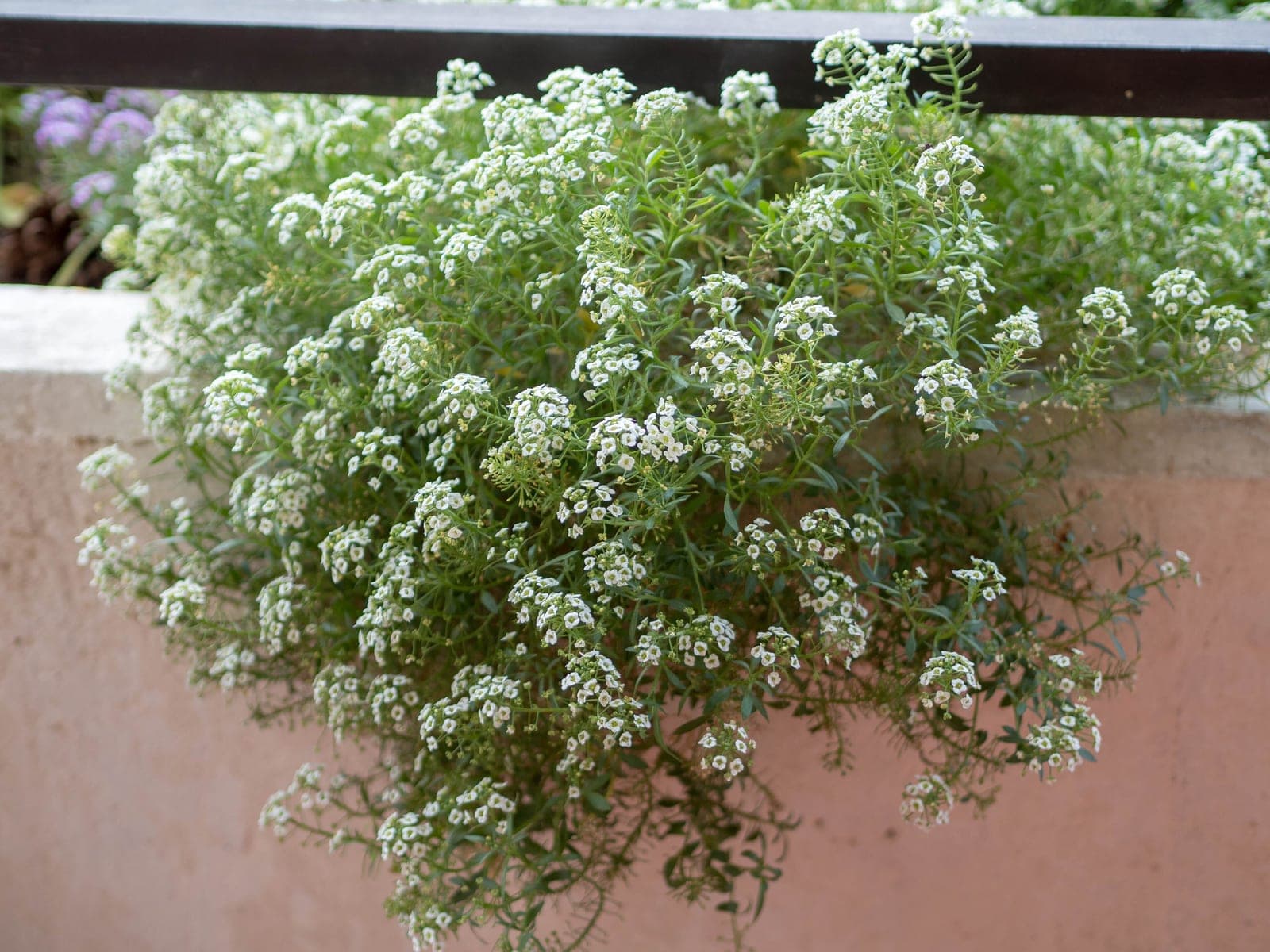
Sweet alyssum is one of the earliest annuals to flower and one of the last to quit - tiny, honey-scented clusters of white, pink, or purple blooms smothering a low, spreading mound from early spring right through the first hard frosts. It's tolerant of light frost, so it can go in the ground before most other annuals.
Use it as edging, between paving stones, spilling over container rims, or as a living mulch between taller plants - the flowers draw in hoverflies and other small beneficial pollinators that help keep aphids down nearby. If the mid-summer heat causes it to stall or get leggy, shear it back hard; it will flush again as temperatures cool. Self-seeds readily where it's happy.
Downy mildew
Yellowing on top of leaves with grey-purple fuzz underneath. Spreads rapidly in humid conditions.
Remove affected leaves. Improve air circulation. Avoid overhead watering. Copper spray as preventive.
Aphids
Aphididae →Clusters of small soft insects on new growth and flower buds.
Knock off with a strong jet of water. Ladybirds and lacewings are natural predators. Insecticidal soap as last resort.
Flea Beetle
Alticini →Small round shot-holes scattered across leaves; tiny dark beetles that jump when disturbed. Heavy feeding stunts young plants.
Use floating row covers on seedlings. Remove crop debris and weeds that harbor beetles. Apply kaolin clay or spinosad if damage is severe.