
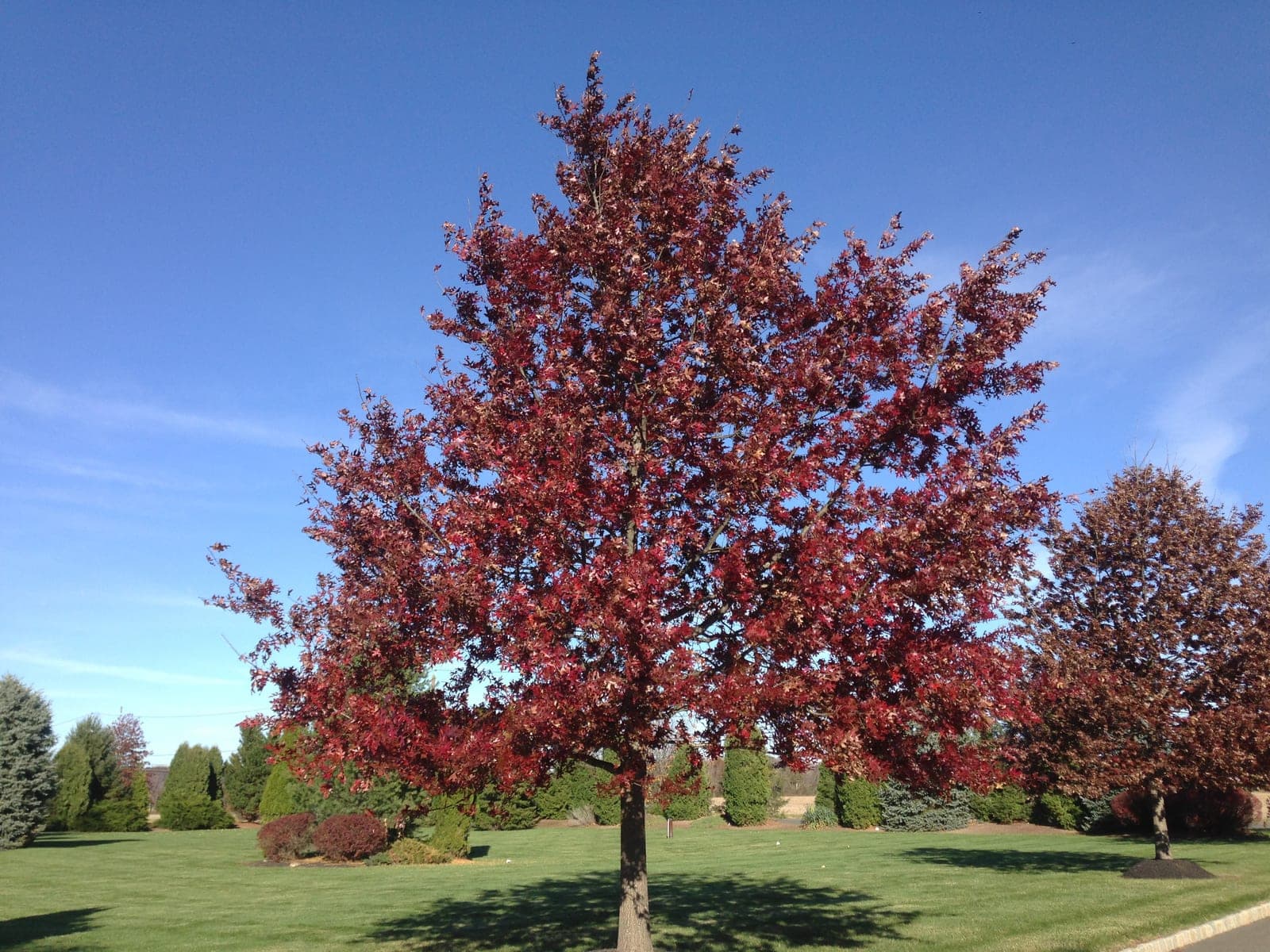
Scarlet oak is a large deciduous native tree of the eastern United States, typically reaching 60–80 feet with a broad, irregular crown. Its deeply cut, bristle-tipped leaves turn an exceptionally vivid scarlet in fall, often surpassing other oaks for color intensity. It is one of the strongest choices among native trees for fall interest combined with high wildlife value.
This species grows best in well-drained, acidic, sandy or loamy soils and is notably intolerant of compacted clay or poorly drained sites. It develops a deep taproot early, making container-grown nursery stock far more successful than bare-root transplanting or moving established specimens. Once settled it is moderately drought-tolerant and relatively fast-growing for an oak. Maintaining soil pH between 4.5 and 6.5 and mulching the root zone support long-term health. Avoid all pruning from April through July, when the beetle vectors of oak wilt are most active and fresh cuts serve as entry points.
Acorns, produced beginning around age 20, are a critical mast crop for deer, wild turkey, blue jays, squirrels, and woodpeckers. Research documents oaks as the single most important genus for caterpillar diversity in eastern North America, supporting over 500 Lepidoptera species. The tannin-rich bark has documented traditional astringent uses among several Indigenous nations of the eastern woodlands.
Ecoregions:Northern ForestsEastern Temperate Forests
Oak Wilt
Leaves wilt and brown starting at branch tips, progressing rapidly toward the trunk. Discoloration may appear as brown or yellow veining across the leaf blade. Individual branches or the entire canopy can defoliate within days to weeks. A cross-section of affected branches reveals dark streaking in the outer sapwood ring.
Contact a certified arborist for trunk injection of propiconazole fungicide, which is most effective as a preventive measure or at earliest symptom onset. Sever root grafts between infected and neighboring live oaks by cutting a trench 3–4 ft deep between trees to prevent fungal spread through connected root systems. Remove and immediately chip, burn, or bury all infected wood; do not store as firewood. Avoid any pruning from March through July when nitidulid sap-feeding beetles that carry the pathogen are most active. Apply wound sealant to all cuts made outside this window within minutes of cutting.
Oak Anthracnose
Brown, irregular dead areas along and between leaf veins appearing soon after bud break, typically in cool, wet springs. Affected leaves curl, wither, and drop prematurely. Severe or repeated infections cause twig dieback in the lower and interior crown.
Rake and dispose of all fallen leaves in autumn to reduce overwintering inoculum. Prune affected twigs back to healthy wood during dry winter weather and dispose of the material. Apply a copper-based or mancozeb fungicide at bud break for young trees or those with a history of severe annual infection. Healthy established trees typically recover without chemical treatment and produce a second flush of foliage.
Oak Leaf Blister
Raised, blister-like bulges on the upper leaf surface with corresponding concave depressions on the underside. Affected tissue may turn light brown or grayish by midsummer. Heavy infections can cause early defoliation but rarely threaten tree health on an established tree.
No treatment is needed on mature, vigorous trees. Rake and dispose of fallen leaves in autumn to reduce the overwintering spore load of the causal fungus (Taphrina caerulescens). On trees with a history of severe symptoms, apply a single dose of copper-based fungicide at bud swell in early spring before leaf tissue is exposed.
Hypoxylon Canker
Outer bark sloughs off stressed limbs to reveal gray, tan, or black crusty fungal stromata on the exposed wood surface; affected branches die back progressively and cross-sections of sapwood show brown streaking.
No effective chemical control exists. Remove affected limbs promptly and dispose of all infected wood off-site - do not chip or compost it on the property. Reduce predisposing stress by providing deep irrigation during drought and avoiding mechanical injury to roots and bark. The fungus is opportunistic; healthy, unstressed trees resist infection.
Armillaria Root Rot
Thinning, yellowing canopy with progressive dieback; white, fan-shaped mycelial mats visible beneath bark at or just below the soil line; honey-colored mushroom clusters appearing at the trunk base or on surface roots in autumn.
No chemical cure exists. Improve drainage and avoid any injury to roots or trunk. Remove severely infected trees along with as much root material as possible. Do not replant susceptible species in the same spot.
Sudden Oak Death
Reddish-brown to black bleeding cankers on the lower trunk ooze dark sap; inner bark beneath the canker is stained deep red-brown. Foliage may wilt and die rapidly as the canker girdles the stem. Leaf lesions occur on some hosts but are secondary on oaks.
No systemic cure is available once infection is established. Preventive trunk injections with potassium phosphite applied before infection can slow canker progression in high-risk areas. Remove and chip or burn infected wood on-site; do not transport infected material off the property. Report confirmed or suspected cases to the California Department of Food and Agriculture.
Powdery mildew
White or grey powdery coating on leaves - usually starting on older growth in humid conditions or when nights cool.
Improve air circulation by thinning plants. Apply neem oil or potassium bicarbonate spray at first sign. Avoid overhead watering.