
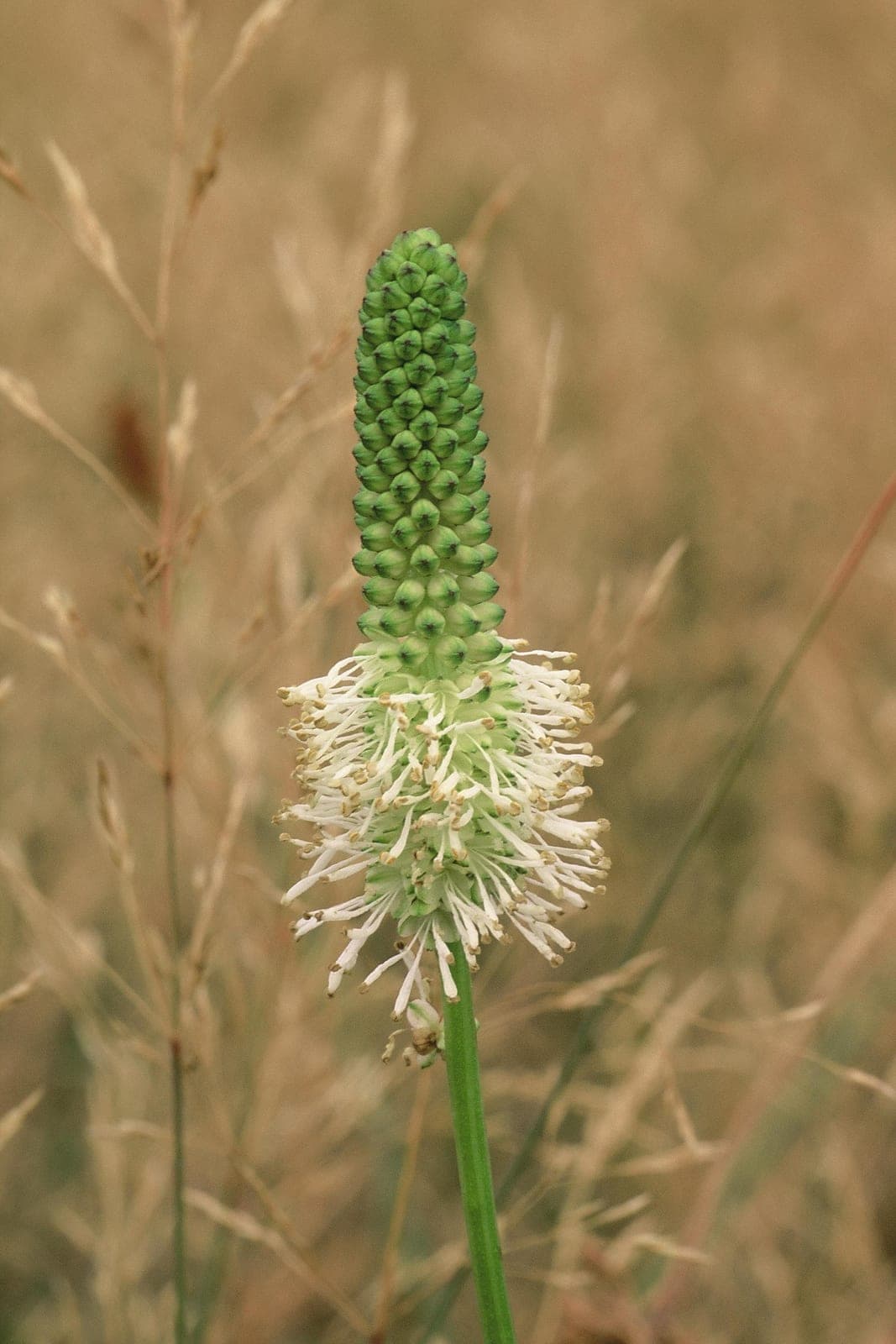
Also called American burnet, this is the true North American native in the genus, found wild in swamps, bogs, and wet meadows from the Canadian Maritimes and New England down through the Appalachians to Georgia, and separately in the Pacific Northwest. Tall, upright stems carry dense white bottlebrush spikes above compound, blue-green foliage from late summer into fall, taller and later-blooming than the maroon-flowered great burnet it's often confused with in catalogs.
Unlike most border perennials, it genuinely wants wet feet - it's a natural fit for a rain garden, pond edge, or any low spot that stays consistently moist, and struggles in average dry border soil. Bees and other pollinators visit the flowers heavily, and the seed heads feed birds into winter if left standing.
Ecoregions:TaigaNorthern ForestsMarine West Coast ForestEastern Temperate Forests
Rust
Orange to brown raised pustules on the undersides of leaves, with yellow spotting on the upper surface. Heavy infections cause leaves to yellow and drop.
Remove and destroy infected leaves. Avoid overhead watering and improve air circulation. Apply a sulfur or copper-based fungicide if it spreads. Clear plant debris in fall.