
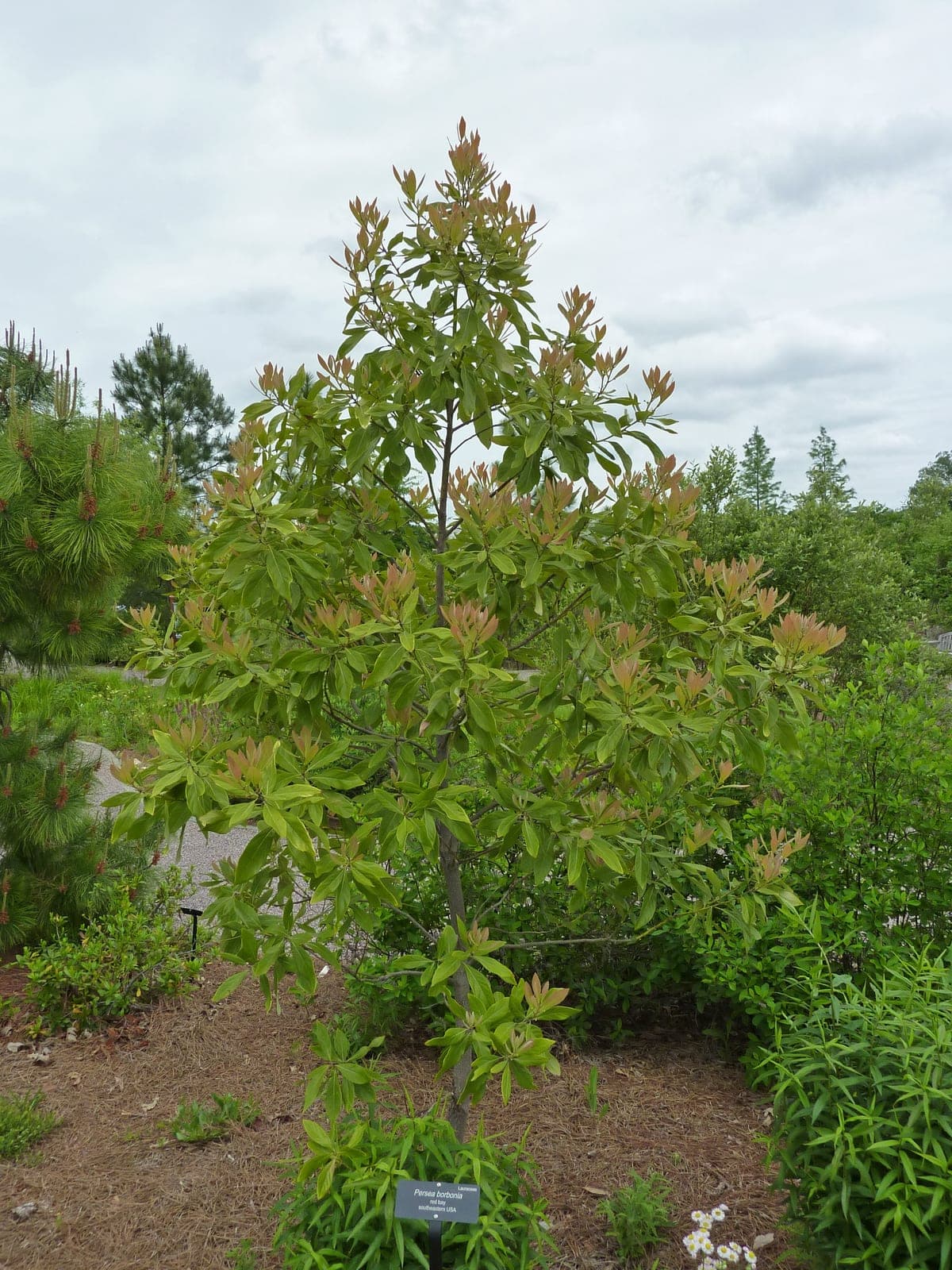
Redbay is a small to medium evergreen tree native to the coastal plain of the southeastern United States, from southern Virginia through Florida and west to eastern Texas, plus the Bahamas. A member of the laurel family, it produces glossy, aromatic leaves and small dark-blue drupes that birds and small mammals consume heavily. In the landscape it delivers year-round evergreen canopy and serves as the primary larval host plant for the Palamedes swallowtail butterfly.
It grows naturally in maritime forests, pocosins, swamp margins, and coastal scrub on acidic, sandy or loamy soils and tolerates periodic inundation. Laurel wilt, caused by the fungus Raffaelea lauricola carried by the invasive redbay ambrosia beetle (Xyleborus glabratus), has killed millions of redbay trees across the Southeast and continues to spread westward. Growers should inspect trunks for tiny entry holes with sawdust-like frass and never move wood or debris from affected areas. The dense reddish-brown wood has historically been used in furniture, cabinetwork, and small boat construction.
The aromatic leaves are a well-documented culinary substitute for bay laurel, used fresh or dried to season soups, stews, and braises.
Ecoregions:Eastern Temperate ForestsGreat PlainsTropical Wet Forests
Laurel Wilt
Rapid wilting of one or more branches, often progressing to the entire crown within weeks. Leaves turn reddish-brown and remain attached rather than dropping. Cross-sections of affected branches or trunk show dark brown to black streaking in the sapwood.
No cure or effective treatment exists. Remove and destroy infected trees and all associated woody debris promptly; do not transport wood from affected sites. Avoid wounding healthy trees, as the redbay ambrosia beetle vector is attracted to fresh wounds. Report new infections to your state forestry agency or cooperative extension service, particularly in areas where the beetle is not yet established.
Root rot
Plants wilt, yellow, and stunt even in moist soil; lower stems and roots turn brown, soft, and mushy and the plant may collapse. Most common in heavy, wet, or poorly drained ground.
Improve drainage and stop overwatering, and never plant too deep. Lift and destroy badly affected plants along with the soil around the roots. Grow in raised or free-draining beds to prevent it returning.
Fungal leaf spot
Brown or purplish spots on the leaves, often ringed with a yellow halo, that spread and merge in warm, humid, or wet weather; heavily spotted leaves yellow and drop early.
Pick off spotted leaves and clear fallen debris to remove overwintering spores. Improve air circulation by thinning, and water at the base so foliage dries quickly. If it persists, apply a copper- or sulfur-based fungicide at the first sign.