
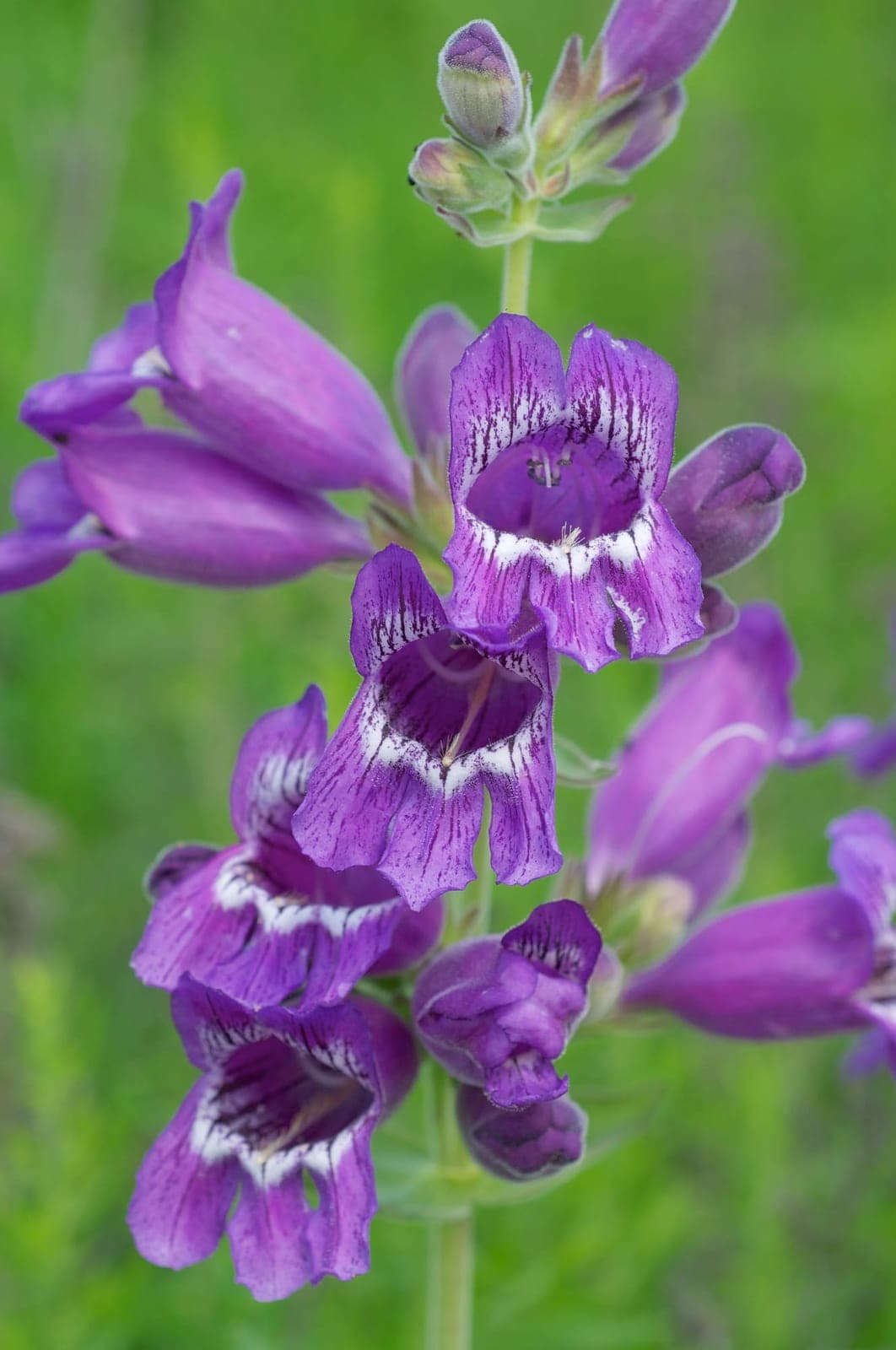
Prairie penstemon (Penstemon cobaea) is a native Great Plains perennial that produces some of the largest flowers in the genus - broad, tubular blooms in pale lavender to white with violet guidelines along the throat, opening in late spring to early summer. Native from Nebraska south to Texas with disjunct populations in the Missouri and Arkansas Ozarks, it suits dry sunny borders and prairie-style plantings where most ornamentals struggle.
This species thrives in well-drained, low-fertility soil and is strongly drought tolerant once established. It behaves as a short-lived perennial in garden settings, typically persisting 3–5 years; maintaining a colony requires allowing reseeding or planting in groups. Cold stratification improves germination from seed. Heavy clay and poor drainage cause rapid crown and root rot - planting on a slope, in a raised bed, or amending with coarse grit is essential on heavier soils. Soil pH on the alkaline side, as found across much of its native range, is tolerated well.
The large, open flower tube is preferentially visited by bumblebees and large carpenter bees, which are among the few insects robust enough to access the nectar. Hummingbirds also forage the flowers. Prairie penstemon supports specialist native bees that depend on penstemon pollen, making it a high-value addition to pollinator gardens within its native range.
Ecoregions:Eastern Temperate ForestsGreat Plains
Crown Rot
Lower leaves yellow and wilt; the base of the rosette turns brown and soft, sometimes with white fungal threads at the soil line. Plants collapse in wet conditions.
Remove and destroy affected plants. Improve drainage and avoid overhead watering. Do not mulch directly against the crown. Space plants for airflow and avoid replanting in the same wet spot.
Root rot
Plants wilt, yellow, and stunt even in moist soil; lower stems and roots turn brown, soft, and mushy and the plant may collapse. Most common in heavy, wet, or poorly drained ground.
Improve drainage and stop overwatering, and never plant too deep. Lift and destroy badly affected plants along with the soil around the roots. Grow in raised or free-draining beds to prevent it returning.
Powdery mildew
White or grey powdery coating on leaves - usually starting on older growth in humid conditions or when nights cool.
Improve air circulation by thinning plants. Apply neem oil or potassium bicarbonate spray at first sign. Avoid overhead watering.
Rust
Orange to brown raised pustules on the undersides of leaves, with yellow spotting on the upper surface. Heavy infections cause leaves to yellow and drop.
Remove and destroy infected leaves. Avoid overhead watering and improve air circulation. Apply a sulfur or copper-based fungicide if it spreads. Clear plant debris in fall.
Damping Off
Seedlings collapse at the soil line with thin, water-soaked stems; seeds may fail to emerge or rot before sprouting.
Sow in well-draining mix, avoid overwatering, and ensure good airflow. Remove affected seedlings and let the surface dry between waterings.
Fungal leaf spot
Brown or purplish spots on the leaves, often ringed with a yellow halo, that spread and merge in warm, humid, or wet weather; heavily spotted leaves yellow and drop early.
Pick off spotted leaves and clear fallen debris to remove overwintering spores. Improve air circulation by thinning, and water at the base so foliage dries quickly. If it persists, apply a copper- or sulfur-based fungicide at the first sign.