
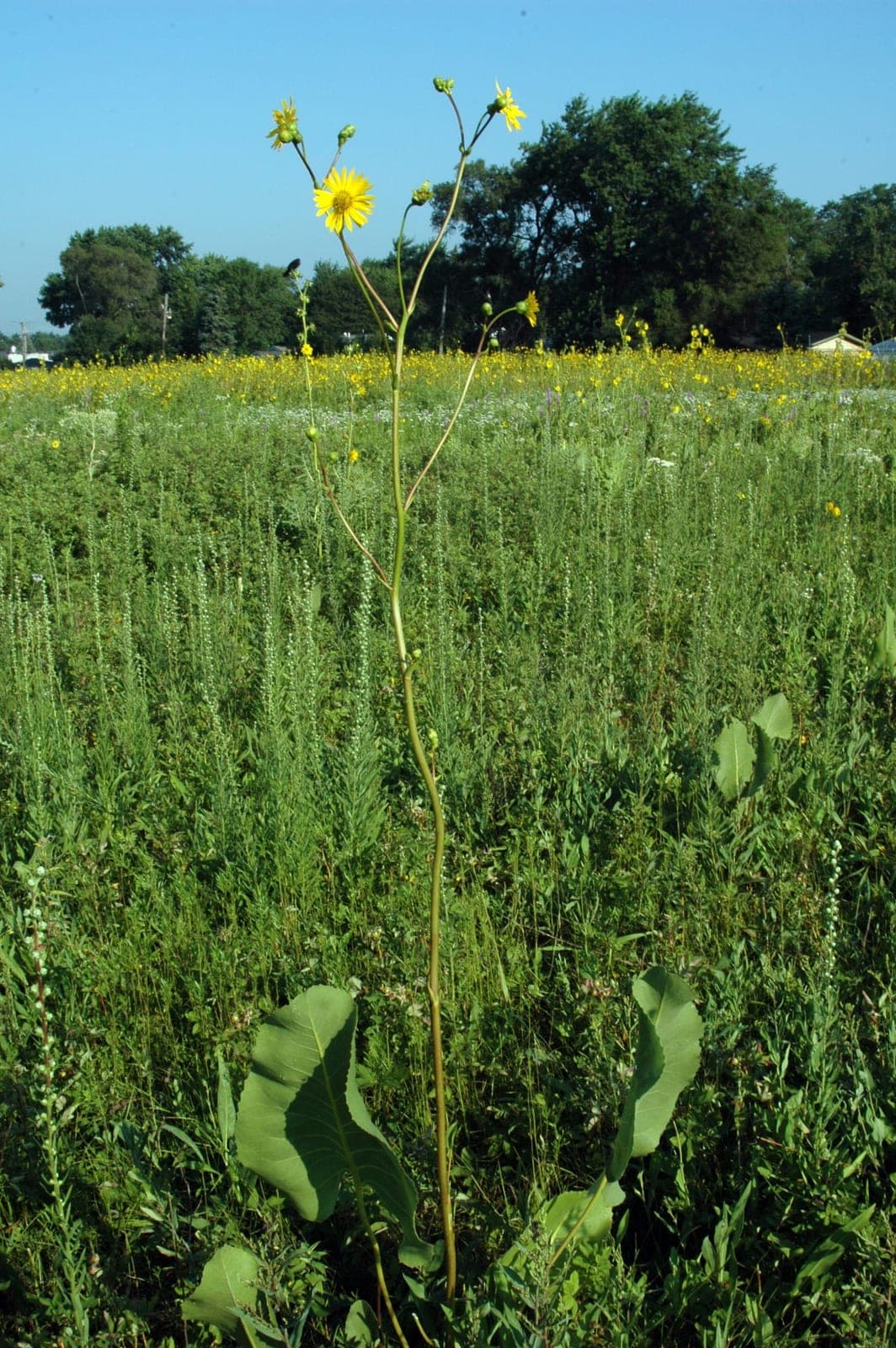
Prairie dock is a long-lived native perennial of the North American tallgrass prairie, ranging from Ontario south to Georgia and west to Nebraska. Its defining feature is the enormous basal foliage: rough, sandpaper-textured leaves up to 18 inches long that persist from spring through frost. Tall, nearly leafless flowering stems rise 5 to 10 feet in midsummer, carrying clusters of small yellow composite heads attractive to native bees and other pollinators. Individual plants can persist for decades with minimal care.
The taproot extends 10 or more feet into the soil, making prairie dock highly drought-tolerant once established but essentially impossible to transplant as a mature plant. Direct sow seed in fall; winter cold and moisture provide the stratification needed for spring germination. Seedlings establish slowly and typically do not produce flowering stems until year three or four. Plants tolerate clay and compacted soil, perform well in rain gardens and restored prairies, and need no supplemental water after the second growing season. Injured stems exude a fragrant resin - the source of the alternate name rosinweed.
Native American groups brewed root tea from prairie dock for a range of medicinal applications, and smoke from the plant was used traditionally to relieve congestion and rheumatism. Seed heads left standing through winter provide food for goldfinches and sparrows.
Ecoregions:Eastern Temperate ForestsGreat Plains
Fungal leaf spot
Brown or purplish spots on the leaves, often ringed with a yellow halo, that spread and merge in warm, humid, or wet weather; heavily spotted leaves yellow and drop early.
Pick off spotted leaves and clear fallen debris to remove overwintering spores. Improve air circulation by thinning, and water at the base so foliage dries quickly. If it persists, apply a copper- or sulfur-based fungicide at the first sign.
Root rot
Plants wilt, yellow, and stunt even in moist soil; lower stems and roots turn brown, soft, and mushy and the plant may collapse. Most common in heavy, wet, or poorly drained ground.
Improve drainage and stop overwatering, and never plant too deep. Lift and destroy badly affected plants along with the soil around the roots. Grow in raised or free-draining beds to prevent it returning.