
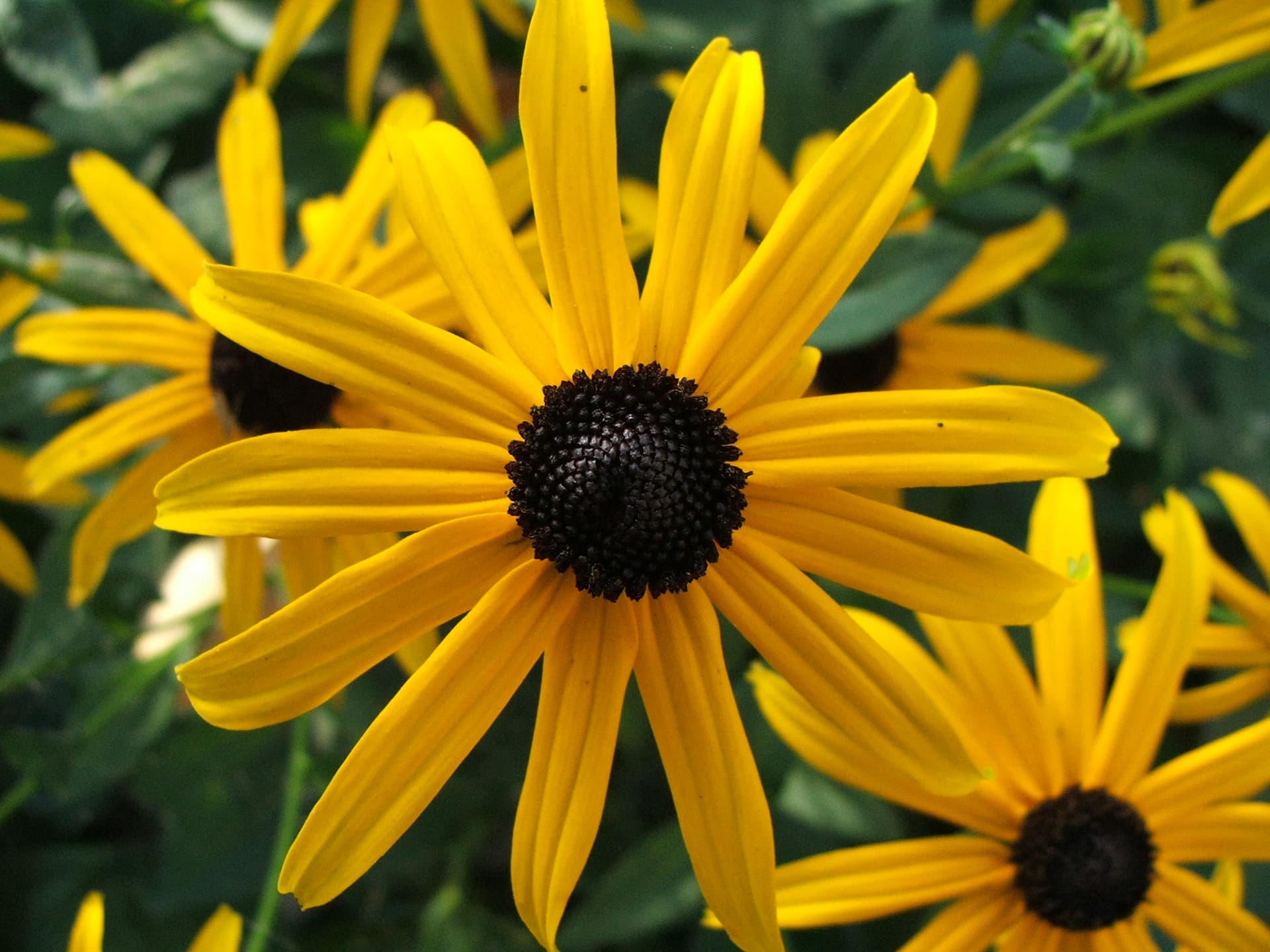
Rudbeckia fulgida is a clump-forming perennial native to the eastern United States, reliably hardy through zones 4–9. It produces golden-yellow daisy-like flowers with raised dark brown central cones from July through October, and is more consistently perennial than the shorter-lived R. hirta. It naturalizes readily in borders, rain gardens, and meadow plantings with minimal intervention once established.
Plants spread gradually by rhizomes and self-seed at a moderate rate over several seasons. They tolerate clay soils, periodic drought after establishment, and summer heat, and adapt across a broad pH range. Dividing crowded clumps every three to four years keeps plants vigorous. In zones 4–5, a layer of mulch over the crown after the ground freezes helps ensure winter survival. The cultivar 'Goldsturm' (var. sullivantii) is the most widely sold selection and delivers especially uniform habit and flower size.
Seed heads left standing through fall and winter are heavily used by goldfinches and chickadees. The extended bloom window and pollen-rich centers make R. fulgida a reliable late-summer foraging resource for native bees, bumble bees, and a range of butterfly species.
Ecoregions:Northern ForestsEastern Temperate Forests
Powdery mildew
White or grey powdery coating on leaves - usually starting on older growth in humid conditions or when nights cool.
Improve air circulation by thinning plants. Apply neem oil or potassium bicarbonate spray at first sign. Avoid overhead watering.
Septoria Leaf Spot
Small tan to brown spots with dark borders on leaves, often with tiny black specks at the center. Spots merge and lower leaves yellow and die.
Remove infected leaves and avoid overhead watering. Space plants for airflow and rotate planting location each year. Apply a copper-based fungicide if spread continues.
Aster Yellows
Deformed, greenish flowers, stunted growth, and yellowed foliage. Flower centers may produce tufts of leafy growth instead of normal petals.
No cure. Remove and destroy infected plants immediately to stop spread. Control leafhoppers, which transmit the disease, and remove nearby weed hosts.