
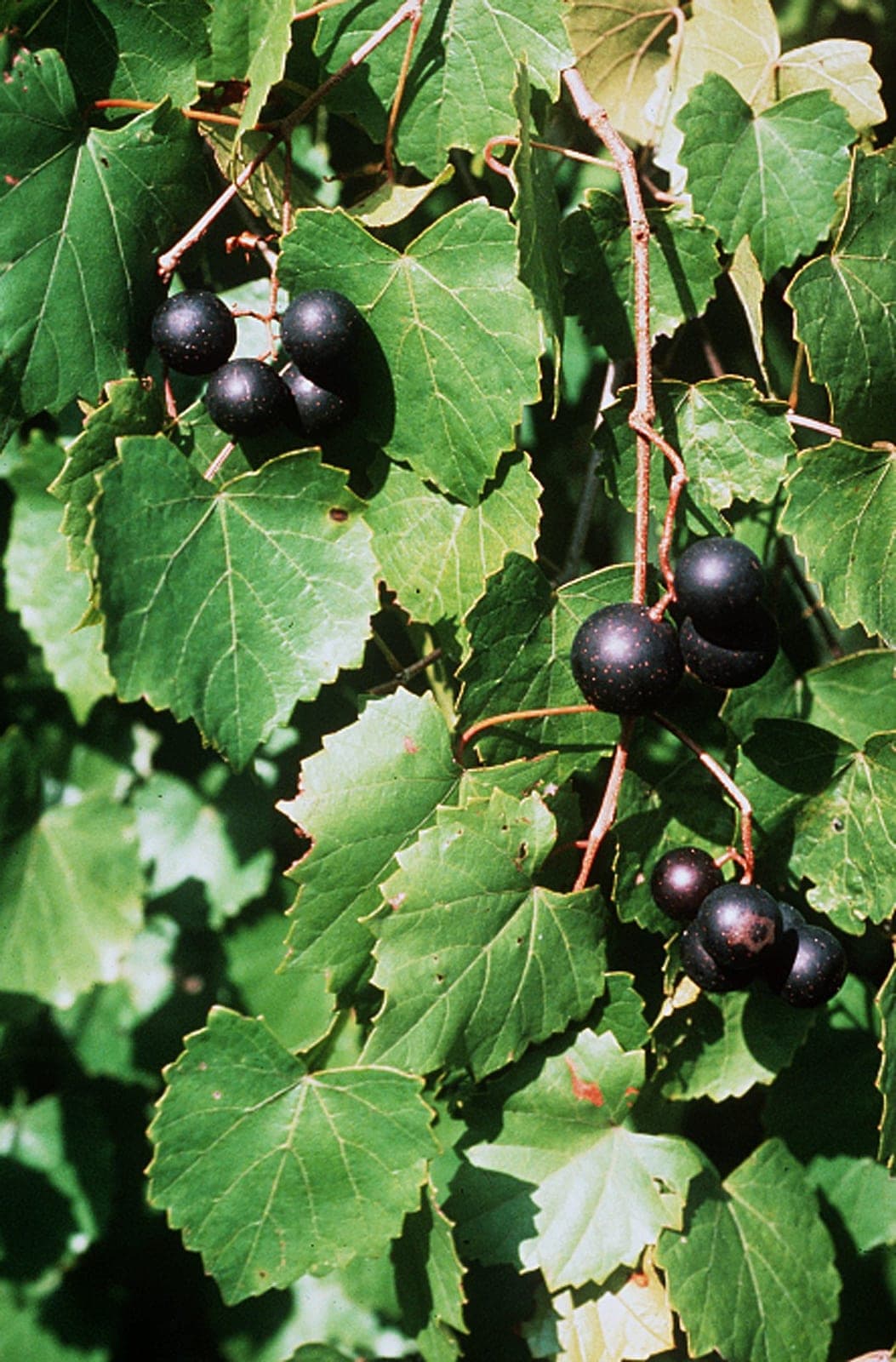
Muscadine (Vitis rotundifolia) is a grape native to the southeastern United States, cultivated since at least the 16th century. It produces thick-skinned bronze or purple-black berries used for wine, juice, jam, and fresh eating. Unlike European wine grapes, it tolerates the heat, humidity, and fungal pressure of the South without intensive spray programs.
Muscadines require a sturdy trellis, typically one or two horizontal wires at 5–6 ft on posts spaced 20 ft apart. Most cultivars are pistillate and need a self-fertile pollenizer nearby; the standard practice is one self-fertile vine per 3–5 non-self-fertile vines. Annual dormant pruning to 2–3 buds per spur is essential for productivity. Optimal soil pH is 6.0–6.5; vines tolerate sandy, low-fertility soils better than most fruit crops. In zones 6a–7a, site on a south-facing slope to extend the season and reduce late-frost exposure. Vines are long-lived and vigorous; heavy pruning is a normal management tool, not a setback.
Muscadine berries rank among the highest known plant sources of ellagic acid, a polyphenol with documented antioxidant activity. Skins and seeds also concentrate resveratrol and other stilbenes at higher levels than Vitis vinifera. Commercially, winemaking pomace is processed into dietary supplements targeting cardiovascular and anti-inflammatory applications.
Ecoregions:Eastern Temperate ForestsGreat PlainsTropical Wet Forests
Grape Black Rot
Tan circular spots with dark borders on leaves; infected berries shrivel into hard, black, wrinkled mummies that cling to the cluster.
Remove and destroy mummified fruit and infected leaves; prune for airflow. Apply protective fungicide from bud break through fruit set in wet seasons. Clean up fallen debris each fall to reduce overwintering spores.
Powdery mildew
White or grey powdery coating on leaves - usually starting on older growth in humid conditions or when nights cool.
Improve air circulation by thinning plants. Apply neem oil or potassium bicarbonate spray at first sign. Avoid overhead watering.
Downy mildew
Yellowing on top of leaves with grey-purple fuzz underneath. Spreads rapidly in humid conditions.
Remove affected leaves. Improve air circulation. Avoid overhead watering. Copper spray as preventive.
Armillaria Root Rot
Thinning, yellowing canopy with progressive dieback; white, fan-shaped mycelial mats visible beneath bark at or just below the soil line; honey-colored mushroom clusters appearing at the trunk base or on surface roots in autumn.
No chemical cure exists. Improve drainage and avoid any injury to roots or trunk. Remove severely infected trees along with as much root material as possible. Do not replant susceptible species in the same spot.
Root-Knot Nematode
Swollen galls on roots, poor vigor, wilting in heat, and reduced fruiting. Containers and sandy soils are more prone.
Use clean potting mix in containers. Avoid replanting in infested soil. Maintain plant vigor with mulch and steady watering. Solarize affected garden soil.
Pierce's Disease
Leaf margins scorch and dry while the rest of the leaf remains green; dead leaves drop but petioles stay attached to the cane. Canes show uneven maturation with patches of green bark surrounded by mature brown bark. Berries shrivel or fail to size up. Vines decline over one to five seasons with no recovery.
No cure. Remove and destroy infected vines immediately to limit spread. Control leafhopper vectors - especially glassy-winged sharpshooter - with targeted insecticide applications in early season before populations peak. Select naturally more tolerant muscadine cultivars when replanting. Avoid siting new plantings adjacent to riparian areas where sharpshooter populations are highest.