
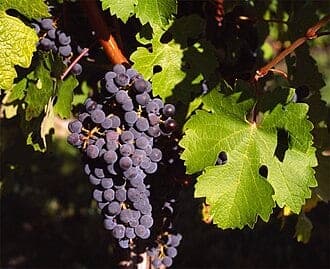
Grape is a woody, deciduous climbing vine grown for fruit and for the cover it gives an arbour. A single established vine produces for decades and yields heavily once mature. The European wine and table grapes (Vitis vinifera) are reliable only in zones 7 to 9 and mild, dry summers; elsewhere the American types and French-American hybrids ('Concord', 'Niagara', 'Marquette', 'Reliance') give reliable winter survival and disease resistance.
Grapes fruit on shoots growing from one-year-old wood, so annual dormant pruning is essential and severe: train the vine to a two-wire trellis or an arbour and in late winter remove 80 to 90 percent of the previous year's growth, keeping a set number of buds on the canes or spurs you leave. Plant in full sun on a south-facing slope if you have one, 6 to 8 feet apart, in average to poor soil that drains; rich soil grows leaves at the expense of fruit. Water until established and then little; dry weather as the fruit ripens concentrates the sugar.
Fruit needs sun and moving air to ripen and to limit black rot and mildew, so thin the leaves around the clusters in midsummer. Birds, wasps and raccoons arrive the week the grapes sweeten; netting is the answer. Japanese beetles skeletonise the leaves. The vine is a host plant for several sphinx moths and the bark shelters overwintering insects. Hardy to zone 5 with the right cultivar.
Powdery mildew
White or grey powdery coating on leaves - usually starting on older growth in humid conditions or when nights cool.
Improve air circulation by thinning plants. Apply neem oil or potassium bicarbonate spray at first sign. Avoid overhead watering.