
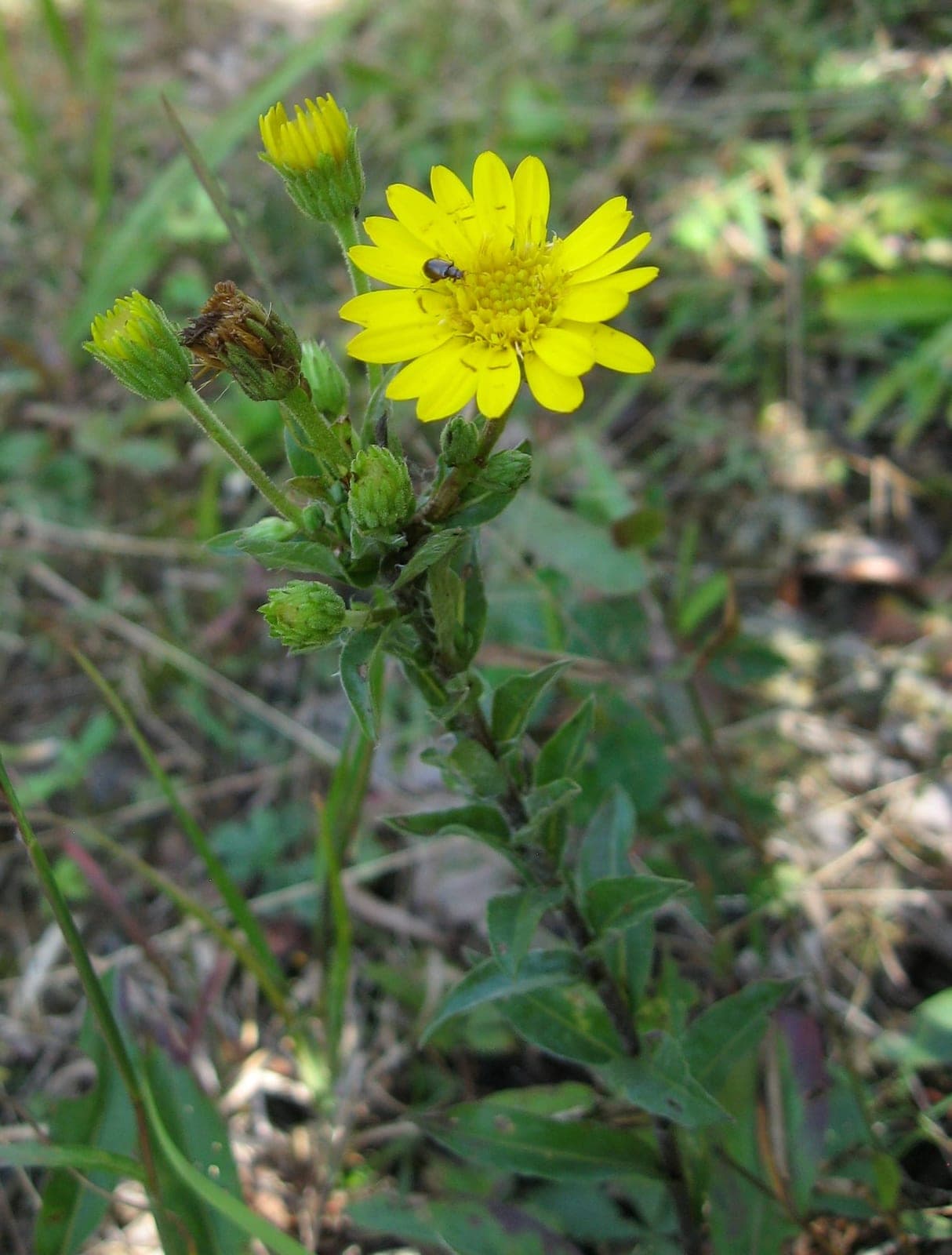
Maryland golden-aster is a clump-forming native perennial ranging from coastal New England south through Florida and west to Texas and Kentucky. It produces clusters of bright yellow daisy-like flowers from late summer through fall, making it a reliable late-season nectar source for native bees and butterflies. Young stems and leaves are covered in distinctive silvery-silky hairs that give the plant a soft, textured look even before flowering.
It thrives in dry, well-drained, often poor soils - sand, gravel, and rocky ground are all acceptable - in full sun. Drought tolerant once established, it spreads slowly by clump growth and moderate self-seeding. It naturalizes readily along roadsides, open wood edges, and dry meadow plantings without becoming aggressive. Avoid rich or consistently moist soils, which promote lax, floppy stems.
Seed heads left standing into winter provide food for finches and other seed-eating birds, extending the plant's ecological value beyond the flowering season.
Ecoregions:Eastern Temperate Forests
Aster Yellows
Deformed, greenish flowers, stunted growth, and yellowed foliage. Flower centers may produce tufts of leafy growth instead of normal petals.
No cure. Remove and destroy infected plants immediately to stop spread. Control leafhoppers, which transmit the disease, and remove nearby weed hosts.
Rust
Orange to brown raised pustules on the undersides of leaves, with yellow spotting on the upper surface. Heavy infections cause leaves to yellow and drop.
Remove and destroy infected leaves. Avoid overhead watering and improve air circulation. Apply a sulfur or copper-based fungicide if it spreads. Clear plant debris in fall.
Fungal leaf spot
Brown or purplish spots on the leaves, often ringed with a yellow halo, that spread and merge in warm, humid, or wet weather; heavily spotted leaves yellow and drop early.
Pick off spotted leaves and clear fallen debris to remove overwintering spores. Improve air circulation by thinning, and water at the base so foliage dries quickly. If it persists, apply a copper- or sulfur-based fungicide at the first sign.