
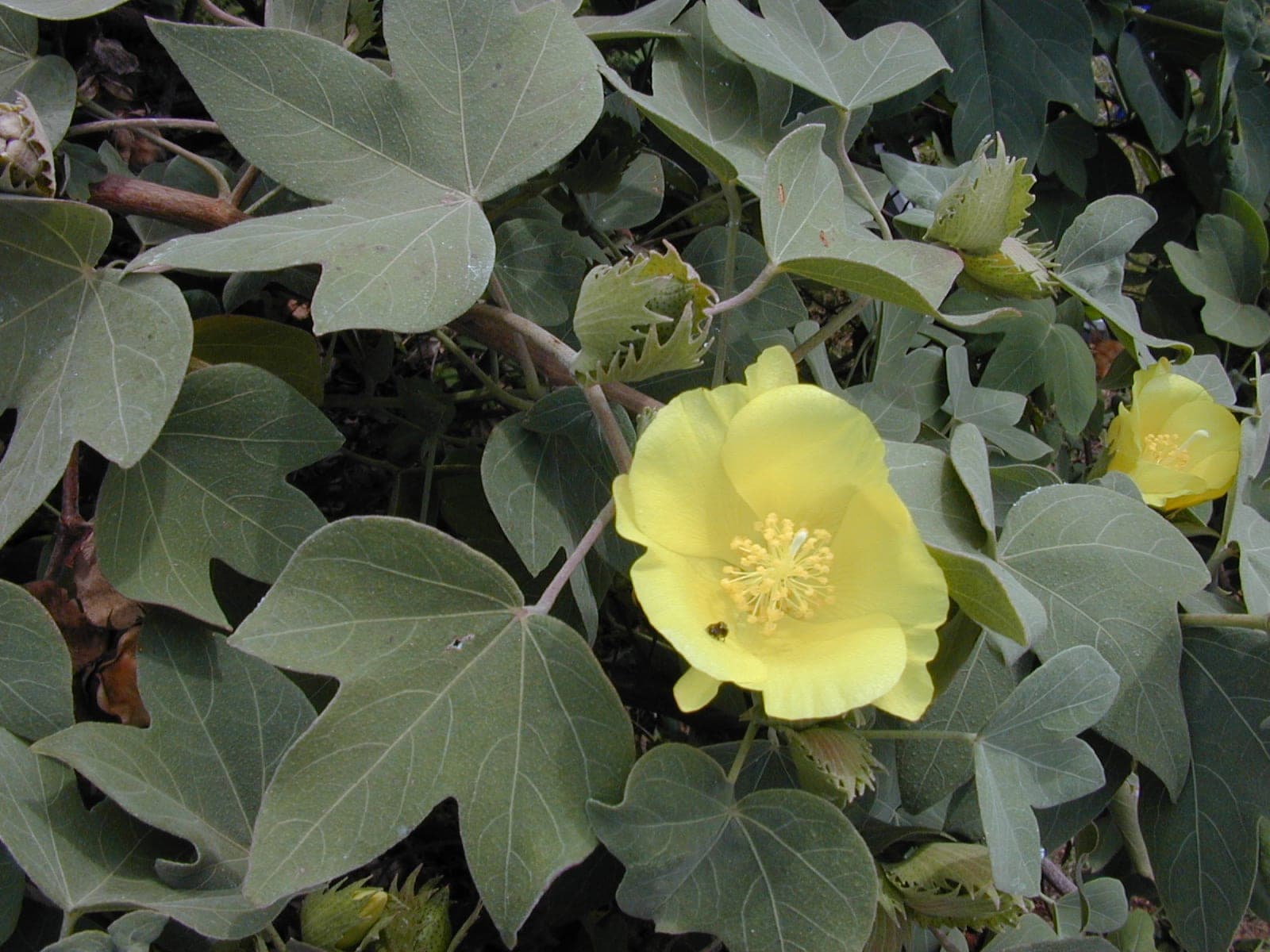
Maʻo, also called Hawaiian cotton, is an endemic shrub of hot, dry lowland slopes and coastal flats. The leaves are soft, felted and silvery, which helps them reflect sun and hold moisture, and the yellow hibiscus-like flowers are followed by small cotton bolls with brown lint. A related native, maʻo hau hele (the yellow hibiscus), is the state flower and a different plant.
Plant in full sun in poor, fast-draining soil, water through the first year, and then let it dry out between rains. Too much water makes it leggy and invites whitefly and mildew. Seed has a hard coat and germinates best after a nick or a short soak. Keep it away from commercial cotton, since the two species can cross.
Fusarium wilt
Sudden wilting, brown streaks in stems, yellowing leaves. Affects sweet basil varieties most.
No cure. Remove and destroy plants. Do not replant in the same spot for 3+ years. Choose resistant varieties.
Root rot
Plants wilt, yellow, and stunt even in moist soil; lower stems and roots turn brown, soft, and mushy and the plant may collapse. Most common in heavy, wet, or poorly drained ground.
Improve drainage and stop overwatering, and never plant too deep. Lift and destroy badly affected plants along with the soil around the roots. Grow in raised or free-draining beds to prevent it returning.
Powdery mildew
White or grey powdery coating on leaves - usually starting on older growth in humid conditions or when nights cool.
Improve air circulation by thinning plants. Apply neem oil or potassium bicarbonate spray at first sign. Avoid overhead watering.