
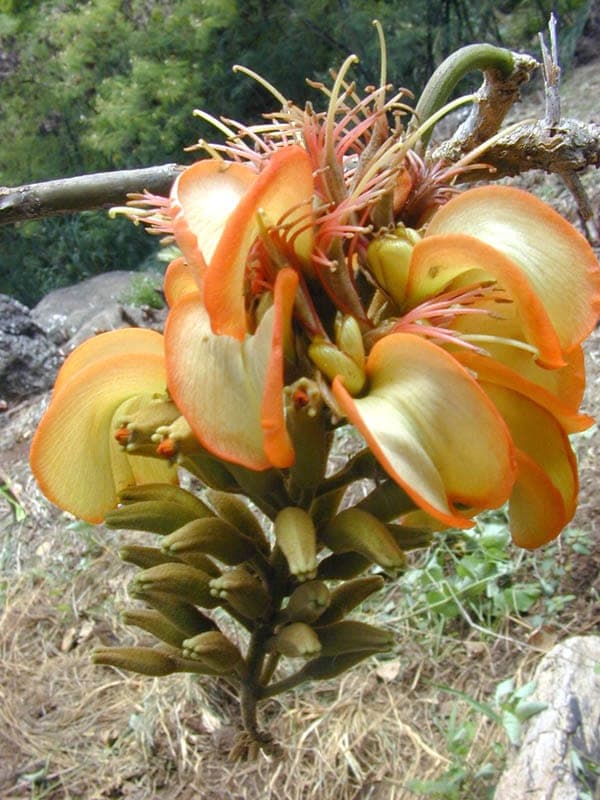
Wiliwili is one of the few Hawaiian trees that drops its leaves in the dry season, and it flowers on bare branches. The blossoms are curved clusters of orange, yellow, salmon, green or white, and the pods split to show bright orange-red seeds that are used in lei. The wood is among the lightest of any Hawaiian tree and was used for surfboards, canoe outriggers and net floats.
It belongs in full sun and gritty, fast-draining soil, and it needs very little water once established; summer drought is what triggers leaf drop, and the tree leafs out again when the rains return. Nick or soak the hard seed coat before sowing. Seedlings grow quickly in warm, bright conditions. The Erythrina gall wasp, an introduced pest first seen in Hawaii in 2005, has damaged many wiliwili by galling the new growth; a biological control wasp has since been released and has helped trees recover. Check new growth for swollen, distorted shoots and report severe cases to the local agricultural office.
The seeds are toxic if eaten.
Root rot
Plants wilt, yellow, and stunt even in moist soil; lower stems and roots turn brown, soft, and mushy and the plant may collapse. Most common in heavy, wet, or poorly drained ground.
Improve drainage and stop overwatering, and never plant too deep. Lift and destroy badly affected plants along with the soil around the roots. Grow in raised or free-draining beds to prevent it returning.
Fungal leaf spot
Brown or purplish spots on the leaves, often ringed with a yellow halo, that spread and merge in warm, humid, or wet weather; heavily spotted leaves yellow and drop early.
Pick off spotted leaves and clear fallen debris to remove overwintering spores. Improve air circulation by thinning, and water at the base so foliage dries quickly. If it persists, apply a copper- or sulfur-based fungicide at the first sign.