
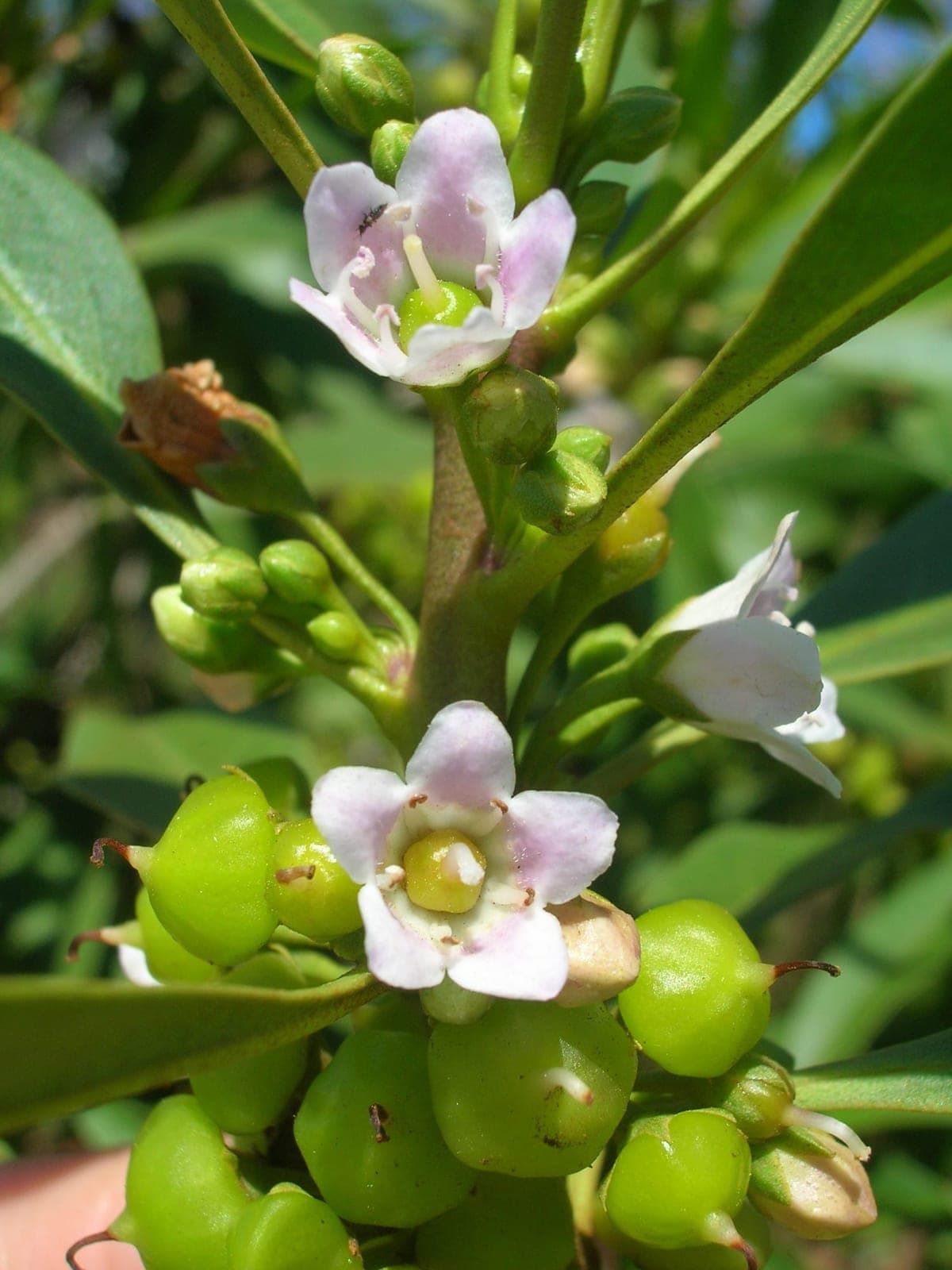
Naio is a native Hawaiian shrub or small tree of dry forest, rocky coastal flats and high-elevation slopes. It has narrow, glossy leaves, small white flowers marked with purple spots, and pale berries that birds eat. The aromatic wood, sometimes called false sandalwood, was valued for torches, and the plant makes a hardy hedge and windbreak.
Plant it in full sun and sandy or rocky, fast-draining soil. Once established it tolerates drought, wind and salt spray with little care. Water regularly for the first year, then taper off. Its form varies with the site, from a dense, rounded shrub on the shore to a rangier tree inland, and it responds well to light pruning for shape. Propagate by seed or semi-ripe cuttings.
Root rot
Plants wilt, yellow, and stunt even in moist soil; lower stems and roots turn brown, soft, and mushy and the plant may collapse. Most common in heavy, wet, or poorly drained ground.
Improve drainage and stop overwatering, and never plant too deep. Lift and destroy badly affected plants along with the soil around the roots. Grow in raised or free-draining beds to prevent it returning.
Fungal leaf spot
Brown or purplish spots on the leaves, often ringed with a yellow halo, that spread and merge in warm, humid, or wet weather; heavily spotted leaves yellow and drop early.
Pick off spotted leaves and clear fallen debris to remove overwintering spores. Improve air circulation by thinning, and water at the base so foliage dries quickly. If it persists, apply a copper- or sulfur-based fungicide at the first sign.