
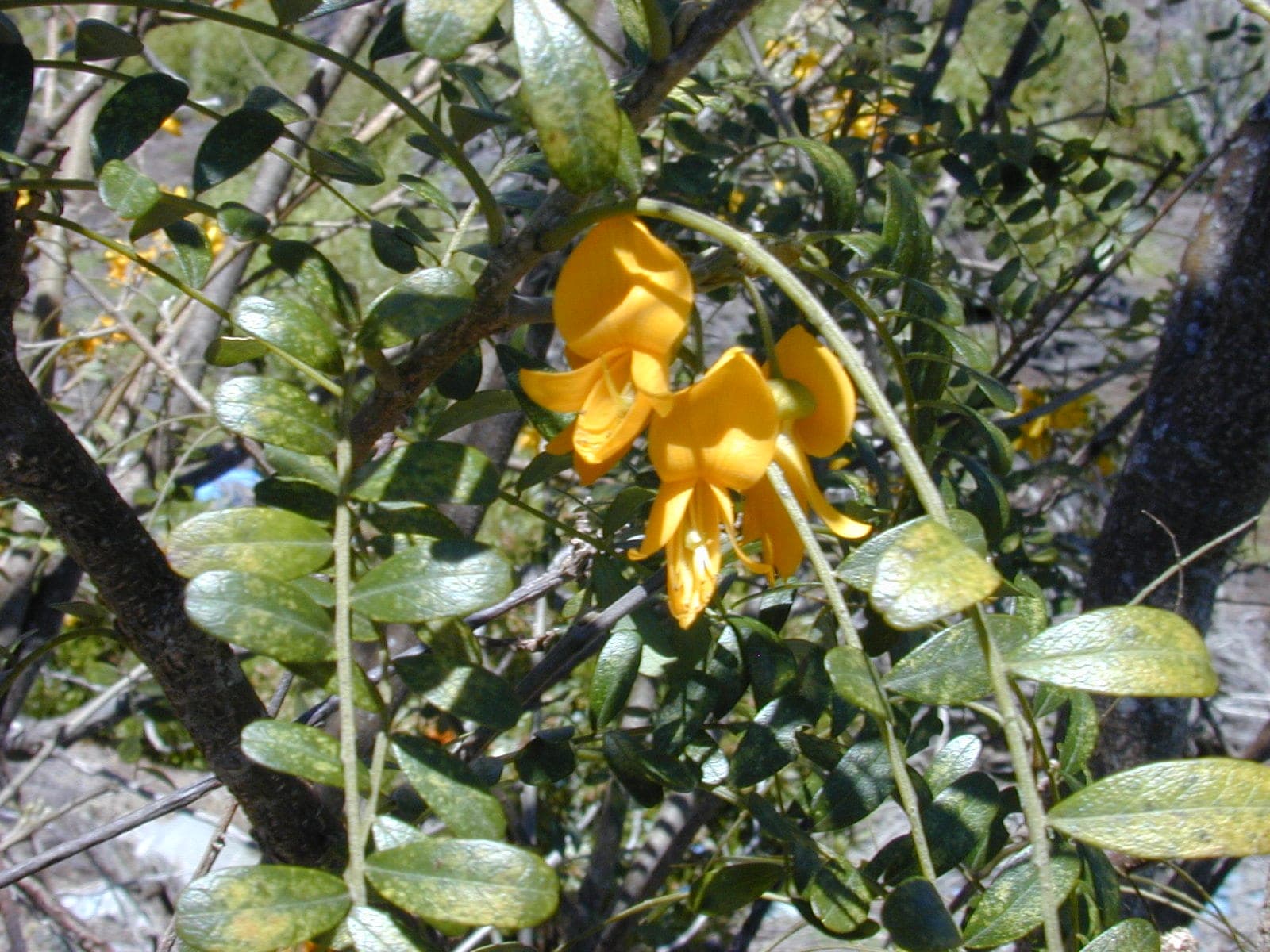
Māmane is an endemic tree of Hawaii's dry upland forests and subalpine slopes, with feathery gray-green leaflets and clusters of bright yellow pea-like flowers. Its green seeds are the main food of the palila, a critically endangered honeycreeper that lives on the slopes of Mauna Kea. Its dense wood was prized for tools, fence posts and sled runners.
It grows best in cooler, drier gardens at some elevation, in full sun and gritty, fast-draining soil. It struggles in hot, humid lowlands. Water young plants lightly through their first year, then leave them alone. Seeds have a hard coat and germinate best after a nick or a short soak. Seedlings dislike transplanting, so sow into deep pots and plant out while small. The seeds are toxic if eaten.
Root rot
Plants wilt, yellow, and stunt even in moist soil; lower stems and roots turn brown, soft, and mushy and the plant may collapse. Most common in heavy, wet, or poorly drained ground.
Improve drainage and stop overwatering, and never plant too deep. Lift and destroy badly affected plants along with the soil around the roots. Grow in raised or free-draining beds to prevent it returning.
Fungal leaf spot
Brown or purplish spots on the leaves, often ringed with a yellow halo, that spread and merge in warm, humid, or wet weather; heavily spotted leaves yellow and drop early.
Pick off spotted leaves and clear fallen debris to remove overwintering spores. Improve air circulation by thinning, and water at the base so foliage dries quickly. If it persists, apply a copper- or sulfur-based fungicide at the first sign.