
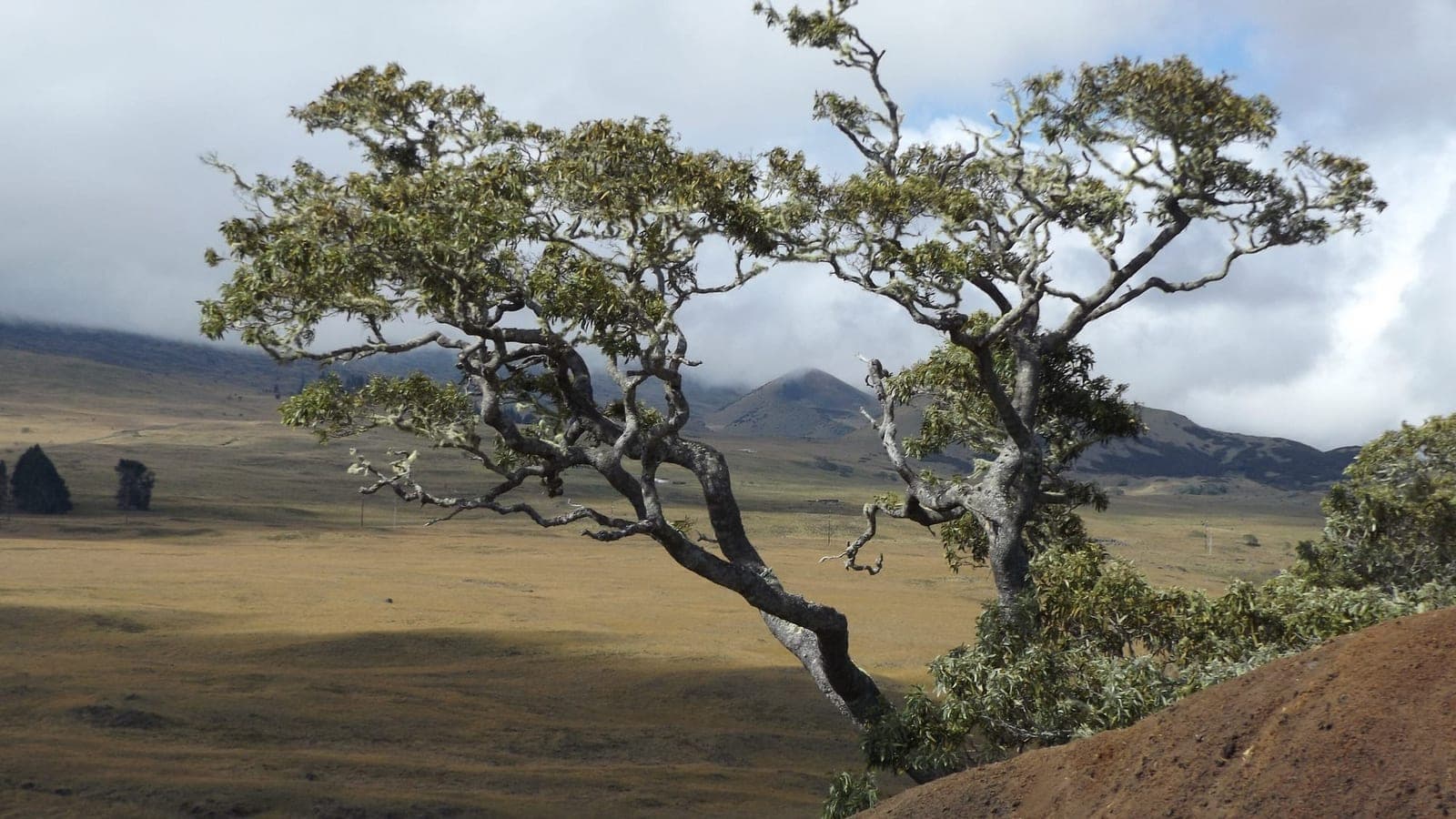
Koa is a large, fast-growing endemic tree and the biggest of the Hawaiian acacias. Seedlings carry true feathery leaves, but older trees switch to flattened, sickle-shaped leaf stalks called phyllodes that do the work of leaves. Pale yellow puffball flowers open in clusters in the cooler months. As a legume it fixes nitrogen, so it improves poor soil as it grows, and it has long been prized for canoe building, ukuleles and furniture.
Koa grows best in cooler, drier uplands with full sun and well-drained soil, and it struggles in hot, humid lowlands where wilt diseases are common. Give it room: it reaches 40 to 80 feet and the roots can lift paving. Seed has a hard coat, so scarify it or soak it in hot water that has been allowed to cool for a moment, then sow in a deep pot and transplant while the taproot is still short. Young trees put on several feet a year with steady water, then slow and live for many decades.
Fusarium wilt
Sudden wilting, brown streaks in stems, yellowing leaves. Affects sweet basil varieties most.
No cure. Remove and destroy plants. Do not replant in the same spot for 3+ years. Choose resistant varieties.
Phytophthora Root Rot
Wilting despite moist soil, yellowing leaves, stunted growth, and dark, decayed roots and crown tissue. Vines may collapse during hot weather.
Plant in well-draining soil and avoid waterlogging. Remove and destroy affected vines. Improve drainage with raised beds or amended soil and avoid overwatering.
Armillaria Root Rot
Thinning, yellowing canopy with progressive dieback; white, fan-shaped mycelial mats visible beneath bark at or just below the soil line; honey-colored mushroom clusters appearing at the trunk base or on surface roots in autumn.
No chemical cure exists. Improve drainage and avoid any injury to roots or trunk. Remove severely infected trees along with as much root material as possible. Do not replant susceptible species in the same spot.
Sooty Mold (Scale-Associated)
Black, powdery or crusty coating on upper leaf surfaces and stems. Affected leaves may yellow and drop in severe cases. The mold grows on honeydew secreted by scale insects, mealybugs, or aphids feeding on the plant.
Control the underlying pest infestation first using horticultural oil or neem oil applied thoroughly to stems and leaf undersides. Once pest populations are reduced, sooty mold stops spreading and weathers away over time. Rinse foliage with a strong stream of water to dislodge existing mold deposits.