
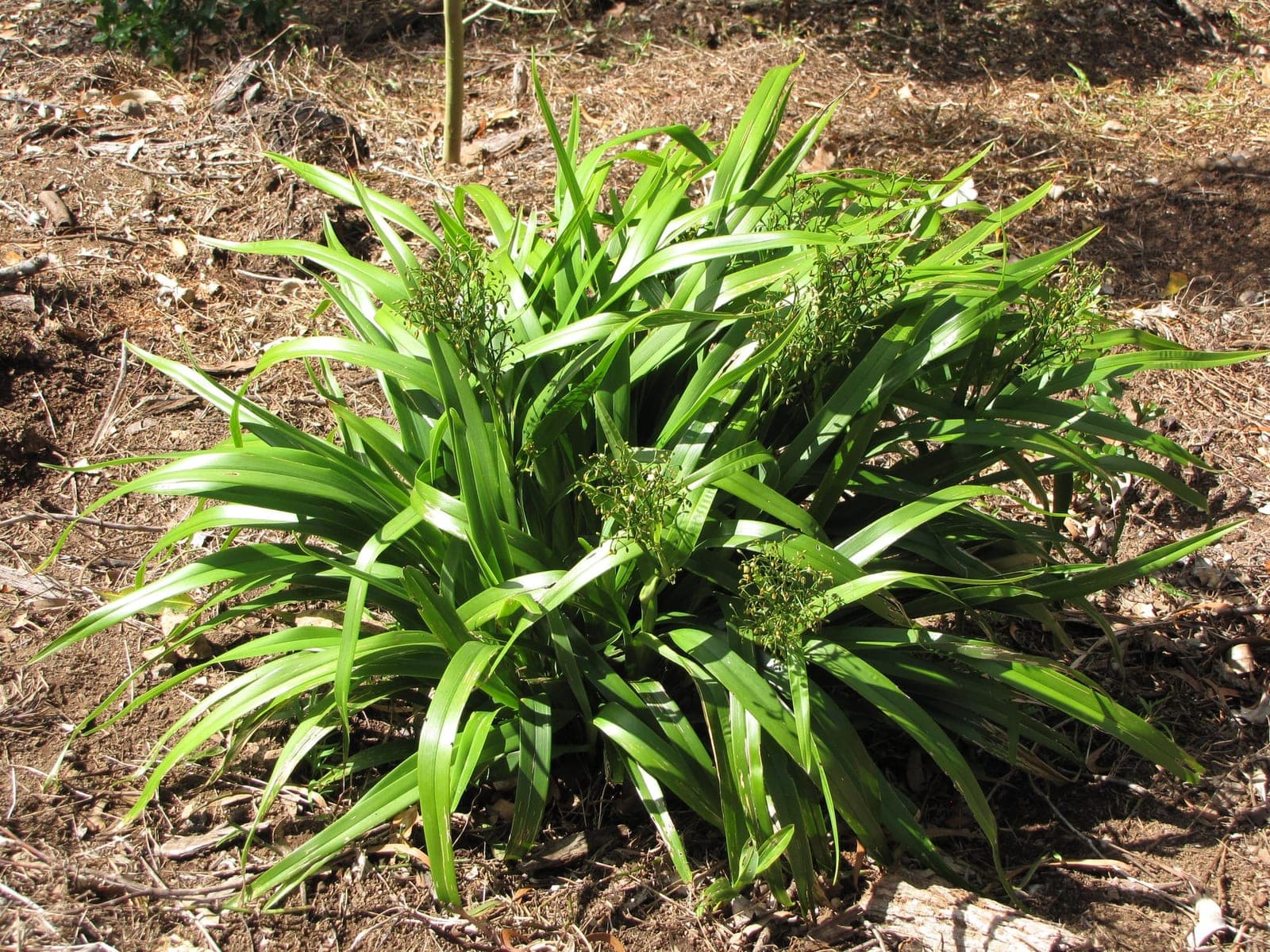
ʻUkiʻuki is a clumping Hawaiian lily with arching, strap-like leaves, loose sprays of small pale flowers and glossy berries in a striking blue. It grows from dry coastal scrub into mesic and wet forest, so it adapts to many gardens, and the fruit has been used for blue dye and in lei. It makes a good edging or accent along paths and around rocks.
Plant it in full sun to light shade and ordinary, well-drained soil. It is tolerant of drought once settled and does better with some afternoon shade in hot, dry sites. Clumps expand slowly and can be divided every few years to renew them. Cut out brown leaves at the base to keep it neat. Seed from fresh berries germinates in a few weeks on warm, moist soil.
Root rot
Plants wilt, yellow, and stunt even in moist soil; lower stems and roots turn brown, soft, and mushy and the plant may collapse. Most common in heavy, wet, or poorly drained ground.
Improve drainage and stop overwatering, and never plant too deep. Lift and destroy badly affected plants along with the soil around the roots. Grow in raised or free-draining beds to prevent it returning.
Fungal leaf spot
Brown or purplish spots on the leaves, often ringed with a yellow halo, that spread and merge in warm, humid, or wet weather; heavily spotted leaves yellow and drop early.
Pick off spotted leaves and clear fallen debris to remove overwintering spores. Improve air circulation by thinning, and water at the base so foliage dries quickly. If it persists, apply a copper- or sulfur-based fungicide at the first sign.