
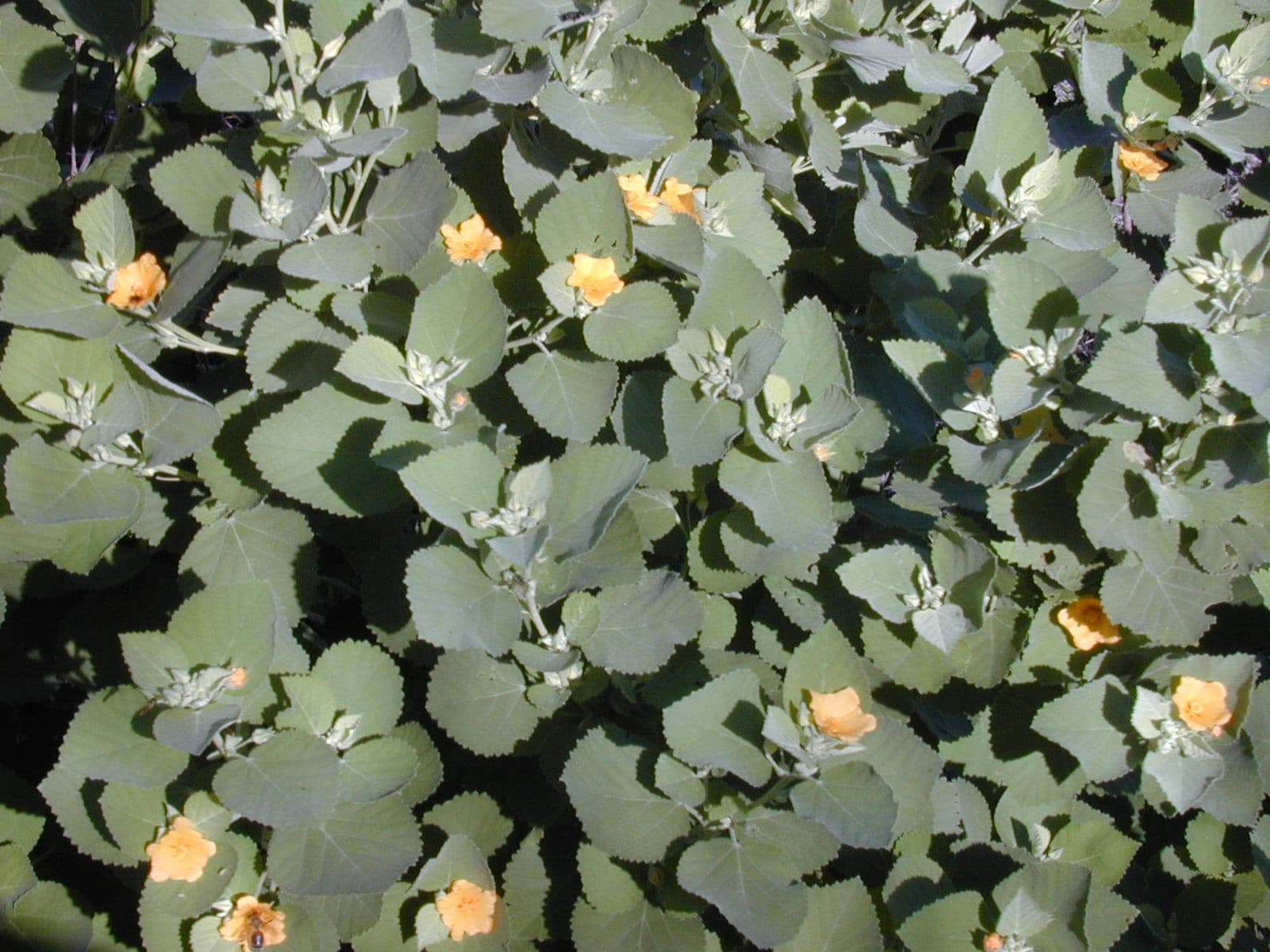
ʻIlima is a low, spreading Hawaiian shrub with soft gray-green leaves and delicate orange-yellow flowers that open nearly all year. It ranges from prostrate forms along the shore, often sold as ʻilima papa, to upright shrubs a few feet tall inland. It is the flower of Oʻahu, and a traditional ʻilima lei takes hundreds of the silky blossoms because each one lasts only about a day.
Plant it in full sun and sandy or rocky soil with sharp drainage. It tolerates salt spray, wind and long dry spells once established, and it dislikes wet feet. Prune lightly after a heavy bloom flush to keep it dense and flowering, and replace plants that go woody and sparse. Aphids and scale can trouble stressed plants and leave sooty mold behind; a strong spray of water, or an insecticidal soap on a bad infestation, is usually enough.
Root rot
Plants wilt, yellow, and stunt even in moist soil; lower stems and roots turn brown, soft, and mushy and the plant may collapse. Most common in heavy, wet, or poorly drained ground.
Improve drainage and stop overwatering, and never plant too deep. Lift and destroy badly affected plants along with the soil around the roots. Grow in raised or free-draining beds to prevent it returning.
Fungal leaf spot
Brown or purplish spots on the leaves, often ringed with a yellow halo, that spread and merge in warm, humid, or wet weather; heavily spotted leaves yellow and drop early.
Pick off spotted leaves and clear fallen debris to remove overwintering spores. Improve air circulation by thinning, and water at the base so foliage dries quickly. If it persists, apply a copper- or sulfur-based fungicide at the first sign.