
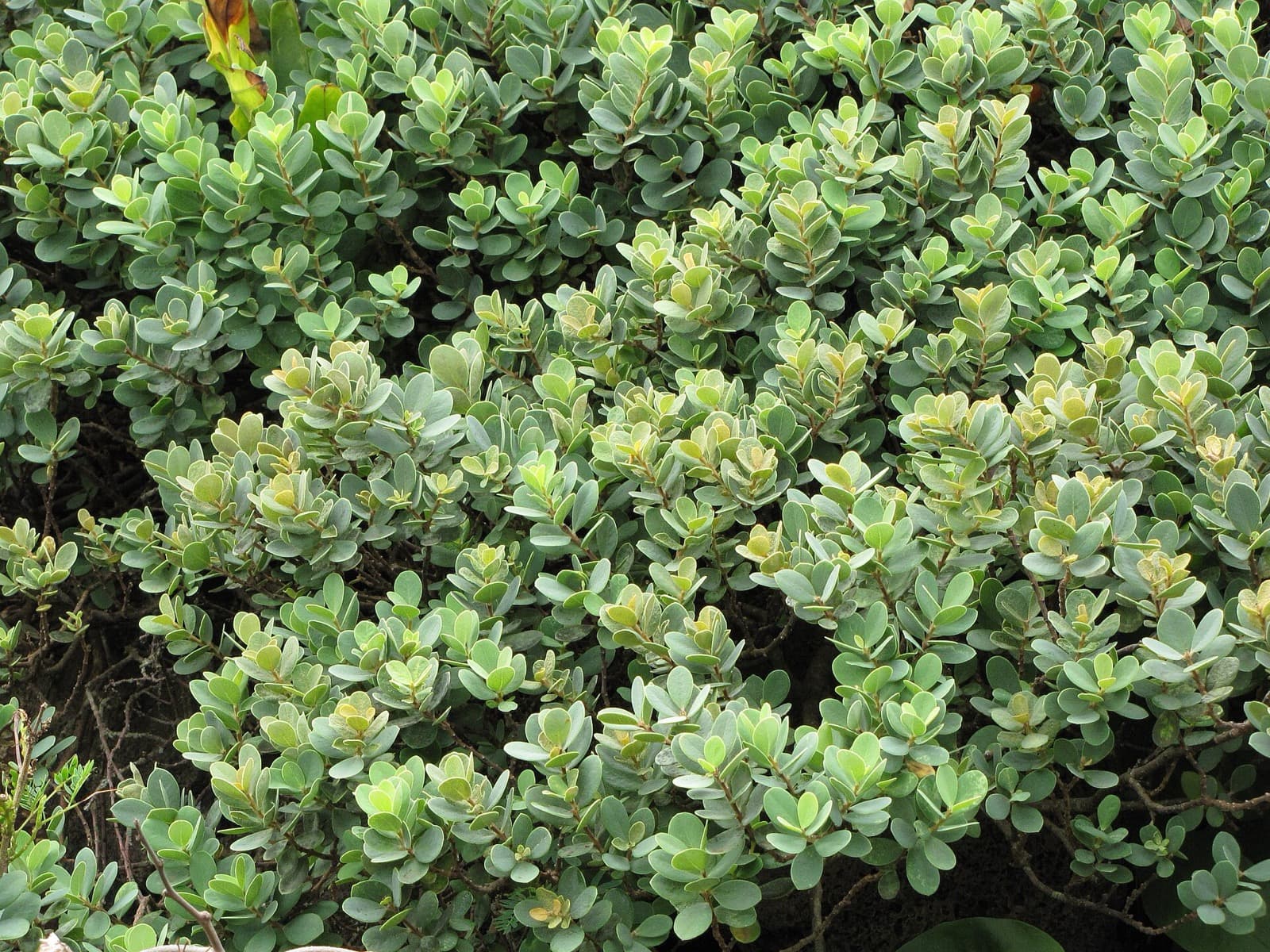
ʻĀkia is a group of Hawaiian endemic shrubs in the genus Wikstroemia. The coastal species Wikstroemia uva-ursi is a low, spreading plant with small blue-green leaves, tiny yellow-green flowers and bright orange to red berries. It grows on rocky shores, sand and dry slopes, and it makes a tidy low shrub or loose groundcover in a hot garden.
Grow it in full sun to light shade and sandy or rocky soil with good drainage. It is drought and salt tolerant once established and needs little attention, though young plants should be watered through their first dry season. Every part of the plant is poisonous if eaten, and the sap can irritate skin, so site it away from play areas, wear gloves when pruning, and keep pets from chewing it. Traditionally the bark fiber was used for cordage and the plant was used to stun fish.
Root rot
Plants wilt, yellow, and stunt even in moist soil; lower stems and roots turn brown, soft, and mushy and the plant may collapse. Most common in heavy, wet, or poorly drained ground.
Improve drainage and stop overwatering, and never plant too deep. Lift and destroy badly affected plants along with the soil around the roots. Grow in raised or free-draining beds to prevent it returning.
Fungal leaf spot
Brown or purplish spots on the leaves, often ringed with a yellow halo, that spread and merge in warm, humid, or wet weather; heavily spotted leaves yellow and drop early.
Pick off spotted leaves and clear fallen debris to remove overwintering spores. Improve air circulation by thinning, and water at the base so foliage dries quickly. If it persists, apply a copper- or sulfur-based fungicide at the first sign.